Analyze this schematic for potential design issues. Identify electrical, logical, or connectivity flaws, including incorrect net connections, missing or misplaced components, incorrect pin assignments, power distribution issues, and potential signal integrity concerns. Check for compliance with best practices such as proper decoupling capacitor placement, pull-up/pull-down resistor usage, current limiting resistors, and correct net labeling. Provide a direct schematic-level analysis—do not generate hypothetical examples. Focus solely on identifying real issues in the provided schematic and suggest specific corrections or optimizations.

To get started, talk to Flux or create a New Document.

Documents

    Documents are markdown text files which describe project goals, capture details, or even simulation outputs.

    Assets

    Gesture Light Switch Relay Reference Design.png

    Gesture Light Switch Relay Reference Design.png

    Gesture Light Switch Relay Reference DesignThumbnail

    Gesture Light Switch Relay Reference Design

    Gesture Light Switch Relay Reference Design thumbnail
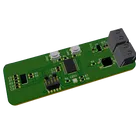
    This project is a Gesture Light Switch Relay Reference Design. It involves an STM32 microcontroller (STMicroelectronics) that interacts with an APDS-9960 sensor (Broadcom) to detect hand gestures. The gesture data is used to control a Toshiba TLP175A relay and an Everlight tri-color LED to switch the light and change colors, respectively. Power is supplied by a Diodes Incorporated's AP2112K-3.3TRG1 regulator. #referenceDesign #edge-computing #edgeComputing #stm #relay #sensors #reference-design

    Pricing & Availability

    Distributor

    Qty 1

    Digi-Key

    $7.01–$8.40

    LCSC

    $1.38

    Mouser

    $9.30

    Controls