Treat Flux like your intern. Tell it what you'd like to build and it'll get to work. You can also ask it questions, brainstorm ideas, and teach it your preferences. Learn More
Sure, I'd be happy to help with your STM32F405 integration!
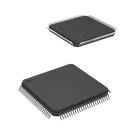
The STM32F405 is a high-performance, advanced line, ARM Cortex-M4 32-bit microcontroller with DSP and FPU instructions, more than 1 Mbyte Flash memory, and 100-pin packages. Here are some suggestions considering the data provided:
Decoupling Capacitors: All power pins (VDD, VDDA) should be decoupled with capacitors. The typical value is 100nF ceramic capacitor that will help to suppress high-frequency noise in your power lines. You connect these capacitors between your VDD and VSS power lines and place them as close to the microcontroller pins as possible.
BOOT0 and NRST: Connect BOOT0 to GND so that you can boot from main Flash memory. Also, connect an external push button to the NRST pin for hardware reset functionality.
Power Supply: The VDD should be connected to a 3.3V source. The VSS pin is the ground pin and should be connected to your ground network. The VCAP_1 and VCAP_2 need to be connected to a 2.2uF capacitor for the internal voltage regulator.
External Oscillator: If you need accurate timing for peripherals like UART, you can connect an 8MHz crystal between pins PH0 and PH1.
GPIOs: All PD, PE, PC, PB, and PA pins are general-purpose I/Os. You can use them according to your specific application needs. They can handle digital inputs, outputs, and even analog inputs.
USB: If your design requirements include USB, PA11 (USBDM) and PA12 (USBDP) would be used for USB communication.
Analog Pins: If you need to read analog values, connect your analog signal to PA0 to PA7, they have built-in Analog to Digital Converters.
Remember, these are quite common suggestions assuming an average use case. Depending upon your specific application or product requirements, you may need to do things differently. You need to thoroughly read and understand the datasheet of STM32F405 to get your design right.
2y
Someone is typing...
2
No files yet
Reviews
Documents
Documents are markdown text files which describe project goals, capture details, or even simulation outputs.
teenarp2026
copilot