Analog Devices
PIC16F877A-I/P
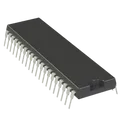
PIC PIC® 16F Microcontroller IC 8-Bit 20MHz 14KB (8K x 14) FLASH 40-PDIP The PIC16F877A-I/P is a high-performance 8-bit microcontroller from Microchip Technology, based on a Harvard architecture with separate program and data memory buses. It is designed for a wide range of embedded applications requiring reliable processing, multiple communication interfaces, and analog capability. The device integrates Flash program memory, EEPROM data storage, and numerous peripherals including ADC, timers, serial communication modules, and PWM functions. Packaged in a 40-pin PDIP form factor, it is widely used in industrial automation, consumer electronics, and educational development systems. Core Features 8-bit PIC microcontroller architecture Harvard architecture with RISC instruction set Operating frequency up to 20 MHz Single-cycle instruction execution (except branches) Memory Program Memory: 8K words (Flash) Data Memory (RAM): 368 bytes EEPROM Data Memory: 256 bytes I/O Features Up to 33 programmable I/O pins Multiple input/output ports (PORTA, PORTB, PORTC, PORTD, PORTE) High current sink/source capability on selected pins Analog Features 10-bit Analog-to-Digital Converter (ADC) Up to 8 analog input channels Programmable voltage reference Timers and Control Three timers (Timer0, Timer1, Timer2) Capture/Compare/PWM (CCP) modules Watchdog Timer (WDT) Power-on Reset (POR) and Brown-out Reset (BOR) Communication Interfaces USART (Universal Synchronous/Asynchronous Receiver/Transmitter) SPI (Serial Peripheral Interface) I²C (Inter-Integrated Circuit) via MSSP module Electrical Characteristics Operating Voltage: 4.0V to 5.5V Operating Temperature Range: -40°C to +85°C (Industrial grade) Low power consumption modes available Package Information Package Type: PDIP (Plastic Dual Inline Package) Pin Count: 40 pins Mounting Type: Through-hole Applications Industrial control systems Embedded automation Consumer electronics Sensor interfacing and data acquisition Educational and prototyping platforms #commonpartslibrary #integratedcircuit #microcontroller
867 Uses
2 Stars
TP5410 Module
This project is a TP5410-based Battery Management System (BMS) circuit. The TP5410 IC handles battery charging, voltage regulation, and protection. It uses various capacitor, resistor, and diode components along with LEDs for status indication, making it an ideal solution for portable electronic devices. #project #Template #charger #reusable #module #batterycharger #template #bms #TP5410 #topPowerASIC #toppower #toppowerasic
19 Uses
2 Stars

RP2350A
The RP2350, developed by Raspberry Pi Ltd, represents a significant advancement in the field of microcontrollers, building upon the foundation laid by its predecessor, the RP2040. This component is designed to cater to a wide range of applications requiring dual-core processing capabilities, with the option to switch between Dual Cortex-M33 or Hazard3 processors operating at up to 150 MHz. It features an extensive 520 kB of on-chip SRAM distributed across 10 independent banks, alongside 8 KB of one-time-programmable (OTP) storage. External memory interfaces are well-supported, with provisions for up to 16 MB of external QSPI flash/PSRAM, and an additional 16 MB accessible via an optional second chip-select, facilitating extensive code and data storage options. Security features are robust, including options for boot signing enforced by on-chip mask ROM, with key fingerprints stored in OTP, and hardware mitigations against fault injection attacks. The RP2350 also boasts a comprehensive set of peripherals, including 2x UARTs, 2x SPI controllers, 2x I2C controllers, 24x PWM channels, and a USB 1.1 controller with PHY for host and device support, among others. Programmable IO (PIO) state machines enhance its flexibility, enabling the implementation of custom peripherals. For developers, the RP2350 offers low-power operation modes and a built-in boot ROM that supports direct boot from external flash or OTP, serial boot from USB or UART, and secure boot with code signature enforcement. The device is available in QFN-60 (7x7 mm) and QFN-80 (10x10 mm) packages, with or without built-in flash, catering to diverse application requirements. This microcontroller is a compelling choice for sophisticated projects that demand high performance, extensive memory and peripheral support, and advanced security features.
44 Uses
2 Stars
MGM210LA22JIF
MGM210LA22JIF devices are PCB modules for Zigbee, Thread, Bluetooth and multiprotocol (Zigbee + Bluetooth) connectivity built around the EFR32MG21 Wireless Gecko Series 2 SoC and designed and optimized for the unique needs of smart LED lightbulbs. Delivering unparalleled RF performance and energy consumption compliance with CA Title 20, the module also offers a powerful and energy-efficient MCU core, 1024 kB of flash memory to enable future-proofing capabilities and over-the-air firmware updates with a dedicated core for enhanced security features. With its extended temperature rating and form factor, the device is suitable for enclosed operation in lightbulb housings. #CommonpartLibrary #Module #EFR32MG21 #arduino-matter
36 Uses
2 Stars
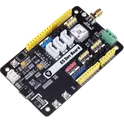
Wio-E5 Dev Kit
Wio-E5 Dev Kit embedded with Wio-E5 STM32WLE5JC LoRa module that supports Long Range protocol on the global frequency band. It provides full GPIOs, which support various data protocols and interfaces such as RS485, Grove, male/female headers, etc. This makes it user-friendly because it allows for easy and flexible connections to other devices or components. It would be a perfect choice for fast testing and rapid prototyping of your Long Range IoT projects.
8 Uses
2 Stars
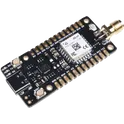
Seeed Studio Wio-E5 mini Dev Board
Wio-E5 mini Dev Board builds in and leads out full GPIO of the Wio-E5 STM32WLE5JC LoRa module. Supporting Long Range protocol and global frequency, the Wio-E5 mini is able to achieve a transmission range of up to 10 km in open areas. It supports EU868 and US915, making it suitable for wireless sensor networks and other IoT devices that require battery power, low power consumption and long range.
10 Uses
2 Stars
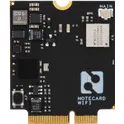
Blues - Note WiFi
The Wi-Fi Notecard is a version of the Blues Notecard with Wi-Fi connectivity in place of cellular. The device is the same size as all cellular Notecards and follows the same m.2 pinout. What's more, the Wi-Fi Notecard uses the same powerful JSON-based programming interface, meaning that developers can easily add Wi-Fi as a deployment option for their IoT solutions, with minimal impact to their existing host applications. WiFi Version
73 Uses
2 Stars

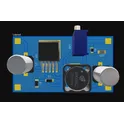
BEC-Arduino-LM2596-Sub_Layout
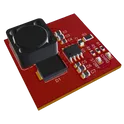
This is a DC/DC step-down voltage regulator that converts input voltage between 3.2V and 40V into a smaller voltage between 1.25V and 35V, capable of driving a 3A load with excellent line and load regulation. In some projects, you might need different voltages (3-35V) for your devices.
24 Uses
2 Stars
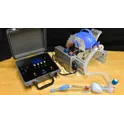
MIT Emergency Ventilator Project
An open source ventilator created by a team at MIT as an emergency response to the growing need for ventilators during the COVID-19 pandemic. Please read through all documentation and safety information linked in the properties before using any device in a clinical setting.
1 Use
2 Stars
STM32MP257FAI3
MPU with Dual Arm Cortex-A35 @1.5GHz, Cortex-M33 @400MHz, 3xEthernet (2+1 switch), 3xFD-CAN, LVDS/DSI, H.264, 3D GPU, AI/NN, Secure Boot, Cryptography, DRAM enc/dec, PKA The STM32MP257FAI3 is a high-performance microprocessor from STMicroelectronics' STM32MP2 series, integrating dual 64-bit Arm Cortex-A35 cores running at up to 1.5 GHz, a Cortex-M33 real-time core, and a Cortex-M0+ low-power management core. It is designed for advanced industrial, edge AI, machine vision, HMI, IoT gateway, and multimedia applications requiring Linux-class processing alongside deterministic real-time control. The device features AI acceleration, 3D graphics, video encoding/decoding, extensive connectivity, advanced security, and support for high-speed external memory. Key Features Dual-core 64-bit Arm Cortex-A35 CPU operating up to 1.5 GHz Arm Cortex-M33 real-time processor with TrustZone and FPU support Arm Cortex-M0+ low-power coprocessor for autonomous operation Integrated NPU (Neural Processing Unit) delivering up to 1.35 TOPS AI performance 3D GPU and hardware video encoder/decoder acceleration Supports DDR3L, DDR4, and LPDDR4 external memory up to 4 GB Multiple display interfaces including MIPI-DSI, LVDS, and parallel RGB USB 2.0 Host and USB 3.0 Dual-Role with embedded PHYs PCI Express interface with integrated 5 Gbps PHY Up to three Gigabit Ethernet interfaces with TSN and IEEE 1588 support Extensive connectivity: I2C, I3C, SPI, UART, USART, CAN FD, SDMMC, SAI, and SPDIF Hardware cryptographic accelerators including AES, SHA, RSA, ECC, PKA, and True RNG Secure boot, TrustZone security, tamper detection, and resource isolation framework Multiple low-power operating modes for energy-efficient designs Available in fine-pitch BGA packages for high-density embedded systems. #STM32MP257FAI3 #STM32MP2 #STMicroelectronics #CortexA35 #CortexM33 #EdgeAI #EmbeddedLinux #IndustrialAutomation #MachineVision #HMI #IoTGateway #MPU #PCIe #USB3 #GigabitEthernet #TrustZone #EmbeddedSystems #ArtificialIntelligence #LinuxProcessor #IndustrialIoT #CommonPartsLibrary #IntegratedCircuit #Microprocessor #STM32MP2
32 Uses
1 Star
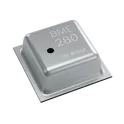
BME280
Humidity, Pressure, Temperature 0 ~ 100% RH I²C, SPI ±3% 1 s Surface Mount BME280 I2C breakout module The BME280 integrates three sensors—temperature, relative humidity, and pressure—along with a high-performance digital interface. It communicates via I²C or SPI, making it easy to interface with microcontrollers like Arduino, ESP32, and STM32. It is designed for low power consumption, making it suitable for battery-powered applications such as portable weather stations and smart home devices. Key Features Environmental Sensing Measures: Temperature Relative Humidity Barometric Pressure Enables altitude estimation based on pressure readings High Accuracy Temperature: ±1.0°C (typical) Humidity: ±3% RH (typical) Pressure: ±1 hPa (typical) Low Power Consumption Typical current: ~0.6 µA (sleep mode) ~3.6 µA (measurement mode) Ideal for battery-operated devices Communication Interfaces Supports: I²C (up to 3.4 MHz) SPI (3-wire / 4-wire) Easy integration with most microcontrollers Compact Package Small footprint: 2.5 × 2.5 × 0.93 mm LGA package Suitable for space-constrained designs Built-in Features Factory-calibrated coefficients stored in NVM Configurable oversampling and filtering Integrated ADC for high-resolution measurements #commonpartslibrary #sensor #humidity #pressure
304 Uses
1 Star
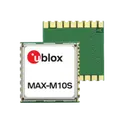
MAX-M10S-00B
MAX-M10 RF Receiver BeiDou, Galileo, GLONASS, GPS, GNSS 1.561GHz, 1.575GHz, 1.602GHz -167dBm 921.6kbps Not Included Module The MAX-M10S-00B is a professional-grade, ultra-low-power GNSS positioning module from u-blox based on the u-blox M10 platform. It is designed for battery-powered applications such as asset trackers, wearables, IoT devices, and navigation systems. The module supports simultaneous reception of multiple GNSS constellations, providing high positioning availability, fast acquisition times, and excellent sensitivity even in challenging urban or weak-signal environments. It integrates a TCXO, LNA, and SAW filter to improve RF performance while maintaining very low power consumption. Key Features Multi-constellation GNSS receiver: GPS Galileo GLONASS BeiDou QZSS SBAS support (WAAS, EGNOS, MSAS, GAGAN) Concurrent tracking of up to four GNSS constellations for improved position availability and accuracy. Ultra-low power consumption: Approximately 25 mW in continuous tracking mode, making it ideal for battery-powered devices. High RF sensitivity: Tracking sensitivity up to −167 dBm for reliable operation in weak-signal conditions. High positioning accuracy: Typical position accuracy of approximately 1.5 m CEP under suitable conditions. Navigation update rate: Up to 10 Hz for responsive tracking applications. Integrated RF front-end: Built-in LNA (Low Noise Amplifier) Built-in SAW filter Integrated TCXO for stable operation. Supports Assisted GNSS services: AssistNow Online AssistNow Offline AssistNow Autonomous CloudLocate support for low-power IoT positioning. Communication interfaces: UART I²C NMEA and UBX protocols supported. Wide operating temperature range: −40°C to +85°C. Supply voltage: 1.76 V to 3.6 V. Typical Applications Asset tracking devices Wearable electronics Fleet management systems Industrial IoT Smart meters Drone and robotics navigation Personal navigation devices Timing and synchronization systems Package Information Package Type: Surface-mount LCC module Dimensions: 9.7 mm × 10.1 mm × 2.5 mm (typical module size) #Commonpartslibrary #RF #Wireless #RFreceivers #MAXM10S #uBlox #GNSS #GPS #Galileo #GLONASS #BeiDou #QZSS #NavigationModule #GNSSModule #GPSTracking #AssetTracking #IoT #IndustrialIoT #WearableTech #FleetManagement #DroneNavigation #EmbeddedSystems #ElectronicsDesign #PCBDesign #HardwareEngineering #LowPowerDesign #LocationTracking #Geolocation #RFDesign #LNA #SMTModule
243 Uses
1 Star
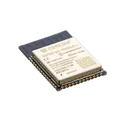
ESP32-S3-WROOM-1-N8R8
Bluetooth, WiFi 802.11b/g/n, Bluetooth v5.0 Transceiver Module 2.4GHz PCB Trace Surface Mount The ESP32-S3-WROOM-1-N8R8 is a high-performance Wi-Fi and Bluetooth Low Energy (BLE) module from Espressif Systems, designed for advanced IoT, edge AI, smart devices, industrial automation, and embedded applications. It is based on the ESP32-S3 SoC featuring a dual-core Xtensa® LX7 processor running up to 240 MHz, integrated wireless connectivity, and enhanced AI acceleration capabilities. The N8R8 variant includes 8 MB Flash memory and 8 MB Octal SPI PSRAM, making it suitable for memory-intensive applications such as machine learning, image processing, graphical user interfaces, and data logging. Key Features Dual-core 32-bit Xtensa LX7 CPU operating up to 240 MHz Integrated 2.4 GHz Wi-Fi (802.11 b/g/n) Bluetooth 5 LE (Low Energy) support 8 MB Flash memory 8 MB Octal SPI PSRAM Vector instructions and hardware acceleration for AI/ML workloads Integrated PCB trace antenna USB OTG and USB Serial/JTAG support Rich peripheral set including: GPIO ADC UART SPI I²C I²S PWM USB Operating voltage: 3.0 V to 3.6 V Wireless data rates up to 150 Mbps RF output power up to 20.5 dBm High receiver sensitivity down to –104.5 dBm Surface-mount 41-pin module package Industrial operating temperature range up to -40°C to +85°C (module-dependent specification) #Module #RF-Transceiver #Esp32
281 Uses
1 Star
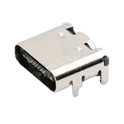
TYPE-C 16PIN 2MD(073)
CONN RCPT Type-C 16POS SMD R/A The TYPE-C 16PIN 2MD(073) is a surface-mount USB Type-C receptacle connector commonly manufactured by SHOU HAN. It is designed for compact PCB applications requiring USB 3.1-compatible data transfer and 5V power delivery in consumer and industrial electronic devices. This connector uses a 16-pin optimized footprint (instead of the full 24-pin USB-C standard) where some contacts are internally shorted or omitted depending on application, making PCB routing simpler while still supporting basic USB-C functionality. USB Type-C female receptacle 16-pin reduced-layout configuration Supports USB 3.1 data transmission (application dependent) 5V rated voltage operation 3A–5A current capability (model dependent variant) Surface-mount (SMD), right-angle / horizontal mount Compact design for high-density PCB layouts Reversible plug orientation support (USB-C standard) Operating temperature: -25°C to +85°C Typical durability: ~5,000–10,000 mating cycles RoHS compliant, lead-free construction #CommonPartsLibrary #Connector
135 Uses
1 Star
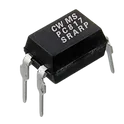
PC817C-S
SOP-4-2.54mm Transistor, Photovoltaic Output Optoisolators ROHS PC817C-S SOP-4_L6.5-W4.6-P2.54-LS10.3-TL LCSC Part Number: C3008369 JLCPCB Part Class: Extended Part Manufactured by UMW(友台半导体) The ESDA18-1K is a transient voltage suppression and electrostatic discharge protection device designed to protect sensitive electronic circuits from ESD events, surge transients, and electrical overstress conditions. Manufactured by STMicroelectronics and commonly used in communication and embedded electronic systems, this device provides fast-response protection for signal lines and low-voltage interfaces exposed to external electrical disturbances. The component utilizes low-capacitance TVS diode technology to clamp transient voltages while maintaining signal integrity on high-speed communication lines. It is optimized for protecting USB interfaces, GPIO lines, communication ports, sensor interfaces, and portable electronic devices from electrostatic discharge damage and transient spikes. The ESDA18-1K is widely used in industrial electronics, consumer devices, embedded systems, communication hardware, and portable equipment requiring compact and reliable ESD suppression. Its small surface-mount package enables easy integration into high-density PCB layouts while improving overall system reliability and EMC robustness. Engineering Specification Device Type Transient voltage suppression and ESD protection diode Protection Function Electrostatic discharge and surge transient suppression Protection Architecture Single-line TVS protection structure Response Characteristics Fast transient clamping response Signal Compatibility Suitable for low-voltage and high-speed signal interfaces Capacitance Characteristics Low capacitance for minimal signal distortion Electrical Performance Low leakage current and stable clamping behavior Reliability Features High ESD robustness and transient tolerance Mounting Style Surface mount technology Package Type Compact SOD-style surface-mount package Thermal Characteristics Low-power passive protection structure EMC Features Enhanced electromagnetic compatibility protection support Applications USB interface protection GPIO protection Communication interfaces Embedded systems Portable electronics Industrial control hardware Sensor interfaces Consumer electronics Signal line protection Data communication systems Manufacturer STMicroelectronics #commonpartslibrary #esdprotection #tvsdiode #transientprotection #signalprotection #stmicroelectronics #embeddedhardware #electronicsdesign
177 Uses
1 Star
PJ-320A
The PJ-320A is a panel-mount or PCB-mount DC barrel power jack connector designed for low-voltage DC power input applications in embedded and consumer electronic systems. This connector provides a reliable interface for external DC power adapters and is commonly used in development boards, communication devices, industrial electronics, portable equipment, and power distribution modules. The connector is engineered for stable mechanical retention and consistent electrical contact performance during repeated insertion and removal cycles. Its compact construction and standardized barrel interface support broad compatibility with common DC plug adapters used in low-voltage electronic systems. The PJ-320A is widely implemented in embedded hardware, battery charging systems, portable electronics, instrumentation equipment, and microcontroller-based applications requiring secure external power connectivity. Its durable housing and solderable terminal structure support reliable PCB integration and automated assembly processes. Engineering Specification Device Type DC barrel power jack connector Connector Function External DC power input interface Mounting Style PCB mount or panel mount depending on implementation Connector Configuration Coaxial barrel-style power connector Electrical Characteristics Designed for low-voltage DC power transmission Contact Structure Spring-contact conductive interface for stable plug retention Mechanical Features Durable insertion and extraction cycle performance Housing Material Insulated high-strength connector body Terminal Configuration Solderable PCB terminal interface Reliability Features Stable contact resistance and secure mechanical retention Assembly Compatibility Suitable for automated and manual PCB assembly processes Package Structure Compact embedded connector form factor Applications Embedded systems Portable electronics Power adapter interfaces Microcontroller development boards Battery charging systems Industrial electronics Consumer devices Communication equipment Instrumentation systems Low-voltage DC power distribution Manufacturer Commonly associated with generic DC power connector manufacturers #commonpartslibrary #dcjack #powerconnector #barreljack #embeddedhardware #electronicsdesign #powerelectronics #pcbconnectors #consumerelectronics #surfacemountcomponents #throughholecomponents #powerinput #industrialelectronics #microcontroller #electromechanical
79 Uses
1 Star