Timers and RTCs
Timers and Real-Time Clocks (RTCs) are electronic devices that are used to measure time or keep track of the current time. They can be found in a wide range of applications, including computers, phones, and appliances. Timers are used to trigger an action after a specific period of time has elapsed. They can be used to control the duration of an event, or to schedule tasks to be performed at a later time. RTCs, on the other hand, are used to maintain accurate time even when the device is powered off. They are often used in devices that need to keep track of the current time and date, such as alarm clocks and smart thermostats. If you're looking for high-quality timers and RTCs for your electronic projects, you should check out Flux.ai. They have the world's largest community-driven public library of timers and RTCs, with footprints, symbols, datasheets, and simulation models. This makes it easy for you to find the components you need for your project, and ensures that you have access to accurate and up-to-date information about each component. Whether you're a professional engineer or a hobbyist, Flux.ai has the resources you need to get your project off the ground.
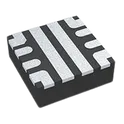
TPS259474LRPWR
IC SURGE STOPPER 2.7V~23V VQFN-10-HR(2x2) The TPS25947xx family of eFuses is a highly integrated circuit protection and power management solution in a small package. The devices provide multiple protection modes using very few external components and are a robust defense against overloads, short-circuits, voltage surges, reverse polarity and excessive inrush current. With integrated back-to-back FETs, reverse current flow from output to input is blocked at all times, making the devices an excellent choice for power MUX/ORing applications as well as systems which need load side energy hold up storage in case input power supply fails. The devices use linear ORing based scheme to establish an almost zero DC reverse current and emulate ideal diode behavior with minimum forward voltage drop and power dissipation. Output slew rate and inrush current can be adjusted using an external capacitor. Loads are protected from input overvoltage conditions either by clamping the output to a safe fixed maximum voltage (pin selectable), or by cutting off the output if input exceeds an adjustable overvoltage threshold. The devices respond to output overload by actively limiting the current or breaking the circuit. The output current limit threshold as well as the transient overcurrent blanking timer are user adjustable. The current limit control pin also functions as an analog load current monitor. The devices are available in a 2mm × 2mm, 10- pin HotRod™ QFN package for improved thermal performance and reduced system footprint. The devices are characterized for operation over a junction temperature range from –40°C to +125°C. • Wide operating input voltage range: 2.7V to 23V – 28V absolute maximum – Withstands negative voltages up to –15V • Integrated back-to-back FETs with low onresistance: RON = 28.3mΩ (typical) • Ideal diode operation with true reverse-current blocking • Fast overvoltage protection – Overvoltage clamp (OVC) with pin-selectable threshold (3.8V, 5.7V, 13.8V) and 5μs (typical) response time OR – Adjustable overvoltage lockout (OVLO) with 1.2μs (typical) response time • Overcurrent protection with load current monitor output (ILM) – Active current limit OR circuit-breaker options – Adjustable threshold (ILIM) 0.5A to 6A • ±10% accuracy for ILIM > 1A – Adjustable transient blanking timer (ITIMER) to allow peak currents up to 2 × ILIM – Output load current monitor accuracy: ±6% (IOUT ≥ 1A) • Fast-trip response for short-circuit protection – 500ns (typical) response time – Adjustable (2 × ILIM) and fixed thresholds • Active high enable input with adjustable undervoltage lockout threshold (UVLO) • Adjustable output slew rate control (dVdt) • Overtemperature protection • Digital outputs – Priority power MUX control (AUXOFF) and fault indication (FLT) or – Power Good indication (PG) with adjustable threshold (PGTH) • UL 2367 recognition – File No. E339631 – RILM ≥ 750Ω • IEC 62368-1 CB certified • Small footprint: QFN 2mm × 2mm, 0.45mm pitch #CommonPartsLibrary #IntegratedCircuit #PowerManagement
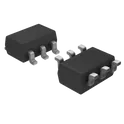
393 Uses0 StarsDW01A
The DW01A is a compact single-cell lithium-ion/lithium-polymer battery protection IC designed to safeguard rechargeable batteries from unsafe operating conditions such as overcharge, overdischarge, overcurrent, and short circuits. It is widely used in battery packs, power banks, TP4056 charging modules, portable electronics, and IoT devices because of its low power consumption and minimal external component requirements. Key Features Single-cell Li-ion/Li-Po battery protection Overcharge protection (typically 4.3V) Overdischarge protection (typically 2.4V) Overcurrent and short-circuit protection Ultra-low quiescent current (~3µA typical) Very low standby/discharge current Drives external dual MOSFETs for charge/discharge control Internal delay timers for noise immunity No external timing capacitors required Compact SOT-23-6 package Wide operating voltage range Automatic recovery after fault removal Typical Applications 18650 battery protection boards Power banks Bluetooth devices Wearables Portable consumer electronics DIY battery-powered projects TP4056 charging modules with protection circuitry #CommonPartsLibrary #IntegratedCircuit #PowerManagement
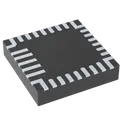
772 Uses0 StarsBQ25792RQMR
Charger IC Lithium Ion/Polymer 29-VQFN-HR (4x4) The BQ25792 is a switch-mode synchronous buck-boost charger with full power-path management. It can automatically regulate power flow between the input source, system load, and battery. It supports a wide input range and is designed for USB Type-C™ / USB Power Delivery (USB-PD) systems, enabling both charging and OTG (power output from battery) operation. ⭐ Key Features ⚡ High-performance charging Up to 5 A charge current Supports 1S to 4S battery packs High efficiency (up to ~96% under typical conditions) Programmable switching frequency: 750 kHz or 1.5 MHz 🔋 Wide input support Input voltage range: 3.6 V to 24 V Absolute max rating up to 30 V Supports USB adapters and barrel jack sources Detects USB charging standards (BC1.2, DCP, CDP, HVDCP, etc.) 🔄 Buck-boost power conversion Seamless buck, boost, and buck-boost operation Maintains stable system voltage even when battery is low or input varies 🔌 USB-PD / OTG support USB Power Delivery (PD 3.0 compatible) Supports OTG output (battery powers USB port) OTG voltage range: 2.8 V to 22 V 🧠 Intelligent power management NVDC power path management (system can run without battery) Dual-input power mux controller (select between two power sources) Battery supplement mode (prevents input overload) 📊 Monitoring & control Integrated 16-bit ADC for voltage, current, temperature monitoring Fully I²C configurable Autonomous or host-controlled operation 🛡️ Protection & safety Input and battery over-voltage/over-current protection Thermal regulation and shutdown Charging safety timer MOSFET protection (internal switching FETs included) 📦 Package 29-pin VQFN (4 mm × 4 mm) package Industrial temperature range: -40°C to 85°C #CommonPartsLibrary #IntegratedCircuit #PowerManagement #Battery-charger
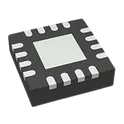
24 Uses0 StarsBQ25302RTER
Charger IC Lithium Ion/Polymer 16-WQFN (3x3) The BQ25302RTER is a highly integrated single-cell lithium-ion and lithium-polymer battery charger and power-path management IC developed by Texas Instruments. The device is optimized for compact portable and wearable applications requiring efficient battery charging from USB or low-voltage DC power sources. It integrates a switching charger, power-path management, system voltage regulation, battery FET, and protection features into a compact package suitable for space-constrained designs. The device supports programmable charging current and voltage regulation while maintaining high power conversion efficiency through its switching charger architecture. Integrated power-path management allows the system load to operate simultaneously while charging the battery, improving system reliability and startup behavior when the battery is deeply discharged or absent. The BQ25302RTER includes input current limiting, thermal regulation, battery temperature monitoring support, and multiple safety timers to ensure safe charging operation. The charger automatically manages preconditioning, fast charging, charge termination, and recharge cycles for lithium-based battery chemistries. The device also supports USB-compliant input operation and includes configurable features through an I2C-compatible interface. Its compact WQFN package and high integration level reduce external component count and PCB area, making it suitable for wearable electronics, portable medical devices, IoT products, handheld instruments, wireless accessories, and battery-powered embedded systems. Electrical Characteristics Input operating voltage supports standard USB and low-voltage DC input sources suitable for portable electronics applications. Supports single-cell lithium-ion and lithium-polymer battery charging with programmable charge voltage regulation. Integrated high-efficiency switching charger architecture minimizes power dissipation and improves thermal performance compared to linear chargers. Programmable fast-charge current supports flexible battery capacity scaling and application-specific charging requirements. Integrated power-path management allows simultaneous battery charging and system power delivery. Includes programmable input current limiting to support USB current compliance and adapter protection. Automatic charge cycle management includes precharge, fast charge, termination, and recharge operation. Supports battery temperature qualification using external thermistor monitoring. Integrated thermal regulation dynamically reduces charge current during high-temperature operating conditions. Low quiescent current operation improves standby battery life in portable products. Protection Features Integrated overvoltage protection for input power safety. Battery overcurrent and short-circuit protection enhance system reliability. Thermal shutdown circuitry protects the device during excessive junction temperature conditions. Safety timers monitor charging duration and prevent abnormal charging operation. Input current limiting protects USB ports and weak power adapters from overload conditions. Undervoltage lockout prevents improper operation during insufficient input supply conditions. Interface and Control I2C-compatible serial interface enables configuration and monitoring of charger parameters. Status reporting supports system-level battery and charging management. Programmable charging parameters allow firmware-controlled optimization for different battery chemistries and capacities. Interrupt and status functions support embedded power management architectures. Package Information Supplied in a compact WQFN package optimized for portable and space-constrained PCB layouts. Package design supports efficient thermal dissipation and automated surface-mount assembly processes. RoHS-compliant and suitable for modern lead-free manufacturing requirements. Typical Applications Wearable electronics Wireless earbuds and audio accessories Portable medical devices IoT and embedded battery-powered systems Handheld consumer electronics Portable instrumentation Rechargeable sensor modules Compact USB-powered battery charging systems #CommonPartsLibrary #IntegratedCircuit #PowerManagement #battery charger
4 Uses0 Stars