Resistors
A resistor is an electronic component that reduces the flow of current in a circuit. It is used to limit the amount of current flowing through a circuit, or to create a voltage drop in a circuit. One of the main uses of resistors is to protect components from too much current, which can cause damage or failure. Flux.ai is the world's largest community-driven public library of resistors, with footprints, symbols, datasheets, and simulation models. Whether you're an engineer working on a new design, or a student learning about electronics, Flux.ai is the go-to resource for all things resistor-related. With a wealth of information and resources available, you'll find everything you need to know about resistors, and more.
WP483GDT
Green 568nm LED Indication - Discrete 2.2V Radial The WP483GDT is a through-hole green light-emitting diode designed for general-purpose visual indication and low-power lighting applications. It emits a visible green wavelength when forward biased and is commonly used in status indicators, signal displays, and basic illumination circuits. The device is built with a durable epoxy lens package that provides mechanical protection and enhances light output visibility. It is suitable for use in a wide range of electronic systems, including consumer electronics, control panels, and embedded designs. Device Overview The component is a standard discrete LED with a two-lead configuration consisting of an anode and a cathode. It operates by converting electrical energy into light through electroluminescence. The emitted color falls within the green spectrum, making it appropriate for applications requiring clear visual signaling without excessive brightness or power consumption. Electrical Characteristics The LED operates under forward bias conditions, with a typical forward voltage in the range expected for green LEDs. It supports low current operation while maintaining consistent luminous output. Reverse voltage tolerance is limited, and proper polarity must be observed to prevent damage. Current-limiting resistors are required in circuit integration to ensure safe operation. Optical Characteristics The device produces a green light output with a defined luminous intensity and viewing angle based on its lens shape and internal structure. The epoxy lens may be diffused or clear, affecting the spread and focus of the emitted light. Brightness is dependent on the forward current applied. Mechanical Characteristics The LED is housed in a standard round through-hole package, compatible with typical PCB mounting. Leads are spaced to fit common board layouts and can be soldered directly. The epoxy body provides insulation and environmental protection while maintaining optical clarity. Thermal Considerations The device is designed for low power dissipation but should be operated within recommended limits to avoid overheating. Adequate spacing and proper current control help maintain thermal stability and prolong device lifespan. Applications The WP483GDT is suitable for indicator lights in electronic devices, status displays in control systems, educational and hobby electronics, and general-purpose signaling applications where green illumination is required. Compliance and Handling The component should be handled using standard ESD precautions. Storage and soldering conditions should follow typical LED handling practices to maintain performance and reliability. #commonpartslibrary #led #green
84 Uses0 StarsLMZ22010TZ/NOPB
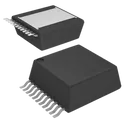
Non-Isolated PoL Module DC DC Converter 1 Output 0.8 ~ 6V 10A 6V - 20V Input The LMZ22010TZ/NOPB is a compact, high-efficiency step-down (buck) DC-DC power module from Texas Instruments. It integrates a switching regulator, power MOSFETs, inductor, and compensation components into a single package, simplifying power supply design. This module is capable of delivering up to 10A output current with excellent thermal performance and minimal external components. It is intended for high power density applications such as industrial systems, telecommunications equipment, and embedded processing platforms. Manufacturer Information Manufacturer: Texas Instruments Part Number: LMZ22010TZ/NOPB Product Type: DC-DC Buck Power Module Key Features Integrated power module with inductor and controller Output current up to 10A Wide input voltage range High efficiency operation Adjustable output voltage Built-in protection features (thermal shutdown, overcurrent protection) Power-good output and enable control Requires minimal external components Electrical Characteristics Parameter Value Input Voltage Range 6 V to 20 V Output Voltage Range 0.8 V to 6 V (adjustable) Output Current Up to 10 A Switching Frequency ~500 kHz Efficiency Up to ~95% Operating Temperature Range -40°C to +125°C Package Information Package Type: TO-PMOD (Power Module) Mounting Type: Surface Mount Integrated inductor and power components Optimized for thermal performance Pin Configuration (Typical) Pin Name Description VIN Input supply voltage VOUT Regulated output voltage GND Ground EN Enable input FB Feedback for output adjustment PGOOD Power-good indicator Typical Applications Industrial automation systems Telecom and networking equipment FPGA / DSP / processor power rails Embedded systems Point-of-load regulation Design Considerations Ensure proper PCB layout for heat dissipation Use appropriate input/output capacitors External resistors required to set output voltage Consider airflow for high-current operation #commonpartslibrary #powersupply #dcdc #converter
16 Uses0 StarsBQ24075TRGTR
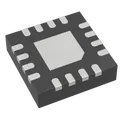
1.5A USB-Friendly Li-Ion Battery Charger and Power-Path Management IC with 4.2 VBAT The BQ24075TRGTR (from Texas Instruments) is a highly integrated single-cell Li-Ion / Li-Polymer linear battery charger IC with power-path management. It is designed for portable and space-constrained applications, allowing a device to be powered from a USB port or AC adapter while simultaneously charging the battery. The device integrates charging control, power-path management, and safety features into a compact package. A key feature is its Dynamic Power Path Management (DPPM), which ensures the system is powered even when the battery is low or absent, while intelligently managing charging current. Key Features Battery Charging Supports single-cell Li-Ion / Li-Polymer batteries Up to 1.5 A programmable charge current Three-phase charging: Pre-charge (conditioning) Constant current Constant voltage Fixed 4.2 V charge voltage Power Path Management Dynamic Power Path Management (DPPM): Powers system and charges battery simultaneously Prioritizes system load over charging Allows system operation even with: Deeply discharged battery No battery connected Input & Power Features Operates from: USB input (100 mA / 500 mA selectable) AC adapter Programmable input current limit up to 1.5 A Input voltage range: ~4.35 V to 6.4 V (28 V max rating) Input dynamic power management (VIN-DPM) prevents source overload Protection & Safety Thermal regulation and shutdown Over-voltage protection (OVP) Short-circuit and reverse current protection Battery temperature monitoring (NTC thermistor input) Battery disconnect (SYSOFF) feature Control & Status Standalone operation (no MCU required, resistor-programmable) Charge status outputs: Charging Charge complete Power good Physical Characteristics Package: 16-pin VQFN (3 mm × 3 mm) Operating temperature: –40°C to +85°C #commonpartslibrary #integratedcircuit #powermanagement #batterycharger
555 Uses0 Stars