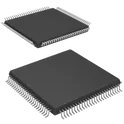
- ESP32-WROOM-32UE Transceiver; 802.11 b/g/n (Wi-Fi, WiFi, WLAN), Bluetooth® Smart Ready 4.x Dual Mode 2.4GHz Evaluation Board The ESP32-DEVKITC-32UE is a development board based on the ESP32 series SoC designed by Espressif. It is widely used for IoT, embedded systems, and wireless communication applications due to its built-in Wi-Fi and Bluetooth capabilities. Microcontroller: ESP32 dual-core Tensilica LX6 processor Wireless Connectivity: Wi-Fi (802.11 b/g/n) and Bluetooth (Classic + BLE) Flash Memory: Integrated SPI flash (varies by module version) Development Interface: USB-to-UART bridge for easy programming and debugging Power Supply: Typically powered via USB or external 5V input GPIO Pins: Multiple multifunction GPIOs supporting ADC, DAC, PWM, SPI, I2C, UART, etc. Supports deep sleep and ultra-low power modes Multiple peripheral interfaces (SPI, I2C, UART, SDMMC, PWM) Compatible with ESP-IDF, Arduino IDE, and MicroPython Built-in antenna (UE variant uses U.FL or external antenna option depending on module design) IoT devices and smart home systems Wireless sensor networks Data logging and monitoring systems Robotics and automation Embedded control systems #commonpartslibrary #developmentboard #esp32 #wroom
848 Uses
6 Stars
JST PH Connector Header Through Hole 3 position 0.079" (2.00mm) The B3B-PH-K-S(LF)(SN) is a 3-position, 2.0 mm pitch, through-hole (THT) male header from the JST PH series, designed for wire-to-board connections. It is a top-entry, shrouded connector that mates with JST PH crimp housings, commonly used for compact internal wiring in electronic devices such as consumer electronics, battery connections, and embedded systems. This connector is optimized for high-density PCB layouts, offering a reliable and secure connection with a locking mechanism and low contact resistance. Key Features Mechanical 3 positions (3-pin) 2.0 mm pitch (compact spacing) Through-hole mounting (THT) Top-entry / vertical orientation Shrouded header (prevents misalignment) Detent lock / friction lock for secure mating Electrical Rated current: up to 2A per pin Rated voltage: up to 100V AC/DC Low contact resistance (~10 mΩ max initial) High insulation resistance (≥1000 MΩ) Environmental Operating temperature: -25°C to +85°C Design & Reliability Fully shrouded design → protects pins and ensures proper insertion Reliable contact structure with dimpled contacts for stable connection PCB retention mechanism → improves mechanical stability Tin-plated contacts for good conductivity and solderability Application Use Commonly used for: Battery connectors Sensor modules Embedded systems (e.g., microcontroller boards) Consumer electronics internal wiring Power + signal low-current connections #commonpartslibrary #connector #header #tht
876 Uses
4 Stars
Motor Driver Power MOSFET Parallel 24-SSOP The TB6612FNG,C,8,EL is a dual H-bridge motor driver IC developed by Toshiba. It is designed to control the speed and direction of two DC motors or one bipolar stepper motor. This device uses low ON-resistance MOSFETs for efficient operation, resulting in lower heat generation and higher efficiency compared to traditional bipolar transistor-based drivers. It is widely used in robotics, motor control applications, and embedded systems. Key Features Motor Drive Capability Dual H-bridge driver (can drive 2 DC motors or 1 stepper motor) Output current: 1.2 A (continuous) per channel 3.2 A (peak) per channel Wide motor supply voltage range: 2.5 V to 13.5 V Logic & Control Logic supply voltage (VCC): 2.7 V to 5.5 V Compatible with 3.3 V and 5 V microcontrollers (e.g., ESP32, Arduino) Control inputs: IN1, IN2 (per channel for direction control) PWM input for speed control STBY (standby mode for power saving) Efficiency & Performance Low ON-resistance MOSFETs: Reduces power loss and heat High efficiency compared to L298N-type drivers Built-in shoot-through protection Protection Features Thermal shutdown protection Overcurrent protection Under voltage lockout (UVLO) #Commonpartslibrary #Motordriver #Integratedcircuit #TB6612
76.8k Uses
3 Stars
The Raspberry Pi Pico 2 is now equipped with the RP2350, a cutting-edge, high-performance microcontroller designed with enhanced security and versatility in mind. Every element of its design has been upgraded, from the advanced CPU cores to the innovative PIO (Programmable I/O) interfacing subsystem. #raspberrypi #newpico #pipico2 #pipico #rp2350 #shield
242 Uses
3 Stars
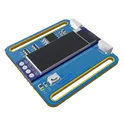
This module is a minimalist Arduino Watch design. Consisting of a Microchip ATTINY85-20SU microcontroller, an OLED display for visual output, two user buttons for interface, and a Li-ion Battery for power. The schematic also includes graphic user interface with ISP for programming and minimal passive components for functionality. #project #Template #projectTemplate #reusable #module #simple-embedded #microchip #arduino #sublayout
10 Uses
3 Stars
The Wio Terminal is a SAMD51-based microcontroller with Wireless Connectivity powered by Realtek RTL8720DN that’s compatible with Arduino and MicroPython. Currently, wireless connectivity is only supported by Arduino. It runs at 120MHz (Boost up to 200MHz), 4MB External Flash and 192KB RAM. It supports both Bluetooth and Wi-Fi providing backbone for IoT projects. This repository contains all the necessary documentation you need to manufacture Wio Terminal: https://github.com/Seeed-Studio/OSHW-WioTerminal
10 Uses
3 Stars