Thermistors
A thermistor is a type of resistor that changes resistance with temperature. It is often used in temperature sensing and control applications because of its high sensitivity and fast response time. Thermistors can be found in a variety of devices, including thermostats, automotive engines, and medical equipment. They are also used in industrial processes to monitor and control temperature. Flux.ai has the world's largest community-driven public library of thermistors, including footprints, symbols, datasheets, and simulation models. This extensive collection makes it easy for designers and engineers to find the right thermistor for their specific needs. Whether you are working on a small consumer device or a large industrial project, Flux.ai's library has the resources you need to get the job done.
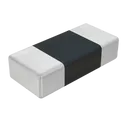
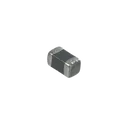
NCP15XH103F03RC
NTC Thermistor 10k 0402 (1005 Metric) NTC thermistor designed for temperature sensing and compensation in electronic circuits. It provides a 10 kΩ nominal resistance at 25°C, ±1% resistance tolerance, and a B constant of 3380 K (25/50°C). The device is housed in a 0402 (1005 metric) SMD package with an operating temperature range of −40°C to +125°C. #TemperatureSensor #TemperatureCompensation #10kOhm #3380K #0402 #SMD #MurataElectronics #CommonPartsLibrary #Sensor #Transducer #NTC-Thermistor #NCP15XH
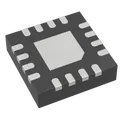
107 Uses1 StarsBQ24075TRGTR
1.5A USB-Friendly Li-Ion Battery Charger and Power-Path Management IC with 4.2 VBAT The BQ24075TRGTR (from Texas Instruments) is a highly integrated single-cell Li-Ion / Li-Polymer linear battery charger IC with power-path management. It is designed for portable and space-constrained applications, allowing a device to be powered from a USB port or AC adapter while simultaneously charging the battery. The device integrates charging control, power-path management, and safety features into a compact package. A key feature is its Dynamic Power Path Management (DPPM), which ensures the system is powered even when the battery is low or absent, while intelligently managing charging current. Key Features Battery Charging Supports single-cell Li-Ion / Li-Polymer batteries Up to 1.5 A programmable charge current Three-phase charging: Pre-charge (conditioning) Constant current Constant voltage Fixed 4.2 V charge voltage Power Path Management Dynamic Power Path Management (DPPM): Powers system and charges battery simultaneously Prioritizes system load over charging Allows system operation even with: Deeply discharged battery No battery connected Input & Power Features Operates from: USB input (100 mA / 500 mA selectable) AC adapter Programmable input current limit up to 1.5 A Input voltage range: ~4.35 V to 6.4 V (28 V max rating) Input dynamic power management (VIN-DPM) prevents source overload Protection & Safety Thermal regulation and shutdown Over-voltage protection (OVP) Short-circuit and reverse current protection Battery temperature monitoring (NTC thermistor input) Battery disconnect (SYSOFF) feature Control & Status Standalone operation (no MCU required, resistor-programmable) Charge status outputs: Charging Charge complete Power good Physical Characteristics Package: 16-pin VQFN (3 mm × 3 mm) Operating temperature: –40°C to +85°C #commonpartslibrary #integratedcircuit #powermanagement #batterycharger
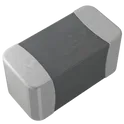
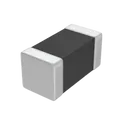
657 Uses0 StarsNCP18XH103F03RB
NTC Thermistor 10k 0603 (1608 Metric) NTC Thermistor for temperature sensing and compensation applications, the Murata NCP18XH103F03RB is a surface-mount chip thermistor with a nominal resistance of 10 kΩ at 25°C, B constant of 3380 K, and 0603 (1608M) size package. It provides temperature-dependent resistance characteristics for use in electronic temperature detection and control circuits. #NTCThermistor #Thermistor #TemperatureSensor #MurataElectronics #ChipComponent #PCBComponent #TemperatureCompensation #commonpartslibrary #ntc #thermistor #sensor #temperature #transducer
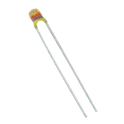
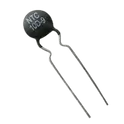
0 Uses0 Stars10D-9
The 10D-9 is an NTC (Negative Temperature Coefficient) thermistor primarily used as an inrush current limiter in power supply circuits. It has a nominal resistance of 10 Ω at 25°C and a disk diameter of approximately 9 mm. When power is first applied, the thermistor's high resistance limits the surge current. As it heats up during normal operation, its resistance decreases significantly, allowing current to flow with minimal power loss. Key Features 10 Ω nominal resistance at 25°C. NTC characteristic – resistance decreases as temperature increases. Inrush current suppression for protecting power supplies and electronic equipment from startup current spikes. Low residual resistance after warm-up, minimizing power loss during normal operation. High reliability and long-term stability. Radial leaded package with epoxy/silicone-coated thermistor disk. Typical operating temperature range up to -40°C to +175°C (manufacturer-dependent). Typical Applications Switching Mode Power Supplies (SMPS) AC/DC adapters Battery chargers LED drivers UPS systems Motor drives and controllers Monitors, TVs, and PC power supplies Electronic ballasts and lighting equipment #CommonPartsLibrary #Thermistor
29 Uses0 Stars10KF3950
10KF3950 is an NTC (Negative Temperature Coefficient) thermistor with a nominal resistance of 10 kΩ at 25°C and a B-value of 3950 K. Its resistance decreases as temperature increases, making it suitable for temperature sensing, compensation, monitoring, and control applications in electronic circuits. It is commonly available in compact SMD packages such as 0402, 0603, and 0805. Key Features Resistance at 25°C: 10 kΩ B Constant (25/50°C): 3950 K ±1% Resistance Tolerance: ±1% Operating Temperature Range: -40°C to +125°C Rated Power: 100 mW Fast thermal response due to small chip size High sensitivity to temperature changes RoHS compliant Available in 0402, 0603, and 0805 SMD packages for space-constrained designs Typical Applications Battery pack temperature monitoring Power supply thermal protection Consumer electronics Industrial control systems Automotive electronics HVAC equipment Smart home devices Temperature compensation circuits #CommonPartsLibrary #thermistor #NTC
244 Uses0 Stars



Page 1 of 2
Next