Switches
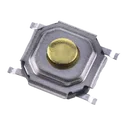
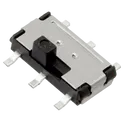
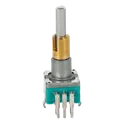
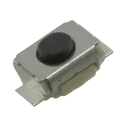
A switch is a device that allows electricity to flow through a circuit by completing or interrupting the connection. It is a common component in electrical and electronic systems and is used in a variety of applications, such as controlling the flow of electricity in a circuit, turning devices on and off, and routing electrical signals. One of the primary use cases for switches is to control the flow of electricity in a circuit. This can be done by manually flipping the switch or by using a control mechanism, such as a timer or a sensor. Another common use for switches is to turn devices on and off. This can be done using a switch that is built into the device or by using a separate switch that is connected to the device. In addition to these basic use cases, switches can also be used to route electrical signals. For example, a switch can be used to route a signal from one device to another or to direct a signal to a specific circuit or component. If you're looking for a wide variety of switches for your projects, flux.ai has the world's largest community-driven public library of them. The library includes footprints, symbols, datasheets, and simulation models for a wide range of switches, making it easy to find the right switch for your needs.
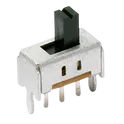
OS102011MS2QN1
Slide Switch, SPDT, On-On, Through Hole, OS Series, 100mA # OS102011MS2QN1 ## General Description The OS102011MS2QN1 is a miniature slide switch manufactured by C&K, designed for low-power signal switching and control applications in electronic equipment. The switch features a compact mechanical design, reliable contact performance, and through-hole mounting configuration, making it suitable for embedded systems, industrial controls, instrumentation, telecommunications equipment, consumer electronics, and portable devices. Its robust construction ensures dependable operation throughout repeated switching cycles while maintaining stable electrical performance. The device is commonly utilized for mode selection, power control, configuration settings, and user-interface functions within electronic assemblies. ## Key Features ### Mechanical Characteristics * Miniature slide switch construction * Through-hole PCB mounting * Compact form factor * Durable actuator mechanism * Positive switching action * Designed for repeated mechanical operation ### Switching Characteristics * Maintained-contact operation * Reliable position retention * Low-force actuation * Stable contact engagement * Suitable for signal and control switching applications ### Electrical Characteristics * Low contact resistance * Reliable signal transmission * Stable switching performance * Suitable for low-current and low-voltage circuits * Consistent electrical operation throughout service life ### Contact System * High-reliability contact materials * Corrosion-resistant contact surfaces * Long operational durability * Dependable electrical continuity ### Material Construction * High-strength thermoplastic housing * Industrial-grade metallic contacts * Durable actuator assembly * RoHS-compliant materials ### Environmental Characteristics * Suitable for commercial and industrial electronic equipment * Resistant to mechanical wear * Reliable performance under normal operating environments * Designed for long-term service reliability ### Application Areas * Embedded Systems * Industrial Control Equipment * Consumer Electronics * Test and Measurement Instruments * Communication Devices * Medical Electronics * Power Control Circuits * User Interface Controls * Configuration and Mode Selection Functions * Electronic Development Platforms ### Compliance * RoHS Compliant * Lead-Free Compatible * Industrial-Grade Switching Component ## Manufacturer C&K ## Product Family OS Series Miniature Slide Switches #OS102011MS2QN1 #CKSwitches #SlideSwitch #MiniatureSwitch #ElectronicSwitch #PCBSwitch #EmbeddedSystems #IndustrialElectronics #ControlSystems #ConsumerElectronics #HardwareDesign #ElectronicsEngineering #SignalSwitching #PCBAssembly #ElectronicComponents #commonpartslibrary #switch #slide #spdt
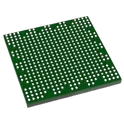
618 Uses1 StarsSTM32MP257FAI3
MPU with Dual Arm Cortex-A35 @1.5GHz, Cortex-M33 @400MHz, 3xEthernet (2+1 switch), 3xFD-CAN, LVDS/DSI, H.264, 3D GPU, AI/NN, Secure Boot, Cryptography, DRAM enc/dec, PKA The STM32MP257FAI3 is a high-performance microprocessor from STMicroelectronics' STM32MP2 series, integrating dual 64-bit Arm Cortex-A35 cores running at up to 1.5 GHz, a Cortex-M33 real-time core, and a Cortex-M0+ low-power management core. It is designed for advanced industrial, edge AI, machine vision, HMI, IoT gateway, and multimedia applications requiring Linux-class processing alongside deterministic real-time control. The device features AI acceleration, 3D graphics, video encoding/decoding, extensive connectivity, advanced security, and support for high-speed external memory. Key Features Dual-core 64-bit Arm Cortex-A35 CPU operating up to 1.5 GHz Arm Cortex-M33 real-time processor with TrustZone and FPU support Arm Cortex-M0+ low-power coprocessor for autonomous operation Integrated NPU (Neural Processing Unit) delivering up to 1.35 TOPS AI performance 3D GPU and hardware video encoder/decoder acceleration Supports DDR3L, DDR4, and LPDDR4 external memory up to 4 GB Multiple display interfaces including MIPI-DSI, LVDS, and parallel RGB USB 2.0 Host and USB 3.0 Dual-Role with embedded PHYs PCI Express interface with integrated 5 Gbps PHY Up to three Gigabit Ethernet interfaces with TSN and IEEE 1588 support Extensive connectivity: I2C, I3C, SPI, UART, USART, CAN FD, SDMMC, SAI, and SPDIF Hardware cryptographic accelerators including AES, SHA, RSA, ECC, PKA, and True RNG Secure boot, TrustZone security, tamper detection, and resource isolation framework Multiple low-power operating modes for energy-efficient designs Available in fine-pitch BGA packages for high-density embedded systems. #STM32MP257FAI3 #STM32MP2 #STMicroelectronics #CortexA35 #CortexM33 #EdgeAI #EmbeddedLinux #IndustrialAutomation #MachineVision #HMI #IoTGateway #MPU #PCIe #USB3 #GigabitEthernet #TrustZone #EmbeddedSystems #ArtificialIntelligence #LinuxProcessor #IndustrialIoT #CommonPartsLibrary #IntegratedCircuit #Microprocessor #STM32MP2
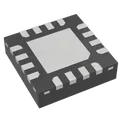
35 Uses1 StarsHUSB238A-BB001-QN16R
The HUSB238A is a highly integratedstand-aloneUSB Type-C® and Power Delivery (PD) Sinkcontroller.The HUSB238A integrates the CClogic, USBPDprotocol and the legacy protocols. The HUSB238A can run in I2C mode andGPIOmode.In I2C mode, an I2C master can access theHUSB238Ato configure settings, read back status andperformadvanced functions such as DRSwap, VDMmessages. The HUSB238A supports APDO, maximum48 V/5 A EPR FPDO and EPR AVSin I2Cmode. While in GPIO mode, the configuration is achievedviathe setting pins. The HUSB238A can beconfiguredtosupport maximum 28 V/3.25 A PDOviaVSETandISET pins, only two resistors are usedtoset thevoltage and current. The ultra-low operation current of theHUSB238Ahelps the system to reduce the total power dissipationand suitable for a battery application. The HUSB238A is available in QFN3 mmx3mm-16Lpackage. Fully Autonomous USB Type-C® and USB PD Sink Controller USB Type-C® Specification Reversion 2.1 and USB PD Specification Reversion 3.1 Supported Maximum 48 V/5 A PDO Supported – GPIO Mode: Maximum 28 V/3.25 A EPR FPDO and EPR AVS – I2C Mode: Maximum 48 V/5 A EPR FPDO, EPR AVS and SPR PPS Automatic Legacy Protocols Detection Including BC1.2, Divider 3, QC2.0 Support SOP’ Detection Typical Low Power Operation: IVDD< 75 μA Integrated VBUS Switch Driver Dead Battery Support VBUS Over-voltage Protection (OVP) and Under-voltage Protection (UVP) Over-temperature Protection (OTP) with Programmable Thresholds 2 kV HBM ESD Rating for USB IO Pins Small Package, 16 Lead QFN (3 mm x 3 mm) #CommonPartsLibrary #IntegratedCircuit #PowerManagement
122 Uses1 Stars