Sensors
A sensor is a device that detects and measures a physical property or phenomenon, such as temperature, pressure, or motion. Sensors are used in a wide range of applications, including industrial automation, environmental monitoring, healthcare, and transportation. Flux.ai is the world's largest community-driven public library of sensors, with footprints, symbols, datasheets, and simulation models. Our extensive collection of sensors covers a variety of use cases and industries, making it easy to find the perfect sensor for your application. Whether you need a temperature sensor for HVAC systems, a pressure sensor for automotive applications, or a motion sensor for security systems, Flux.ai has you covered. Our comprehensive library of sensors is constantly updated with the latest and most innovative technologies, ensuring that you have access to the best sensors available. So, if you need a sensor for your next project, be sure to check out Flux.ai and take advantage of our extensive collection and expert support.
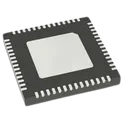
ESP32-S3FH4R2
2.4GHz Wi-Fi+Bluetooth LE SoC ESP32-S3FH4R2 is a highly integrated low-power Wi-Fi and Bluetooth LE System-on-Chip (SoC) from Espressif Systems. It is based on a dual-core Xtensa® LX7 processor running at up to 240 MHz and is designed for IoT, smart home, industrial control, AIoT, audio processing, and embedded applications. The ESP32-S3FH4R2 variant includes 4 MB of in-package Quad SPI Flash and 2 MB of in-package Quad SPI PSRAM, reducing external component count and simplifying PCB design. Key Features Dual-core Xtensa® LX7 CPU Up to 240 MHz operating frequency 32-bit architecture with floating-point unit (FPU) SIMD instructions for AI and signal-processing workloads Integrated Memory 4 MB in-package Flash 2 MB in-package PSRAM 512 KB on-chip SRAM 384 KB ROM Additional RTC memory for low-power operation Wireless Connectivity IEEE 802.11 b/g/n 2.4 GHz Wi-Fi Bluetooth® 5 Low Energy (LE) Long-range and low-power wireless communication support Rich Peripheral Set Up to 45 programmable GPIOs USB OTG and USB Serial/JTAG SPI, I²C, I²S, UART, SDIO TWAI® (CAN 2.0 compatible) Camera interface LCD interface PWM, pulse counter, RMT, DMA controller Analog Features Two 12-bit SAR ADCs Temperature sensor 14 capacitive touch sensing inputs Security Features Secure Boot Flash Encryption AES, SHA, RSA, HMAC hardware accelerators True Random Number Generator (RNG) Digital Signature peripheral Low-Power Operation Multiple power-saving modes ULP-RISC-V coprocessor ULP-FSM coprocessor Deep-sleep support with RTC memory retention
31 Uses0 Stars2.54-2*4P立贴针
CONN HEADER 8POS 2.54mm DUAL ROW SMD The 2.54-2×4P is a generic 8-pin dual-row connector/header with a 2.54 mm (0.1 inch) pitch, commonly used for board-to-board, wire-to-board, and programming/debug interfaces in electronic circuits. The designation 2×4P indicates two rows of four pins, providing a total of eight electrical connections in a compact arrangement. This type of connector is widely used in embedded systems, development boards, industrial control equipment, consumer electronics, and prototyping applications due to its standard pitch and broad compatibility with jumper wires, IDC cables, and mating sockets. Key Features 2.54 mm standard pitch (0.1 inch industry standard) 2×4 pin configuration (8 total contacts) Available in through-hole (THT) and sometimes surface-mount (SMT) versions Supports board-to-board and wire-to-board connections Compatible with standard jumper wires and ribbon cable connectors Compact dual-row design for higher pin density Typically constructed with gold-plated or tin-plated contacts for reliable electrical performance Suitable for signal, control, and low-power applications Commonly used for programming, debugging, communication interfaces, and expansion headers Available in straight (vertical) or right-angle orientations depending on manufacturer Typical Applications Microcontroller and development boards ISP/JTAG/SWD programming headers Sensor and peripheral connections Industrial control systems Prototyping and breadboard-compatible designs Communication interfaces and expansion ports #CommonPartsLibrary #Connector
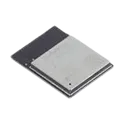
114 Uses0 StarsESP32-S3-MINI-1-N8
ESP32-S3-MINI-1-N8 is a compact, low-power Wi-Fi and Bluetooth module from Espressif Systems based on the ESP32-S3 SoC. It integrates a dual-core Xtensa LX7 processor, 8 MB flash memory, crystal oscillator, RF matching circuitry, and a PCB antenna in a small SMD package, making it ideal for IoT devices, smart home products, industrial automation, HMI applications, AIoT edge devices, and USB-connected embedded systems. Key Features Dual-core 32-bit Xtensa LX7 CPU Up to 240 MHz operating frequency Includes single-precision floating-point unit (FPU) for enhanced processing performance. Integrated Memory 8 MB Quad SPI Flash (N8 variant) 512 KB SRAM 384 KB ROM 16 KB RTC SRAM. Wireless Connectivity 2.4 GHz Wi-Fi 4 (802.11 b/g/n) Data rates up to 150 Mbps Bluetooth 5 LE with Bluetooth Mesh support Simultaneous Wi-Fi and Bluetooth operation through an integrated coexistence mechanism. Rich Peripheral Set Up to 39 GPIOs USB 2.0 OTG USB Serial/JTAG SPI, I²C, I²S, UART PWM, MCPWM SDIO Host ADC Touch sensing Temperature sensor TWAI® (CAN 2.0 compatible) Timers and watchdogs. Integrated Components On-board 40 MHz crystal oscillator PCB antenna RF matching network Compact certified module design. Operating Conditions Supply voltage: 3.0 V to 3.6 V Operating temperature: −40°C to +85°C. Compliance RoHS and REACH compliant RF-certified module for simplified product development. #RF_transceiver #Module #Esp32
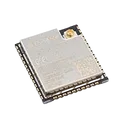
768 Uses0 StarsESP32-WROOM-32UE-N16
2.4GHz -98dBm SMD,19.2x18mm RF Transceiver Modules and Modems RoHS The ESP32-WROOM-32UE-N16 is a 2.4 GHz wireless MCU module built around the ESP32 SoC. It combines a dual-core processor, integrated Wi-Fi (802.11 b/g/n) and Bluetooth 4.2 (Classic + BLE), along with rich peripherals. The “UE” variant specifically uses a U.FL / IPEX connector for an external antenna, making it ideal for applications that require better RF performance or flexible antenna placement (e.g., enclosed products or long-range communication). The “N16” indicates 16 MB external flash memory, suitable for large firmware, OTA updates, and data-heavy applications. Processing Dual-core Xtensa LX6 32-bit CPU Clock speed up to 240 MHz Memory 16 MB Flash (N16 variant) ~520 KB SRAM + 448 KB ROM Connectivity Wi-Fi: 802.11 b/g/n (up to 150 Mbps) Bluetooth: v4.2 (BR/EDR + BLE) Frequency: 2.4 GHz band Antenna External antenna via U.FL connector Better range and flexibility vs PCB antenna Interfaces / Peripherals GPIO (≈26 usable pins) UART, SPI, I2C, I2S, SDIO ADC, DAC PWM (LED & motor control) Capacitive touch sensing Security Hardware encryption: AES, SHA, RSA Secure boot & flash encryption support Power Operating voltage: 3.0V – 3.6V (typ. 3.3V) Multiple low-power modes for battery applications Environmental Operating temperature: -40°C to +85°C Physical Surface-mount module (~38 pins / 52 pads depending on reference) Compact and RF-shielded design Typical Applications Smart home devices (IoT) Industrial automation Wireless sensors and data loggers Wearables and consumer electronics Remote monitoring systems #Module #ESP32
51 Uses0 Stars