Microcontrollers
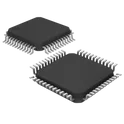
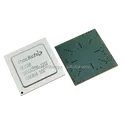
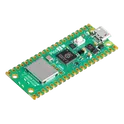
A microcontroller is a small, low-cost computer-on-a-chip that can be used to control electronic devices and systems. It consists of a central processing unit (CPU), memory, input/output (I/O) ports, and other peripherals integrated onto a single chip. Microcontrollers are commonly used in a wide range of applications, including automotive systems, home appliances, industrial automation, and consumer electronics. One of the key benefits of microcontrollers is their ability to interact with their environment through sensors and actuators, making them well-suited for use in embedded systems. These systems are often found in devices that require real-time control or data processing, such as medical equipment, aircraft, and factory automation systems. Flux.ai is home to the world's largest community-driven public library of microcontrollers, with footprints, symbols, datasheets, and simulation models for a wide range of devices. Whether you're a professional engineer looking for a specific microcontroller for your next project, or a hobbyist exploring the possibilities of microcontroller-based systems, Flux.ai has the resources you need to get started.
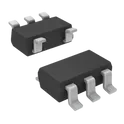
AP2112K-3.3TRG1
Linear Voltage Regulator IC Positive Fixed 1 Output 600mA SOT-25 3.3V LDO AP2112K-3.3 The AP2112K-3.3TRG1 is a low dropout (LDO) linear voltage regulator designed to provide a stable 3.3V output from a higher input voltage. It is optimized for low noise, high power supply rejection ratio (PSRR), and low quiescent current, making it suitable for battery-powered and noise-sensitive applications. The device features current limiting and thermal shutdown protection, ensuring reliable operation under fault conditions. It is commonly used in portable electronics, RF modules, microcontroller power supplies, and other low-power systems. Key Features Fixed output voltage: 3.3V Output current: up to 600 mA Low dropout voltage: ~250 mV at 300 mA load High PSRR: up to 70 dB at 1 kHz Low quiescent current: typically 55 µA Stable with low ESR ceramic capacitors Built-in overcurrent protection Thermal shutdown protection Fast transient response Absolute Maximum Ratings Input Voltage (VIN): up to 6.5 V Output Current: Internally limited Operating Junction Temperature: -40°C to +125°C Storage Temperature: -65°C to +150°C Electrical Characteristics (Typical values unless otherwise specified) Output Voltage Accuracy: ±2% Dropout Voltage: 250 mV @ 300 mA 400 mV @ 600 mA Line Regulation: 0.05%/V Load Regulation: 0.2% Quiescent Current: 55 µA Shutdown Current: <1 µA PSRR: 70 dB @ 1 kHz 45 dB @ 10 kHz Pin Configuration (SOT-23-5 / SC-70-5) VIN – Input voltage GND – Ground EN – Enable (active high) NC – No connection VOUT – Regulated output (3.3V) Package Information Package Type: SOT-23-5 (TRG1 suffix indicates tape & reel) Mounting: Surface mount Small footprint suitable for compact PCB layouts Typical Applications Battery-powered devices Wireless modules (Wi-Fi, Bluetooth, RF) Microcontroller and FPGA power supplies Portable consumer electronics Sensor and analog circuits requiring low noise Compliance & Reliability RoHS compliant Lead-free package Designed for high reliability and long operational life #CommonPartsLibrary #IntegratedCircuit #PowerManagement #LinearRegulator #VoltageRegulator
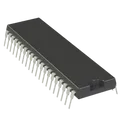
3.5k Uses2 StarsPIC16F877A-I/P
PIC PIC® 16F Microcontroller IC 8-Bit 20MHz 14KB (8K x 14) FLASH 40-PDIP The PIC16F877A-I/P is a high-performance 8-bit microcontroller from Microchip Technology, based on a Harvard architecture with separate program and data memory buses. It is designed for a wide range of embedded applications requiring reliable processing, multiple communication interfaces, and analog capability. The device integrates Flash program memory, EEPROM data storage, and numerous peripherals including ADC, timers, serial communication modules, and PWM functions. Packaged in a 40-pin PDIP form factor, it is widely used in industrial automation, consumer electronics, and educational development systems. Core Features 8-bit PIC microcontroller architecture Harvard architecture with RISC instruction set Operating frequency up to 20 MHz Single-cycle instruction execution (except branches) Memory Program Memory: 8K words (Flash) Data Memory (RAM): 368 bytes EEPROM Data Memory: 256 bytes I/O Features Up to 33 programmable I/O pins Multiple input/output ports (PORTA, PORTB, PORTC, PORTD, PORTE) High current sink/source capability on selected pins Analog Features 10-bit Analog-to-Digital Converter (ADC) Up to 8 analog input channels Programmable voltage reference Timers and Control Three timers (Timer0, Timer1, Timer2) Capture/Compare/PWM (CCP) modules Watchdog Timer (WDT) Power-on Reset (POR) and Brown-out Reset (BOR) Communication Interfaces USART (Universal Synchronous/Asynchronous Receiver/Transmitter) SPI (Serial Peripheral Interface) I²C (Inter-Integrated Circuit) via MSSP module Electrical Characteristics Operating Voltage: 4.0V to 5.5V Operating Temperature Range: -40°C to +85°C (Industrial grade) Low power consumption modes available Package Information Package Type: PDIP (Plastic Dual Inline Package) Pin Count: 40 pins Mounting Type: Through-hole Applications Industrial control systems Embedded automation Consumer electronics Sensor interfacing and data acquisition Educational and prototyping platforms #commonpartslibrary #integratedcircuit #microcontroller
873 Uses2 Stars
RP2040-ZERO
Through hole footprint. Waveshare Electronics 5.35mm Package None https://www.snapeda.com/parts/RP2040-ZERO/Waveshare+Electronics/view-part/?ref=eda Manufacturer Recommendations NA https://www.snapeda.com/parts/RP2040-ZERO/Waveshare+Electronics/view-part/?ref=snap RP2040-ZERO Low-Cost, High-Performance Pico-Like MCU Board Based On Raspberry Pi Microcontroller RP2040 Waveshare
152 Uses2 StarsRaspberry Pi Pico 2 W Shield SMD
Raspberry Pi Pico 2 W features 2.4GHz 802.11n wireless LAN and Bluetooth 5.2, giving you even more flexibility in your IoT or smart product designs and expanding the possibilities for your projects. And equipped with the RP2350, a cutting-edge, high-performance microcontroller designed with enhanced security and versatility in mind. #raspberrypi #newpico #pipico2 #pipico #rp2350 #shield #pipico2W #wifi #bluetooth
429 Uses2 StarsRP2350B
The RP2350, developed by Raspberry Pi Ltd, is a high-performance microcontroller designed to cater to a broad range of applications requiring efficient power management, advanced security features, and versatile IO options. This microcontroller stands out with its dual-core architecture, featuring either Cortex-M33 or Hazard3 processors operating at up to 150 MHz, ensuring robust performance for complex applications. It boasts a substantial 520 KB of on-chip SRAM distributed across 10 independent banks, enhancing parallel data processing capabilities. Additionally, the RP2350 supports up to 16 MB of external QSPI flash/PSRAM for extensive program and data storage, further expandable via an optional second chip-select. A notable feature of the RP2350 is its integrated on-chip switched-mode power supply, designed to generate core voltage efficiently, complemented by a low-quiescent-current LDO mode for reduced power consumption in sleep states. Security is a paramount feature of the RP2350, offering options for boot signing with key fingerprint in OTP, hardware mitigations against fault injection attacks, and a hardware SHA-256 accelerator for cryptographic operations. The microcontroller is also equipped with a comprehensive set of peripherals, including USB 1.1 controller and PHY, multiple UARTs, SPI, and I2C controllers, 24 PWM channels, and 12 programmable IO (PIO) state machines, providing extensive interface capabilities. The RP2350 is available in QFN-60 and QFN-80 packages, with or without flash-in-package options, catering to various design requirements and application needs.
55 Uses2 StarsRP2350A
The RP2350, developed by Raspberry Pi Ltd, represents a significant advancement in the field of microcontrollers, building upon the foundation laid by its predecessor, the RP2040. This component is designed to cater to a wide range of applications requiring dual-core processing capabilities, with the option to switch between Dual Cortex-M33 or Hazard3 processors operating at up to 150 MHz. It features an extensive 520 kB of on-chip SRAM distributed across 10 independent banks, alongside 8 KB of one-time-programmable (OTP) storage. External memory interfaces are well-supported, with provisions for up to 16 MB of external QSPI flash/PSRAM, and an additional 16 MB accessible via an optional second chip-select, facilitating extensive code and data storage options. Security features are robust, including options for boot signing enforced by on-chip mask ROM, with key fingerprints stored in OTP, and hardware mitigations against fault injection attacks. The RP2350 also boasts a comprehensive set of peripherals, including 2x UARTs, 2x SPI controllers, 2x I2C controllers, 24x PWM channels, and a USB 1.1 controller with PHY for host and device support, among others. Programmable IO (PIO) state machines enhance its flexibility, enabling the implementation of custom peripherals. For developers, the RP2350 offers low-power operation modes and a built-in boot ROM that supports direct boot from external flash or OTP, serial boot from USB or UART, and secure boot with code signature enforcement. The device is available in QFN-60 (7x7 mm) and QFN-80 (10x10 mm) packages, with or without built-in flash, catering to diverse application requirements. This microcontroller is a compelling choice for sophisticated projects that demand high performance, extensive memory and peripheral support, and advanced security features.
62 Uses2 Stars