Memory
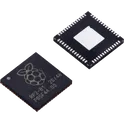
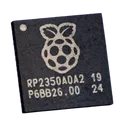
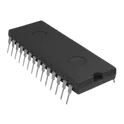
A memory IC, or integrated circuit, is a type of electronic device that stores and retrieves data. It is used in a wide range of electronic devices, including computers, smartphones, and other electronic devices. Memory ICs come in a variety of types, including DRAM, SRAM, and Flash memory, and are used for different purposes depending on the device and application. One of the primary use cases for memory ICs is in computer systems, where they are used to store data and instructions that are accessed by the processor. Memory ICs are also used in a variety of other electronic devices, such as digital cameras, MP3 players, and mobile phones, to store data and enable various functions. Flux.ai has the world's largest community-driven public library of memory ICs, with a wide variety of footprints, symbols, datasheets, and simulation models available. This extensive library allows users to easily access and use memory ICs in their projects, making it an invaluable resource for engineers and developers.
CH32X035F7P6
The CH32X035/X033 series, developed by WCH, encompasses industrial-grade microcontrollers based on the QingKe RISC-V core. These microcontrollers, including models such as the CH32X035R8T6, CH32X035C8T6, CH32X035G8U6, CH32X035G8R6, CH32X035F8U6, CH32X035F7P6, and CH32X033F8P6, are equipped with integrated USB and PD PHY, supporting USB Host and Device functionalities, as well as PDUSB and Type-C fast charging capabilities. The series features a programmable protocol I/O controller, two groups of operational amplifiers (OPA), three groups of comparators (CMP), four USARTs, I2C, SPI, multiple timers, a 12-bit ADC, and 14-channel capacitive touch-key interfaces, among other peripherals. These microcontrollers offer a comprehensive suite of features, including a 32-bit QingKe RISC-V4C core with support for the RV32IMAC instruction set, fast interrupt handling, and low-power modes, making them suitable for a wide range of embedded applications. With a robust memory architecture comprising 20KB SRAM and 62KB CodeFlash, alongside various power management and security features, the CH32X035/X033 series is designed to deliver high performance and flexibility for industrial applications.
5 Uses1 Stars