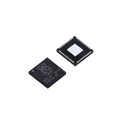
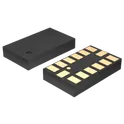
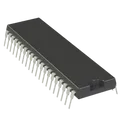
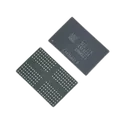
802.15.4 Bluetooth, Wi-Fi Bluetooth v5.0, ZigBee® Transceiver Module 2.4GHz PCB Trace Surface Mount The ESP32-C6-WROOM-1-N4 is based on the ESP32-C6 single-core RISC-V microcontroller, integrating advanced wireless standards and secure connectivity in a small module format. It is designed for next-generation IoT devices that require Wi-Fi 6 efficiency, mesh networking, and Bluetooth Low Energy support. Processor: 32-bit RISC-V single-core CPU (up to 160 MHz) Wireless Connectivity: Wi-Fi 6 (802.11ax, 2.4 GHz) Bluetooth LE 5.0 IEEE 802.15.4 (Thread / Zigbee support) Memory (N4 variant): 4 MB Flash Security: Secure boot Flash encryption Cryptographic hardware acceleration #commonpartslibrary #rf #wireless #transceiver #module #zigbee
364 Uses
3 Stars
Accelerometer X, Y, Z Axis ±2g, 4g, 8g, 16g 0.05Hz ~ 1.6kHz 14-LGA (3x5) The ADXL345 is a small, thin, ultralow power, 3-axis accelerometer with high resolution (13-bit) measurement at up to ±16 g. Digital output data is formatted as 16-bit twos complement and is accessible through either a SPI (3- or 4-wire) or I2C digital interface. The ADXL345 is well suited for mobile device applications. It measures the static acceleration of gravity in tilt-sensing applications, as well as dynamic acceleration resulting from motion or shock. Its high resolution (3.9 mg/LSB) enables measurement of inclination changes less than 1.0°. Several special sensing functions are provided. Activity and inactivity sensing detect the presence or lack of motion by comparing the acceleration on any axis with user-set thresholds. Tap sensing detects single and double taps in any direction. Free-fall sensing detects if the device is falling. These functions can be mapped individually to either of two interrupt output pins. An integrated memory management system with a 32-level first in, first out (FIFO) buffer can be used to store data to minimize host processor activity and lower overall system power consumption. Low power modes enable intelligent motion-based power management with threshold sensing and active acceleration measurement at extremely low power dissipation. The ADXL345 is supplied in a small, thin, 3 mm × 5 mm × 1 mm, 14-lead, plastic package. ► Ultralow power: as low as 23 µA in measurement mode and 0.1 µA in standby mode at VS = 2.5 V (typical) ► Power consumption scales automatically with bandwidth ► User-selectable resolution ► Fixed 10-bit resolution ► Full resolution, where resolution increases with g range, up to 13-bit resolution at ±16 g (maintaining 4 mg/LSB scale factor in all g ranges) ► Embedded memory management system with FIFO technology minimizes host processor load ► Single tap/double tap detection ► Activity/inactivity monitoring ► Free-fall detection ► Supply voltage range: 2.0 V to 3.6 V ► I/O voltage range: 1.7 V to VS ► SPI (3- and 4-wire) and I2C digital interfaces ► Flexible interrupt modes mappable to either interrupt pin ► Measurement ranges selectable via serial command ► Bandwidth selectable via serial command ► Wide temperature range (−40°C to +85°C) ► 10,000 g shock survival ► Pb free/RoHS compliant #commonpartslibrary #sensor #transducer #accelerometer
199 Uses
2 Stars
AVR series Microcontroller IC 8-Bit 20MHz 32KB (16K x 16) FLASH 32-TQFP (7x7) The ATMEGA328PB-AU is a low-power, high-performance 8-bit AVR microcontroller from Microchip Technology. It is an enhanced version of the widely used ATmega328P, offering additional peripherals while maintaining compatibility. It operates on the AVR RISC architecture, enabling efficient instruction execution with most instructions completed in a single clock cycle. This makes it suitable for embedded systems, industrial control, consumer electronics, and IoT applications. The device comes in a 32-pin TQFP package (AU) and integrates memory, analog features, communication interfaces, and timers into a compact solution. Key Features Core & Performance 8-bit AVR RISC CPU Up to 20 MHz clock frequency Single-cycle instruction execution for high efficiency Memory 32 KB Flash (with self-programming capability) 2 KB SRAM 1 KB EEPROM Peripherals & Interfaces 2 × USART (compared to 1 in ATmega328P) 2 × SPI interfaces 2 × I²C (TWI) interfaces Up to 23 programmable I/O pins Timers & PWM 3 Timers/Counters: 2 × 8-bit timers 1 × 16-bit timer Multiple PWM channels Analog Features 10-bit ADC (up to 8 channels) Analog comparator Power & Voltage Operating voltage: 1.8V to 5.5V Multiple low-power modes: Idle Power-down Power-save Standby Special Features Watchdog Timer with independent oscillator Brown-out Detection (BOD) In-System Programming (ISP) Debug support via debugWIRE Package & Temperature Package: TQFP-32 (AU) Operating temperature: Industrial grade: –40°C to +85°C#CommonPartsLibrary #Microcontroller #Atmega328
670 Uses
2 Stars
PIC PIC® 16F Microcontroller IC 8-Bit 20MHz 14KB (8K x 14) FLASH 40-PDIP The PIC16F877A-I/P is a high-performance 8-bit microcontroller from Microchip Technology, based on a Harvard architecture with separate program and data memory buses. It is designed for a wide range of embedded applications requiring reliable processing, multiple communication interfaces, and analog capability. The device integrates Flash program memory, EEPROM data storage, and numerous peripherals including ADC, timers, serial communication modules, and PWM functions. Packaged in a 40-pin PDIP form factor, it is widely used in industrial automation, consumer electronics, and educational development systems. Core Features 8-bit PIC microcontroller architecture Harvard architecture with RISC instruction set Operating frequency up to 20 MHz Single-cycle instruction execution (except branches) Memory Program Memory: 8K words (Flash) Data Memory (RAM): 368 bytes EEPROM Data Memory: 256 bytes I/O Features Up to 33 programmable I/O pins Multiple input/output ports (PORTA, PORTB, PORTC, PORTD, PORTE) High current sink/source capability on selected pins Analog Features 10-bit Analog-to-Digital Converter (ADC) Up to 8 analog input channels Programmable voltage reference Timers and Control Three timers (Timer0, Timer1, Timer2) Capture/Compare/PWM (CCP) modules Watchdog Timer (WDT) Power-on Reset (POR) and Brown-out Reset (BOR) Communication Interfaces USART (Universal Synchronous/Asynchronous Receiver/Transmitter) SPI (Serial Peripheral Interface) I²C (Inter-Integrated Circuit) via MSSP module Electrical Characteristics Operating Voltage: 4.0V to 5.5V Operating Temperature Range: -40°C to +85°C (Industrial grade) Low power consumption modes available Package Information Package Type: PDIP (Plastic Dual Inline Package) Pin Count: 40 pins Mounting Type: Through-hole Applications Industrial control systems Embedded automation Consumer electronics Sensor interfacing and data acquisition Educational and prototyping platforms #commonpartslibrary #integratedcircuit #microcontroller
867 Uses
2 Stars
The RP2350, developed by Raspberry Pi Ltd, represents a significant advancement in the field of microcontrollers, building upon the foundation laid by its predecessor, the RP2040. This component is designed to cater to a wide range of applications requiring dual-core processing capabilities, with the option to switch between Dual Cortex-M33 or Hazard3 processors operating at up to 150 MHz. It features an extensive 520 kB of on-chip SRAM distributed across 10 independent banks, alongside 8 KB of one-time-programmable (OTP) storage. External memory interfaces are well-supported, with provisions for up to 16 MB of external QSPI flash/PSRAM, and an additional 16 MB accessible via an optional second chip-select, facilitating extensive code and data storage options. Security features are robust, including options for boot signing enforced by on-chip mask ROM, with key fingerprints stored in OTP, and hardware mitigations against fault injection attacks. The RP2350 also boasts a comprehensive set of peripherals, including 2x UARTs, 2x SPI controllers, 2x I2C controllers, 24x PWM channels, and a USB 1.1 controller with PHY for host and device support, among others. Programmable IO (PIO) state machines enhance its flexibility, enabling the implementation of custom peripherals. For developers, the RP2350 offers low-power operation modes and a built-in boot ROM that supports direct boot from external flash or OTP, serial boot from USB or UART, and secure boot with code signature enforcement. The device is available in QFN-60 (7x7 mm) and QFN-80 (10x10 mm) packages, with or without built-in flash, catering to diverse application requirements. This microcontroller is a compelling choice for sophisticated projects that demand high performance, extensive memory and peripheral support, and advanced security features.
44 Uses
2 Stars
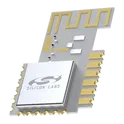
MGM210LA22JIF devices are PCB modules for Zigbee, Thread, Bluetooth and multiprotocol (Zigbee + Bluetooth) connectivity built around the EFR32MG21 Wireless Gecko Series 2 SoC and designed and optimized for the unique needs of smart LED lightbulbs. Delivering unparalleled RF performance and energy consumption compliance with CA Title 20, the module also offers a powerful and energy-efficient MCU core, 1024 kB of flash memory to enable future-proofing capabilities and over-the-air firmware updates with a dedicated core for enhanced security features. With its extended temperature rating and form factor, the device is suitable for enclosed operation in lightbulb housings. #CommonpartLibrary #Module #EFR32MG21 #arduino-matter
36 Uses
2 Stars
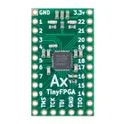
The schematic for TinyFPGA A-Series boards are tiny bare-bones FPGA boards created by Luke Valenty https://github.com/tinyfpga - Tiny, just 1.2 by 0.7 inches - Low power 3.3 volt operation - 18 user IOs (21 with JTAGEN) - 1200 4-input look-up tables - 10 kilobits distributed RAM - 64 kilobits dedicated RAM - 64 kilobits user flash memory - 1 SPI Hard-IP - 2 I2C Hard-IPs - 1 PLL Hard-IP - Built-in flash configuration memory programmable via JTAG
0 Uses
2 Stars
MPU with Dual Arm Cortex-A35 @1.5GHz, Cortex-M33 @400MHz, 3xEthernet (2+1 switch), 3xFD-CAN, LVDS/DSI, H.264, 3D GPU, AI/NN, Secure Boot, Cryptography, DRAM enc/dec, PKA The STM32MP257FAI3 is a high-performance microprocessor from STMicroelectronics' STM32MP2 series, integrating dual 64-bit Arm Cortex-A35 cores running at up to 1.5 GHz, a Cortex-M33 real-time core, and a Cortex-M0+ low-power management core. It is designed for advanced industrial, edge AI, machine vision, HMI, IoT gateway, and multimedia applications requiring Linux-class processing alongside deterministic real-time control. The device features AI acceleration, 3D graphics, video encoding/decoding, extensive connectivity, advanced security, and support for high-speed external memory. Key Features Dual-core 64-bit Arm Cortex-A35 CPU operating up to 1.5 GHz Arm Cortex-M33 real-time processor with TrustZone and FPU support Arm Cortex-M0+ low-power coprocessor for autonomous operation Integrated NPU (Neural Processing Unit) delivering up to 1.35 TOPS AI performance 3D GPU and hardware video encoder/decoder acceleration Supports DDR3L, DDR4, and LPDDR4 external memory up to 4 GB Multiple display interfaces including MIPI-DSI, LVDS, and parallel RGB USB 2.0 Host and USB 3.0 Dual-Role with embedded PHYs PCI Express interface with integrated 5 Gbps PHY Up to three Gigabit Ethernet interfaces with TSN and IEEE 1588 support Extensive connectivity: I2C, I3C, SPI, UART, USART, CAN FD, SDMMC, SAI, and SPDIF Hardware cryptographic accelerators including AES, SHA, RSA, ECC, PKA, and True RNG Secure boot, TrustZone security, tamper detection, and resource isolation framework Multiple low-power operating modes for energy-efficient designs Available in fine-pitch BGA packages for high-density embedded systems. #STM32MP257FAI3 #STM32MP2 #STMicroelectronics #CortexA35 #CortexM33 #EdgeAI #EmbeddedLinux #IndustrialAutomation #MachineVision #HMI #IoTGateway #MPU #PCIe #USB3 #GigabitEthernet #TrustZone #EmbeddedSystems #ArtificialIntelligence #LinuxProcessor #IndustrialIoT #CommonPartsLibrary #IntegratedCircuit #Microprocessor #STM32MP2
32 Uses
1 Star
Bluetooth, WiFi 802.11b/g/n, Bluetooth v5.0 Transceiver Module 2.4GHz PCB Trace Surface Mount The ESP32-S3-WROOM-1-N8R8 is a high-performance Wi-Fi and Bluetooth Low Energy (BLE) module from Espressif Systems, designed for advanced IoT, edge AI, smart devices, industrial automation, and embedded applications. It is based on the ESP32-S3 SoC featuring a dual-core Xtensa® LX7 processor running up to 240 MHz, integrated wireless connectivity, and enhanced AI acceleration capabilities. The N8R8 variant includes 8 MB Flash memory and 8 MB Octal SPI PSRAM, making it suitable for memory-intensive applications such as machine learning, image processing, graphical user interfaces, and data logging. Key Features Dual-core 32-bit Xtensa LX7 CPU operating up to 240 MHz Integrated 2.4 GHz Wi-Fi (802.11 b/g/n) Bluetooth 5 LE (Low Energy) support 8 MB Flash memory 8 MB Octal SPI PSRAM Vector instructions and hardware acceleration for AI/ML workloads Integrated PCB trace antenna USB OTG and USB Serial/JTAG support Rich peripheral set including: GPIO ADC UART SPI I²C I²S PWM USB Operating voltage: 3.0 V to 3.6 V Wireless data rates up to 150 Mbps RF output power up to 20.5 dBm High receiver sensitivity down to –104.5 dBm Surface-mount 41-pin module package Industrial operating temperature range up to -40°C to +85°C (module-dependent specification) #Module #RF-Transceiver #Esp32
285 Uses
1 Star
Bluetooth, WiFi 802.11b/g/n, Bluetooth v5.0 Transceiver Module 2.4GHz Antenna Not Included, U.FL Surface Mount The ESP32-S3-WROOM-1U-N16R8 is a high-performance embedded module designed for IoT and edge computing applications, featuring integrated wireless connectivity and enhanced processing capabilities. Processor: Dual-core Xtensa LX7, up to 240 MHz Wireless Connectivity: Wi-Fi 2.4 GHz (802.11 b/g/n) Bluetooth LE 5.0 Memory Configuration (N16R8): 16 MB Flash memory 8 MB PSRAM Antenna Type: U.FL connector for external antenna (“1U” variant) Indicates support for an external antenna via U.FL connector Allows improved RF performance and flexible antenna placement #commonpartslibrary #rf #wireless #transceiver #module
79 Uses
1 Star
The ESP32-CAM Ai-Thinker is a compact, low-cost Wi-Fi and Bluetooth-enabled camera development module based on the ESP32-S dual-core microcontroller. It integrates an OV2640 2MP camera sensor, onboard Flash memory, PSRAM, and a MicroSD card slot, making it suitable for IoT vision applications, wireless surveillance, image capture, video streaming, face recognition, and smart home projects. The module combines wireless connectivity and image processing capabilities in a small form factor while maintaining low power consumption. Key Features ESP32-S Dual-Core Processor Tensilica Xtensa LX6 dual-core 32-bit CPU Operating frequency up to 240 MHz Computing performance up to 600 DMIPS Integrated Camera Equipped with OV2640 CMOS image sensor Maximum image resolution: 1600 × 1200 (UXGA, 2MP) Supports JPEG image compression and video streaming Memory 4 MB Flash memory External PSRAM for frame buffering and image processing 520 KB internal SRAM Wireless Connectivity 2.4 GHz Wi-Fi (802.11 b/g/n) Bluetooth 4.2 BR/EDR and BLE support Storage Built-in MicroSD/TF card slot Supports local storage of images, videos, and data logs Peripheral Interfaces UART SPI I²C PWM ADC DAC GPIO expansion pins Power Supply Operating voltage: 5 V Low-power operation with deep-sleep capability for battery-powered applications Compact Design Module size approximately 27 mm × 40.5 mm PCB antenna onboard Optional external antenna connection on some variants
157 Uses
1 Star
ARM® Cortex®-M7 S32K3 Microcontroller IC 32-Bit 160MHz 4MB (4M x 8) FLASH 172-QFP (16x16) S32K344EHT1VPBST is an automotive-grade 32-bit microcontroller from NXP Semiconductors based on the Arm Cortex-M7 core architecture. The device is designed for high-performance real-time automotive body, chassis, powertrain, and domain control applications requiring functional safety, security, and advanced communication interfaces. It integrates high-speed processing capability, extensive peripheral integration, hardware security acceleration, and deterministic control functions suitable for safety-critical embedded systems. The microcontroller operates with an Arm Cortex-M7 CPU core running at high frequency with floating-point support and DSP extensions for computationally intensive applications. Integrated flash memory and SRAM provide embedded program and data storage optimized for automotive embedded control systems. The device supports hardware-assisted security features including secure boot, cryptographic acceleration, and tamper protection for secure automotive network communication and firmware integrity. The S32K344EHT1VPBST includes multiple communication peripherals supporting CAN FD, FlexCAN, LIN, SPI, UART, I2C, and Ethernet interfaces for distributed automotive networking and gateway applications. Advanced analog integration includes ADC modules, timers, PWM generators, watchdogs, and motor-control-oriented peripherals enabling precision sensing and control functionality. The device supports functional safety development aligned with ISO 26262 requirements and includes error correction, memory protection, fault monitoring, and safety management features. Power management functionality supports low-power operating modes for energy-efficient automotive electronic control units. The microcontroller is housed in a thermally enhanced LQFP package suitable for automotive operating environments with extended temperature capability and AEC-Q100 qualification for automotive reliability standards. #commonpartslibrary #integratedcircuit #microcontroller #arm #m7
3 Uses
1 Star
Temperature Sensor Digital, Local -55°C ~ 150°C 16 b 6-WSON (2x2) The TMP117AIDRVR is a high-precision digital temperature sensor manufactured by Texas Instruments. The device provides accurate temperature measurements through an I²C-compatible digital interface and is optimized for applications requiring medical-grade accuracy, low power consumption, and compact PCB footprint. The sensor integrates a precision temperature sensing element, analog-to-digital converter, calibration memory, and digital interface into a single compact package. The device supports continuous conversion and shutdown operating modes, enabling efficient thermal monitoring in battery-powered and always-on systems. Internal calibration minimizes external component requirements while providing highly linear and repeatable temperature measurements across an extended operating range. The TMP117AIDRVR is commonly used in industrial controls, wearable electronics, healthcare equipment, environmental monitoring systems, battery management systems, consumer electronics, and precision instrumentation. Electrical Characteristics Supply voltage supports low-voltage digital systems and portable electronics applications. Ultra-low operating current enables long battery life in energy-sensitive designs. Integrated EEPROM allows programmable offset correction and configuration storage. Digital output eliminates the need for external ADC circuitry. High measurement resolution supports precision thermal monitoring applications. Low self-heating characteristics improve measurement stability and accuracy. Functional Features High-accuracy digital temperature sensing. I²C and SMBus compatible communication interface. Programmable alert functionality for thermal threshold monitoring. Continuous conversion and low-power shutdown operating modes. Integrated non-volatile memory for user configuration storage. Wide operating temperature range for industrial and commercial environments. Fast conversion timing suitable for real-time monitoring systems. Factory-calibrated performance requiring minimal external calibration. Package Information Package type is WSON with compact surface-mount footprint suitable for dense PCB layouts. Moisture-sensitive package designed for automated assembly processes. Lead-free and RoHS-compliant construction. Typical Applications Medical thermometers and patient monitoring systems. Industrial temperature monitoring equipment. Battery-powered portable electronics. HVAC and environmental sensing systems. Data acquisition and instrumentation systems. Server and embedded thermal management applications. Consumer electronics requiring precision thermal sensing. #commonpartslibrary #integratedcircuit #temperaturesensor
287 Uses
1 Star
ARM® Cortex®-M4 series Microcontroller IC 32-Bit Single-Core 168MHz 1MB (1M x 8) FLASH 64-LQFP (10x10) Arm® Cortex®-M4 32b MCU+FPU, 210DMIPS, up to 1MB flash/192+4KB RAM, USB OTG HS/FS, Ethernet, 17 TIMs, 3 ADCs, 15 comm. interfaces, and camera Includes ST state-of-the-art patented technology • Core: Arm® 32-bit Cortex®-M4 CPU with FPU, Adaptive real-time accelerator (ART Accelerator) allowing 0-wait state execution from flash memory, frequency up to 168 MHz, memory protection unit, 210 DMIPS/ 1.25 DMIPS/MHz (Dhrystone 2.1), and DSP instructions • Memories – Up to 1 Mbyte of flash memory – Up to 192+4 Kbytes of SRAM including 64- Kbyte of CCM (core coupled memory) data RAM – 512 bytes of OTP memory – Flexible static memory controller supporting CompactFlash™, SRAM, PSRAM, NOR and NAND memories • LCD parallel interface, 8080/6800 modes • Clock, reset, and supply management – 1.8 V to 3.6 V application supply and I/Os – POR, PDR, PVD and BOR – 4-to-26 MHz crystal oscillator – Internal 16 MHz factory-trimmed RC (1% accuracy) – 32 kHz oscillator for RTC with calibration – Internal 32 kHz RC with calibration • Low-power operation – Sleep, Stop, and Standby modes –VBAT supply for RTC, 20×32-bit backup registers + optional 4 KB backup SRAM • 3×12-bit, 2.4 MSPS A/D converters: up to 24 channels and 7.2 MSPS in triple interleaved mode • 2×12-bit D/A converters • General-purpose DMA: 16-stream DMA controller with FIFOs and burst support • Up to 17 timers: up to twelve 16-bit and two 32- bit timers up to 168 MHz, each with up to 4 IC/OC/PWM or pulse counter and quadrature (incremental) encoder input • Debug mode – Serial wire debug (SWD) & JTAG interfaces – Cortex-M4 Embedded Trace Macrocell™ • Up to 140 I/O ports with interrupt capability – Up to 136 fast I/Os up to 84 MHz – Up to 138 5 V-tolerant I/Os • Up to 15 communication interfaces – Up to 3 × I2C interfaces (SMBus/PMBus) – Up to 4 USARTs/2 UARTs (10.5 Mbit/s, ISO 7816 interface, LIN, IrDA, modem control) – Up to 3 SPIs (42 Mbits/s), 2 with muxed full-duplex I2S to achieve audio class accuracy via internal audio PLL or external clock – 2 × CAN interfaces (2.0B Active) – SDIO interface • Advanced connectivity – USB 2.0 full-speed device/host/OTG controller with on-chip PHY – USB 2.0 high-speed/full-speed device/host/OTG controller with dedicated DMA, on-chip full-speed PHY and ULPI – 10/100 Ethernet MAC with dedicated DMA: supports IEEE 1588v2 hardware, MII/RMII #commonpartslibrary #integratedcircuit #microcontroller
53 Uses
1 Star
Bluetooth, WiFi 802.11b/g/n, Bluetooth v5.0 Transceiver Module 2.4GHz PCB Trace Surface Mount The ESP32-C3-WROOM-02-N4 is a compact, general-purpose Wi-Fi and Bluetooth Low Energy (BLE) module developed by Espressif Systems. It is built around the ESP32-C3 SoC and integrates RF components, crystal oscillator, flash memory, and PCB antenna in a single module. It is designed for a wide range of applications such as IoT devices, smart home systems, industrial automation, and consumer electronics, offering a balance of performance, low power consumption, and cost efficiency. Key Features MCU & Memory 32-bit RISC-V single-core processor up to 160 MHz 384 KB ROM 400 KB SRAM + 8 KB RTC SRAM Integrated 4 MB SPI flash (N4 variant) Connectivity 2.4 GHz Wi-Fi (802.11 b/g/n) Supports Station, SoftAP, and Station + SoftAP modes Bluetooth 5 (BLE) with mesh support Data rates up to 150 Mbps (Wi-Fi) Peripherals & Interfaces Up to 15 GPIOs Interfaces: SPI, UART, I2C, I2S LED PWM ADC (SAR) Timers & watchdog USB Serial/JTAG support TWAI® (CAN 2.0 compatible) #commonpartslibrary #transceiver #module #wireless #rf
685 Uses
1 Star
Bluetooth, WiFi 802.11b/g/n, Bluetooth v5.0 Transceiver Module 2.4GHz PCB Trace Surface Mount The ESP32-S3-WROOM-2-N32R16V is a powerful dual-core microcontroller module that integrates wireless connectivity, large memory, and hardware acceleration for AI and signal processing tasks. It is particularly suited for applications requiring edge AI, voice recognition, and high-speed data processing, while still maintaining low power consumption. Dual-core Xtensa LX7 CPU Up to 240 MHz Includes vector instructions for AI and DSP workloads Wi-Fi 2.4 GHz (802.11 b/g/n) Bluetooth 5 (LE) N32 → 32 MB external Flash R16 → 16 MB PSRAM Built for memory-intensive applications #commonpartslibrary #transceiver #wireless #rf
124 Uses
1 Star