Interface ICs
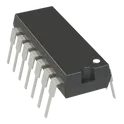
An interface IC is a type of integrated circuit that is designed to facilitate communication between two devices or systems. These devices are commonly used in electronic systems to enable the transfer of data and control signals between different components or subsystems. Some common use cases for interface ICs include connecting microcontrollers to peripherals such as sensors or displays, linking multiple processors together in a network, and enabling communication between devices using different communication protocols. Flux.ai has the world's largest community-driven public library of interface ICs, with footprints, symbols, datasheets, and simulation models. This library is a valuable resource for engineers and designers who need access to accurate and up-to-date information on these important components. Whether you are working on a new design project or simply looking to learn more about interface ICs, Flux.ai is an excellent resource to help you find the information you need.

LM324QT
Quad Operational Amplifier IC – The STMicroelectronics LM324QT integrates four independent, internally frequency-compensated op-amps for analog signal conditioning, amplification, filtering, and sensor interfaces. It operates from a 3 V to 30 V single supply or ±1.5 V to ±15 V dual supplies, with a 1.3 MHz gain-bandwidth product, 100 dB typical voltage gain, and 20 nA typical input bias current. The device features an input common-mode range that includes ground and is housed in a 16-pin QFN (3 × 3 mm) package. #STMicroelectronics #LM324QT #OperationalAmplifier #QuadOpAmp #AnalogIC #SignalConditioning #SensorInterface #QFN16 #PCBDesign
0 Uses0 Stars
IPEX-4
RF Coaxial Board Connector – The ZIISOR IPEX-4 is a surface-mount antenna connector designed for wireless modules, computers, tablets, and other communication devices. It features a 50 Ω impedance, 4 GHz frequency rating, 1.5 mm interface diameter, and an operating temperature range of −40°C to +85°C. The connector uses an inner-pin interface for compact RF connections between a PCB and a compatible IPEX cable assembly. LCSC Electronics +1 #ZIISOR #IPEX4 #RFConnector #CoaxialConnector #50Ohm #WirelessModules #AntennaConnector #PCBDesign #EmbeddedSystems
6 Uses0 Stars
CP2108-B03-GMR
USB-to-Quad UART Bridge IC – The Silicon Labs CP2108-B03-GMR converts USB 2.0 full-speed (12 Mbps) data to four independent UART interfaces, supporting baud rates from 300 bps to 2 Mbps. It integrates a USB transceiver, clock, voltage regulator, and programmable EEPROM, with RTS/CTS hardware flow control and 16 configurable GPIO pins. It supports a 3.0–3.6 V self-powered supply and is housed in a 64-pin QFN package (9 × 9 mm), operating from −40°C to +85°C. Silicon Labs +1 #SiliconLabs #CP2108 #USBtoUART #UARTBridge #USB20 #SerialCommunication #GPIO #EmbeddedSystems #PCBDesign #InterfaceIC
6 Uses0 Stars
CH342F
USB-to-Dual-UART Interface Controller – The WCH CH342F converts a USB 2.0 full-speed interface into two independent UART serial ports. It supports programmable baud rates from 50 bps to 3 Mbps, full-duplex communication, hardware flow control, and 3.3 V or 5 V supply operation. UART I/O voltage is independently configurable from 1.8 V to 5 V. The device integrates a clock generator and power-on reset and is housed in a 4 × 4 mm QFN-24 package. Operating temperature range: −40°C to +85°C. #WCH #CH342F #USBtoUART #UART #USBInterface #SerialCommunication #InterfaceController #EmbeddedSystems #PCBDesign
6 Uses0 StarsST25DV04K-IER8C3
Dynamic NFC/RFID Tag IC – 4-Kbit EEPROM memory device with I²C and RF interfaces, supporting contactless communication according to ISO/IEC 15693 and NFC Forum Type 5. The ST25DV04K-IER8C3 operates from 1.8 V to 5.5 V, supports 13.56 MHz RF communication, and provides up to 512 bytes of user memory through the I²C interface. It also supports fast transfer mode and energy harvesting from the RF field. The device is housed in an 8-pin UFDFPN 2 × 3 mm package and operates from −40°C to +105°C. #STMicroelectronics #ST25DV04K #NFC #RFID #EEPROM #I2C #ISO15693 #NFCType5 #13_56MHz #EmbeddedSystems
0 Uses0 StarsMUSBA11130
Rugged USB Type-A Receptacle Connector – Right-angle, through-hole USB 2.0 connector designed for panel-mounted data and power interfaces in industrial and embedded systems. The Amphenol CS MUSBA11130 features 4 contacts, 1.5 A current rating, IP67 ingress protection, and 500 V AC RMS voltage rating. It has gold-plated contacts, a shielded nickel-plated zinc-alloy shell, a UL94 V-0 thermoplastic housing, and a −40°C to +105°C operating temperature range. Rated for 1,500 mating cycles. Amphenol +1 #Amphenol #MUSBA11130 #USBTypeA #USB20 #RuggedConnector #IP67 #ThroughHole #RightAngleConnector #PCBComponents #EmbeddedSystems
6 Uses0 Stars54602-908LF
RJ45 Modular Ethernet Jack – The Amphenol ICC (FCI) 54602-908LF is an unshielded, right-angle modular connector designed for Ethernet and other network interface applications. It features an 8P8C interface, single port, through-hole PCB mounting, solder termination, and gold-plated copper-alloy contacts. The connector is Cat 3 rated, has a 250-cycle mating durability, and operates over a −40°C to +70°C temperature range. Amphenol +1 #Amphenol #54602908LF #RJ45 #EthernetConnector #ModularJack #8P8C #ThroughHole #PCBConnector #Networking #EmbeddedSystems
6 Uses0 Stars