• Pet Tracker Module 9f1t

    Pet Tracker Module 9f1t

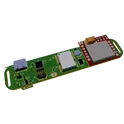
    This is a Pet Tracker module based on STM32L4. Tracker connects with network by SIM800L module connected to the STM. Also MCU connected to the GPS by uart and send data to server #STM32 #GPS #G4 #G3 #LTE #IoT #Tracker #reusable #module #edge-computing #edgeComputing #stm #sublayout

    0nuravcu


  • FT232R

    FT232R

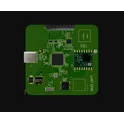
    FT232R USB 2.0 to UART (RS232) Bridge Interface Evaluation Board #commonpartslibrary #developmentboard #kits #evaluationboard #uart #UM232R

    0nuravcu


  • Pet Tracker Reference Design

    Pet Tracker Reference Design

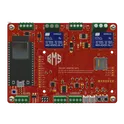
    This is a Pet Tracker Reference Design based on STM32L4. Tracker connects with network by SIM800L module connected to the STM. Also MCU connected to the GPS by uart and send data to server #STM32 #GPS #G4 #G3 #LTE #IoT #Tracker #referenceDesign #edge-computing #edgeComputing #stm #template #reference-design

    ramzi92552014


  • ESP32 Battery Management System Controller Board

    ESP32 Battery Management System Controller Board

    A smart ESP32-based battery management system controller board for Lithium ion battery packs/cells. Capable of communicating to wide varieties of hybrid-smart inverters with CANbus, RS485 and UART communication.

    kerry


  • Pet Tracker Reference Design 9HKu

    Pet Tracker Reference Design 9HKu

    This is a Pet Tracker Reference Design based on STM32L4. Tracker connects with network by SIM800L module connected to the STM. Also MCU connected to the GPS by uart and send data to server #STM32 #GPS #G4 #G3 #LTE #IoT #Tracker #referenceDesign #edge-computing #edgeComputing #stm #template #reference-design

    ezee


  • FT232RL Serial to USB C Module 97c4

    FT232RL Serial to USB C Module 97c4

    USB C to UART converter using the FTDI232RL IC

    singhrohan


  • Pet Tracker Module fNV7

    Pet Tracker Module fNV7

    This is a Pet Tracker module based on STM32L4. Tracker connects with network by SIM800L module connected to the STM. Also MCU connected to the GPS by uart and send data to server #STM32 #GPS #G4 #G3 #LTE #IoT #Tracker #reusable #module #edge-computing #edgeComputing #stm #sublayout

    0nuravcu


  • Pet Tracker Reference Design

    Pet Tracker Reference Design

    This is a Pet Tracker Reference Design based on STM32L4. Tracker connects with network by SIM800L module connected to the STM. Also MCU connected to the GPS by uart and send data to server #STM32 #GPS #G4 #G3 #LTE #IoT #Tracker #referenceDesign #edge-computing #edgeComputing #stm #template #reference-design

    l1hana


  • [PROJECT] JTAGULAXEL

    [PROJECT] JTAGULAXEL

    JTAGulator copied from Joe Grand design. Allows to discover JTAG interfaces on embedded systems. Also allows to find UART interfaces. Is able to use OpenOCD to debug chips.

    greg

    &

    dacre
    axel725


  • RP2350B

    RP2350B

    The RP2350, developed by Raspberry Pi Ltd, is a high-performance microcontroller designed to cater to a broad range of applications requiring efficient power management, advanced security features, and versatile IO options. This microcontroller stands out with its dual-core architecture, featuring either Cortex-M33 or Hazard3 processors operating at up to 150 MHz, ensuring robust performance for complex applications. It boasts a substantial 520 KB of on-chip SRAM distributed across 10 independent banks, enhancing parallel data processing capabilities. Additionally, the RP2350 supports up to 16 MB of external QSPI flash/PSRAM for extensive program and data storage, further expandable via an optional second chip-select. A notable feature of the RP2350 is its integrated on-chip switched-mode power supply, designed to generate core voltage efficiently, complemented by a low-quiescent-current LDO mode for reduced power consumption in sleep states. Security is a paramount feature of the RP2350, offering options for boot signing with key fingerprint in OTP, hardware mitigations against fault injection attacks, and a hardware SHA-256 accelerator for cryptographic operations. The microcontroller is also equipped with a comprehensive set of peripherals, including USB 1.1 controller and PHY, multiple UARTs, SPI, and I2C controllers, 24 PWM channels, and 12 programmable IO (PIO) state machines, providing extensive interface capabilities. The RP2350 is available in QFN-60 and QFN-80 packages, with or without flash-in-package options, catering to various design requirements and application needs.

    dawgshalmer

    1 Comment


  • Inherent Crimson Transporter

    Inherent Crimson Transporter

    SmartDeskPet v1.0 Shield Stage 1 status: - Goal: 5V input -> dual AMS1117-3.3 rails (+3V3_MCU and +3V3_WIFI) with common GND. - Note: Keep power nets explicitly named (avoid unnamed nets) to keep ERC happy. Stage 1 completion checklist: - Mark J1 Pin_1 (+5V) as a Power Output pin to satisfy ERC power-driver checks. - Verify all GND symbols/returns are on the same GND net. - Keep +5V_SERVO isolated from the main +5V net (only share GND). Stage 2 preparation notes (MPN/LCSC + layout constraints): - MPN/LCSC targets to define before Stage 2 exit: - AMS1117-3.3 (SOT-223): set exact MPN and (optionally) LCSC PN for both U1 and U2. - 100nF capacitor (0603): set MPN/LCSC for all 0603 100nF decouplers. - 4.7k resistor (0603): set MPN/LCSC for I2C pull-ups R1 and R2. - 1000uF bulk capacitor (radial): set MPN/LCSC for C7 (CP_Radial_D10.0mm_P5.00mm). - DC005 power jack/regulator input: select exact DC005 footprint + MPN/LCSC (if used). - 2.54mm headers/sockets: set MPN/LCSC for H1, H2, J1, J3, J4, J5, P3, P4, P5, and J2. - ESP-01S antenna keepout: - Reserve a copper keepout under and in front of the ESP-01S onboard antenna. - No copper pours/traces/components in the antenna region (top and bottom) per module guidelines. - H1/H2 header spacing: - Maintain 1000 mil spacing between H1 and H2 header centerlines (shield mechanical requirement). - Silkscreen placeholders: - Add silkscreen labels for: 5V IN, GND, +3V3_MCU, +3V3_WIFI, SERVO1, SERVO2, I2C SDA/SCL, DHT11, ASRPRO UART2, ESP-01S UART3. - Add placeholder text for: MPN, LCSC, board revision, and date code. Stage 3 layout constraints (placement and routing guidance): - Connector placement strategy: - Place H1 and H2 first to lock the shield mechanical interface; enforce 1000 mil spacing. - Place J1 and any DC005 input at the board edge for easy access. - Designated power area planning: - Group U1, U2, and C7 near the 5V entry point; keep high-current 5V and regulator loops short. - Use wide copper for +5V and any servo supply; stitch GND around power section. - Antenna keepout boundaries: - Place J2 (ESP-01S socket) at a board edge with the antenna facing outward. - Enforce a top-and-bottom copper keepout in the antenna region; keep noisy power traces away.

    alanlee


  • pocket-soudbox

    pocket-soudbox

    Pocket Soundbox – LiPo-Powered Cellular I2S MP3 Audio Player (SIMCom A7670E-LASE, Nano-SIM, I2S MP3 to PCM5101A DAC, FM8002E Amp, 1.8V↔3.3V UART/PWRKEY Level Shifting, Remapped J4, MP2315 3.3V Power Path, USB-C ESD/TVS) with power ON/OFF long-press control via SW2 and Q2 featuring pull-ups, RC debounce, and PFET safety clamp (#Cellular #I2S #LiPo #Audio #powerbutton #debounce #PFET)

    sayurun

    &

    sumkomo
    indonesianbeans
    circlebitlab