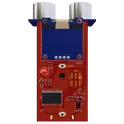
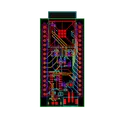
• 619 J Stepper

    619 J Stepper

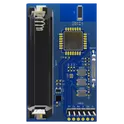
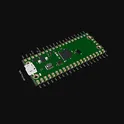
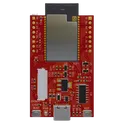
    This project is an open source micro-controller board used to drive a stepper motor in closed loop mode. The board is generally used on 3D printer steppers or CNC steppers to prevent losing steps. The project is inspired by Tropical labs: Mechaduino board #motorControllers

    adrian95

    3 Comments

    2 Stars


  • LoRa Door and Window Sensor Reference Design bbYa

    LoRa Door and Window Sensor Reference Design bbYa

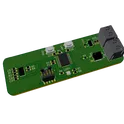
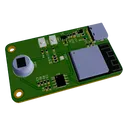
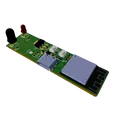
    This is a LoRa-based door and window sensor incorporating a microcontroller unit (MCU). It features a reed sensor, LED indicators, a AAA non-rechargeable battery, and a booster IC for constant voltage. The MCU is linked to peripherals through nets, ensuring optimal performance #LoRa #MCU #ReferenceDesign #project #referenceDesign #simple-embedded #seeed #seeed-studio #template #reference-design

    yeisondurango

    1 Comment

    2 Stars


  • MAX98357 Audio DAC Breakout 077b

    MAX98357 Audio DAC Breakout 077b

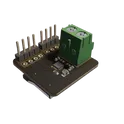
    This compact breakout board makes it easy to add high-quality audio output to your microcontroller projects using the MAX98357A/B Class D audio amplifier. Perfect for Arduino, ESP32, Raspberry Pi, or any microcontroller with I2S output capabilities. Features High-Performance Audio: Delivers Class AB audio quality with Class D efficiency (92% efficient at 1W) Powerful Output: 3.2W into 4Ω speakers at 5V supply Clean Sound: Low distortion (0.013% THD+N at 1kHz) Wide Supply Range: Operates from 2.5V to 5.5V Simplified I2S Interface: No MCLK required, just BCLK, LRCLK, and DIN Selectable Gain: Solder jumpers for easy gain selection (3dB, 6dB, 9dB, 12dB, or 15dB) Channel Selection: Configure for left, right, or combined (mono) output Filterless Design: No need for external output filtering components Compact Form Factor: Minimal board space with optimized layout Applications Smart speakers and voice assistants Portable audio devices IoT audio projects Gaming devices and sound effects Educational audio projects Digital instrument amplification The FLUX MAX98357 breakout board requires only three I/O pins plus power, making it the perfect audio solution for projects where simplicity and sound quality matter.

    flux

    &

    ryanf

    2 Stars


  • Arduino-UNO-R3

    Arduino-UNO-R3

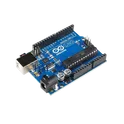
    The Arduino Uno R3 is a microcontroller board based on a removable ATmega328P 20 digital input/output pins AVR MCU 8-Bit 5V USB 16MHz #Module #Arduino

    ghhhhfgh

    2 Stars


  • Raspberry Pi Pico 2 Shield Template

    Raspberry Pi Pico 2 Shield Template

    This is the project template for the Raspberry Pi Pico 2, the latest addition and update to Pi Pico line up. Raspberry pi pico 2 is equipped with the RP2350, a cutting-edge, high-performance microcontroller designed with enhanced security and versatility in mind. Every element of its design has been upgraded, from the advanced CPU cores to the innovative PIO (Programmable I/O) interfacing subsystem. The Raspberry Pi Foundation has integrated a robust security architecture centered around Arm TrustZone for Cortex-M, ensuring data protection and integrity. Additionally, new low-power states and expanded package options broaden the range of applications, making the Pico 2 an ideal choice for diverse, power-sensitive projects. To learn more about what's the key differences between the original Pi Pico and the new Pi Pico 2, read our blog https://www.flux.ai/p/blog/whats-new-in-the-raspberry-pi-pico-2-a-showdown-with-the-original-raspberry-pi-pico #project-template #template #raspberry #pi #pico2 #newpico

    jharwinbarrozo

    2 Stars


  • MSP430FR6035IPZ

    MSP430FR6035IPZ

    The Texas Instruments MSP430FR604x and MSP430FR603x family comprises highly integrated ultrasonic sensing and measurement system-on-chips (SoCs) designed specifically for water and heat metering applications. The featured components, including MSP430FR6047, MSP430FR60471, MSP430FR6045, MSP430FR6037, MSP430FR60371, and MSP430FR6035, deliver best-in-class ultrasonic water flow measurement with ultra-low power consumption. These microcontrollers excel with an active mode current consumption of approximately 120 µA/MHz and a standby mode power draw as low as 450 nA with a real-time clock (RTC) enabled. Key functionalities include a high-precision differential time-of-flight (dTOF) accuracy of less than 25 ps, integrated analog front-end, programmable pulse generation (PPG), and an analog comparator. They also interface directly with standard ultrasonic sensors up to 2.5 MHz and feature up to 256KB FRAM, robust RAM options, and integrated LCD drivers for up to 264 segments. The embedded low-energy accelerator (LEA) enhances digital signal processing capabilities, making these components ideal for battery-powered metering solutions. Peripherals include multiple enhanced serial communication interfaces, high-performance ADCs, DMA controllers, and a suite of timers and encryption modules. These features combine to offer a powerful solution for high-accuracy, low-cost, and ultra-low-power metering applications.

    jbreidfjord-dev

    4 Comments

    2 Stars


  • Adafruit Trinket  Mini Microcontroller - 3V3 Logic

    Adafruit Trinket Mini Microcontroller - 3V3 Logic

    A tiny microcontroller board, built around the Atmel ATtiny85, a little chip with a lot of power. We wanted to design a microcontroller board that was small enough to fit into any project, and low cost enough to use without hesitation. Perfect for when you don't want to give up your expensive dev-board and you aren't willing to take apart the project you worked so hard to design. It's our lowest-cost arduino-IDE programmable board!

    jecstronic

    &

    jharwinbarrozo

    1 Comment

    1 Star


  • FireBeetle 2 ESP32-E IoT Microcontroller (Supports Wi-Fi & Bluetooth)

    FireBeetle 2 ESP32-E IoT Microcontroller (Supports Wi-Fi & Bluetooth)

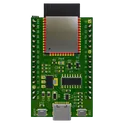
    Specially designed for IoT ESP-WROOM-32E-based main controller board with dual-core chips. #ESP32 #ESP32WROOM #RF #WIFI #MCU

    roytaylor

    9 Comments

    1 Star


  • Custom Microcontroller using atmega32u4

    Custom Microcontroller using atmega32u4

    Possible future project?

    1 Star


  • Lethal Company Pro Flashlight Power Board V1

    Lethal Company Pro Flashlight Power Board V1

    Lethal Company Pro Flashlight Broken Features: - U2M cannot be line powered from this circuit so the LED driver does not regulate. [Find the acompanying button board here](https://www.flux.ai/markwuflux/lethal-company-pro-flashlight-button-board) -Ultra bright -Makes click noise from speaker -Wirelessly transmits battery life (maybe use Ubo to receive this) -Drive a SST-40 Chinese LED I want this thing to be super bright! The brighter the better, but keep it simple. These LEDs will draw a lot of power, so we need some sort of CC source. It doesn't have to have high bandwidth. I am thinking about a DIY microcontroller buck converter with PID duty cycle control. Mistakes in this V1 design: - No pullup resistor on PG of Module1

    92 Comments

    1 Star


  • Arduino Force Units Connection Shield

    Arduino Force Units Connection Shield

    An I2C extension shield with 6 shielded ethernet ports and a TCA9548 breakout board. This board is for the target side, any microcontroller with a standard Arduino header can use it. With proper target side hardware and an SSTP ethernet cable, the board provides robust i2c communication over 10ft(could be longer, haven't tested it yet) with a bitrate of 400kHz under a noisy environment( near motors, power cables, switches, etc). The shield board provides power to the target side and can power the i2c device. The board also supports drdy trigger, which is available on many i2c sensors. The TCA9548 breakout board is for a scenario in which all of your i2c devices have the same address. #Arduino #Uno #Shield #Template #project-template #project

    45 Comments

    1 Star


  • Motion Detector Reference Design

    Motion Detector Reference Design

    This is a motion detector circuit using an ESP32 microcontroller and PIR sensor. It features USB-C connectivity, RGB LED indication, push buttons and is powered by a 3.3V supply. #referenceDesign #edge-computing #edgeComputing #espressif #template #iot #PIR #esp32 #reference-design

    &

    jharwinbarrozo

    34 Comments

    1 Star


  • WiFi RF-ID lock reference design g7u8 eb3f 125c

    WiFi RF-ID lock reference design g7u8 eb3f 125c

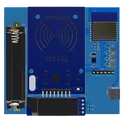
    This project is a WiFi RF-ID Lock, which uses a Espressif ESP-8684 microcontroller for WiFi connectivity and a Handson Technology RC522 for RF-ID functionality. It also includes an OLED display and user control via a switch. A step-up power converter ensures consistent 3.3V power. #WiFi #MCU #ReferenceDesign #project #ESP8684 #lock #OLED #referenceDesign #simple-embedded #espressif #template #reference-design

    27 Comments

    1 Star


  • Coil Winder Circuit Board Design

    Coil Winder Circuit Board Design

    This project included the schematic and PCB layout of a coil winding machine circuit board. It uses Arduino Nano microcontroller, to count the number of turns and it can be used to replace manual coil winding process.

    24 Comments

    1 Star


  • WiFi Camera Reference Design

    WiFi Camera Reference Design

    This project uses an ESP32 microcontroller and OV2640 camera to create a WiFi-enabled digital camera. It uses AMS1117 voltage regulators to provide regulated power, a CH340C for USB communication, and includes capacitors and resistors for circuit balance. Ideal for IoT and edge computing tasks. #referenceDesign #project #ESP32 #ESP32WROVER #RF #WIFI #MCU #referenceDesign #edge-computing #edgeComputing #espressif #template #reference-design

    20 Comments

    1 Star


  • Plant Care System Reference Design

    Plant Care System Reference Design

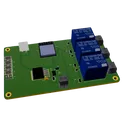
    This project is a plant care system that uses an ESP32-S3-MINI-1U-N8 microcontroller to automate plant care tasks. This system includes three Songle relays, multiple resistors, capacitors, and transistors, all powered at 3.3V, 5V, or 12V. It also incorporates a USB Type-C connector. #referenceDesign #edge-computing #edgeComputing #espressif #template #iot #ESP32 #relay #reference-design

    &

    jharwinbarrozo

    18 Comments

    1 Star


  • WiFi to IR Gateway Reference Design bN3H

    WiFi to IR Gateway Reference Design bN3H

    This is a WiFi to Infrared (IR) gateway reference design leveraging an ESP32-S3 microcontroller for WiFi connectivity. It also incorporates a Type-C USB interface for data and power, 3 LEDs (red, green, & IR), and voltage regulation. It facilitates wireless control of IR devices, suitable for home automation projects. #referenceDesign #edge-computing #espressif #template #IR #project #reference-design

    15 Comments

    1 Star


  • [Example] ESP32 Reference Design

    [Example] ESP32 Reference Design

    An example development and reference design for the ESP32 microcontroller.

    14 Comments

    1 Star


  • Ultrasonic Distance Meter Reference Design

    Ultrasonic Distance Meter Reference Design

    This circuit is an ultrasonic distance meter based on an ATTiny2313 microcontroller. It uses an HC-SR04 ultrasonic sensor to measure distance and displays the results on an OLED display. The power supply is constructed using a Boost converter (TPS613222A) and a 2-cell AA battery. Additionally, it also includes ISP for programming, RESET and START switches, and LED indicators. #project #Template #projectTemplate #ultrasonic #OLED #arduino #attiny2313 #TPS613222A #ISP #referenceDesign #simple-embedded #microchip #template #reference-design .

    &

    13 Comments

    1 Star


  • [Example] ESP32 Reference Design

    [Example] ESP32 Reference Design

    An example development and reference design for the ESP32 microcontroller.

    8 Comments

    1 Star


  • semgdaq

    semgdaq

    The semgdaq board is a wearable 6 channel data acquisition unit for capturing surface electromyographic (sEMG) signals from human arm muscles using SJ2-3593D jack connectors while conditioning, digitizing, processing and feature extracting them then transmitting the feature data as vectors to an external AI accelerated board through an SM12B-SRSS IDC connector using 12C and UART communication protocals where AI models are run for various applications including robotic control, muscle signals medical assessment and gesture recognition. The feature vectors are comprised of onset detection, slope sign changes, autoregression coefficients and Short Time Fourier Transform magnitude spectrum data for each segment or window of the signals in real time. This vectors can be used as the basis for further feature extraction on more computationally resourceful hardware where machine learning algorthms can be employed for descision making in the applications mentioned earlier. The board leverages INA125P instrumentation amplifiers together with filter stages utilizing LM324QT op-amps for conditioning and an STM32G4A1VET6 microcontroller for the digitization, processing, feature extraction and data transmission. Since AI models can only be as good as the data, the design of such a DAQ is necessary to ensure clean, reliable and real-time data for AI applications requiring sEMG feature data. The board also has USB-FS and JTAG to cater for debugging and external flash memory to extend its data storage and processing capability. The power (5V) is fed through a screw terminal and is regulated by two LDK320AM LDO regulators to offer 5V, 3.3V and 1.8V to meet the requirements of various components on the board.

    6 Comments

    1 Star


  • [Example] ESP32 Reference Design

    [Example] ESP32 Reference Design

    An example development and reference design for the ESP32 microcontroller.

    4 Comments

    1 Star


  • ESP32-S2 Dev Board k6h9

    ESP32-S2 Dev Board k6h9

    A low-power, single-core Wi-Fi high-performance microcontroller SoC with a rich set of IO capabilities. #esp32 #wifi #low-power

    &

    4 Comments

    1 Star


  • Resistive Touch Screen Controller - STMPE610

    Resistive Touch Screen Controller - STMPE610

    This breakout board features the STMPE610, which has both I2C and SPI interfaces available. There is also an interrupt pin that you can use to indicate when a touch has been detected to your microcontroller or microcomputer.

    adrian95

    &

    jharwinbarrozo

    3 Comments

    1 Star


  • [Example] ESP32 Reference Design

    [Example] ESP32 Reference Design

    An example development and reference design for the ESP32 microcontroller.

    1 Comment

    1 Star


  • PCF8523 Real Time Clock Assembled Breakout Board

    PCF8523 Real Time Clock Assembled Breakout Board

    This is a great battery-backed real time clock (RTC) that allows your microcontroller project to keep track of time even if it is reprogrammed, or if the power is lost. Perfect for datalogging, clock-building, time stamping, timers and alarms, etc. Equipped with PCF8523 RTC - it can run from 3.3V or 5V power & logic!

    1 Comment

    1 Star


  • Doorbell with Camera Reference Design

    Doorbell with Camera Reference Design

    This project is a doorbell system reference design with an integrated camera. It leverages an ESP32 microcontroller for processing, along with various components including resistors, buzzers, and transistors. The system also features a charging circuitry with a USB-C connection for power supply. #referenceDesign #edge-computing #edgeComputing #SeeedStudio #template #iot #esp32#camera #reference-design

    1 Comment

    1 Star


  • WiFi RF-ID lock reference design vnb3

    WiFi RF-ID lock reference design vnb3

    This project is a WiFi RF-ID Lock, which uses a Espressif ESP-8684 microcontroller for WiFi connectivity and a Handson Technology RC522 for RF-ID functionality. It also includes an OLED display and user control via a switch. A step-up power converter ensures consistent 3.3V power. #WiFi #MCU #ReferenceDesign #project #ESP8684 #lock #OLED #referenceDesign #simple-embedded #espressif #template #reference-design

    1 Comment

    1 Star


  • ESP32-S2 Dev Board

    ESP32-S2 Dev Board

    A low-power, single-core Wi-Fi high-performance microcontroller SoC with a rich set of IO capabilities. #esp32 #wifi #low-power

    &

    jharwinbarrozo

    1 Comment

    1 Star


  • Keypad lock reference design

    Keypad lock reference design

    This project involves the design of a keypad lock system. It utilizes an ATMEGA328P microcontroller, buzzers, LEDs for indicator functions and a 4x3 matrix keypad. An in-circuit serial programming (ISP) header is also present for programming the microcontroller. #project #Template #projectTemplate #lock #keypad #arduino #atmega328 #TPS613222A #ISP #buzzer #referenceDesign #simple-embedded #microchip #template #reference-design

    1 Comment

    1 Star


  • Spikeling

    Spikeling

    Spikeling V2.0 is an educational tool for neuroscience students and enthusiasts! It is an artificial neuron that can receive different inputs, integrate them and send an output out, just like a spiking neuron would! Technically, its microcontroller (an ESP32) runs the computationally efficient Izhikevich model of a spiking neuron.

    jecstronic

    1 Comment

    1 Star


  • [Example] ESP32 Reference Design

    [Example] ESP32 Reference Design

    An example development and reference design for the ESP32 microcontroller.

    1 Comment

    1 Star


  • [Example] ESP32 Reference Design

    [Example] ESP32 Reference Design

    An example development and reference design for the ESP32 microcontroller.

    1 Comment

    1 Star


  • Raspberry Pi Pico Shield Template

    Raspberry Pi Pico Shield Template

    Here's your template for the famous Raspberry Pi Pico Powerful, flexible microcontroller boards, available from $4 The Raspberry Pi Pico series is a range of tiny, fast, and versatile boards built using RP2040 #project-template #template #raspberry #pi #pico

    1 Comment

    1 Star


  • [Example] ESP32 Reference Design

    [Example] ESP32 Reference Design

    An example development and reference design for the ESP32 microcontroller.

    1 Comment

    1 Star


  • Qwiic PC Fan Controller

    Qwiic PC Fan Controller

    The Qwiic PC Fan Controller allows you easily control almost any PC fan over the Qwiic bus using the on board ATtiny microcontroller and control firmware. The control firmware monitors the tachometer output of the fan in order to implement PI Control over the fan speed, allowing you to set your desired speed in real units.

    adrian95

    &

    jharwinbarrozo

    1 Comment

    1 Star


  • model-test

    model-test

    Explore the Raspberry Pi Pico Template Unleash the power of these flexible microcontroller boards, starting at just $4. The Raspberry Pi Pico series features a range of compact, high-performance boards powered by the RP2040 chip. #project-template #template #raspberry #pi #pico

    1 Comment

    1 Star


  • Brainstorm a new project with AI [Example]

    Brainstorm a new project with AI [Example]

    make this for me now # Device Summary & Specification Sheet ## 1. Overview A rugged, Arduino-Uno-and-Raspberry-Pi-style single-board micro-PC featuring: - Smartphone-class CPU (Snapdragon 990) - USB-C Power Delivery + 4×AA alkaline backup + ambient-light harvester - On-board Arduino-Uno-compatible ATmega328P - External NVMe SSD via USB3 bridge & optional Thunderbolt 3 eGPU support - 5× USB 3.0 ports, HDMI in/out, Gigabit Ethernet & SFP fiber, Wi-Fi, Bluetooth, LoRa - 0.96″ OLED status display, 3.5 mm audio jack with codec --- ## 2. Key Specifications | Category | Specification | |--------------------|-------------------------------------------------------------------------------| | CPU | Snapdragon 990, octa-core up to 2.84 GHz | | Memory | 6 GB LPDDR4x DRAM | | Storage Interface | PCIe Gen3 ×4 → M.2 NVMe + USB 3.1 Gen1 bridge | | MCU | ATmega328P (Arduino-Uno-compatible) | | Power Input | USB-C PD up to 20 V/5 A; 4×AA alkaline backup; ambient-light photodiode boost | | Power Rails | 12 V, 5 V, 3.3 V, 1.8 V, 1.2 V via buck/buck-boost regulators | | USB Hub | 5× USB 3.0 downstream ports | | Display | 0.96″ 128×64 OLED via I²C/SPI | | Networking | 1 × Gigabit RJ45; 1 × SFP fiber; Wi-Fi 802.11ac + Bluetooth; LoRa SX1276 | | Video I/O | HDMI 2.0 input (RX) & output (TX) | | Audio | 3.5 mm jack + TLV320AIC3101 codec; Bluetooth audio | | Form Factor | Raspberry Pi–style header + Arduino-Uno shield headers; 4× standoff mounts | --- ## 3. Complete Parts List | Part | Function | Qty | |------------------------------------------------------------------------------------------------|-----------------------------------------------|-----| | [Snapdragon 990](https://www.flux.ai/search?type=components&q=Snapdragon%20990) | Main application CPU | 1 | | [LPDDR4x DRAM](https://www.flux.ai/search?type=components&q=LPDDR4x%20DRAM) | System memory | 1 | | [eMMC 64GB](https://www.flux.ai/search?type=components&q=eMMC%2064GB) | On-board storage | 1 | | [M.2 NVMe Connector](https://www.flux.ai/search?type=components&q=M.2%20NVMe%20Connector) | External SSD interface | 1 | | [JMS583](https://www.flux.ai/search?type=components&q=JMS583) | PCIe→USB 3.1 bridge for NVMe | 1 | | [Titan Ridge](https://www.flux.ai/search?type=components&q=Titan%20Ridge) | Thunderbolt 3/eGPU controller | 1 | | [STUSB4500](https://www.flux.ai/search?type=components&q=STUSB4500) | USB-C Power-Delivery controller | 1 | | [LTC4412](https://www.flux.ai/search?type=components&q=LTC4412) | Ideal-diode OR-ing | 1 | | [LTC3108](https://www.flux.ai/search?type=components&q=LTC3108) | Ambient-light (solar) energy harvester | 1 | | [Battery Holder 4×AA](https://www.flux.ai/search?type=components&q=Battery%20Holder%204xAA) | Alkaline backup power | 1 | | [TPS53318](https://www.flux.ai/search?type=components&q=TPS53318) | 6 V→5 V synchronous buck regulator | 1 | | [MCP1700-3302E/TO](https://www.flux.ai/search?type=components&q=MCP1700-3302E/TO) | 6 V→3.3 V LDO | 1 | | [TPS63060](https://www.flux.ai/search?type=components&q=TPS63060) | Buck-boost for 12 V rail (eGPU power) | 1 | | [ATmega328P](https://www.flux.ai/search?type=components&q=ATmega328P) | Arduino-Uno microcontroller | 1 | | [ESP32-WROOM-32](https://www.flux.ai/search?type=components&q=ESP32-WROOM-32) | Wi-Fi + Bluetooth co-processor | 1 | | [SX1276](https://www.flux.ai/search?type=components&q=SX1276) | LoRa transceiver | 1 | | [TUSB8041](https://www.flux.ai/search?type=components&q=TUSB8041) | 5-port USB 3.0 hub IC | 1 | | [Ethernet PHY](https://www.flux.ai/search?type=components&q=Ethernet%20PHY) | Gigabit Ethernet physical transceiver | 1 | | [SFP Cage](https://www.flux.ai/search?type=components&q=SFP%20Cage) | Fiber-optic SFP module connector | 1 | | [TDA19978](https://www.flux.ai/search?type=components&q=TDA19978) | HDMI 2.0 receiver (input) | 1 | | [TFP410](https://www.flux.ai/search?type=components&q=TFP410) | HDMI 2.0 transmitter (output) | 1 | | [TLV320AIC3101](https://www.flux.ai/search?type=components&q=TLV320AIC3101) | Audio codec for 3.5 mm jack & Bluetooth audio | 1 | | [Audio Jack 3.5mm](https://www.flux.ai/search?type=components&q=Audio%20Jack%203.5mm) | Headphone/mic port | 1 | | [SSD1306 OLED](https://www.flux.ai/search?type=components&q=SSD1306%20OLED) | Status display | 1 | --- ## 4. High-Level Design & Implementation Steps 1. **Schematic Creation** - Section off blocks: CPU + memory, power-supply, NVMe/USB bridge, MCU, wireless, USB hub, video, audio, I/O headers. - Place all parts from the list and wire per respective datasheet reference circuits. 2. **Power System** - Implement USB-C PD with STUSB4500 → buck/buck-boost & LDO rails. - Add LTC4412 to OR-ing battery pack into 6 V bus. - Include LTC3108 harvest input to 6 V bus (no recharge to AA). - Add decoupling & bulk caps per regulator datasheets; PTC fuses & ESD diodes on inputs. 3. **SoC & High-Speed Interfaces** - Break out Snapdragon 990 BGA with DDR4 routing (point-to-point). - Route PCIe Gen3 lanes to M.2 slot via JMS583 and to Titan Ridge for TB/eGPU. - Follow high-speed layout guidelines: impedance, length matching, EMI filters. 4. **MCU & Expansion Headers** - Place ATmega328P with UNO-style 2.54 mm headers; add ISP 6-pin, I²C pull-ups, reset circuit. 5. **Connectivity Blocks** - USB hub: TUSB8041 + ESD + chokes → five USB-A 3.0 ports. - Ethernet: RJ45 + magnetics + PHY; SFP cage + PHY/SFP interface. - Wireless: ESP32 module pad + SX1276 + antenna matching; program pads. 6. **Video & Audio** - HDMI RX (TDA19978) & TX (TFP410) blocks with TMDS ESD & termination. - Audio codec + 3.5 mm jack; route differential audio lines; add ESD. 7. **Display & Indicators** - SSD1306 OLED on I²C; add pull-ups & backlight power if needed. - LEDs for power, charge, status. 8. **PCB Layout & Mechanical** - Follow Raspberry Pi 2×20 header footprint & UNO shield hole pattern. - Add reinforcement for rugged use; standoffs at corners. - Define 4-layer stackup: • Top: signal • L2: GND • L3: PWR • Bottom: signal 9. **DRC/ERC Reviews** - Run ERC for decoupling, pull-ups, power nets. - Run DRC for high-speed clearance, differential pairs, via aspect ratios. 10. **Fabrication & Testing** - Export Gerbers, IPC-2581, BOM. - Prototype assembly; verify power sequencing, rails, interfaces. - Functional tests: USB-C PD negotiation, NVMe throughput, eGPU over TB3, wireless comm, audio, OLED. --- This spec sheet and part list should guide your Flux schematic and PCB layout workflow through to fabrication and validation. Let me know if you’d like to deep-dive into any specific block or review datasheet details next!

    &

    1 Star


  • Ultrasonic Distance Meter Reference Design

    Ultrasonic Distance Meter Reference Design

    This circuit is an ultrasonic distance meter based on an ATTiny2313 microcontroller. It uses an HC-SR04 ultrasonic sensor to measure distance and displays the results on an OLED display. The power supply is constructed using a Boost converter (TPS613222A) and a 2-cell AA battery. Additionally, it also includes ISP for programming, RESET and START switches, and LED indicators. #project #Template #projectTemplate #ultrasonic #OLED #arduino #attiny2313 #TPS613222A #ISP #referenceDesign #simple-embedded #microchip #template #reference-design

    1 Star


  • Plant Care System Reference Design d3b4 beTG ef00 b1c0 udnL

    Plant Care System Reference Design d3b4 beTG ef00 b1c0 udnL

    This project is a plant care system that uses an ESP32-S3-MINI-1U-N8 microcontroller to automate plant care tasks. This system includes three Songle relays, multiple resistors, capacitors, and transistors, all powered at 3.3V, 5V, or 12V. It also incorporates a USB Type-C connector. #referenceDesign #edge-computing #edgeComputing #espressif #template #iot #ESP32 #relay #reference-design

    1 Star


  • LoRa temperature sensor Reference Design

    LoRa temperature sensor Reference Design

    This project is a LoRa temperature sensor. It uses the RP2040 microcontroller and a SHT31 temperature sensor and also RFM95 for LoRa communication #LoRa #referenceDesign #simple-embedded #raspberrypi #template #reference-design

    1 Star


  • WiFi RF-ID lock reference design g7u8 eb3f

    WiFi RF-ID lock reference design g7u8 eb3f

    This project is a WiFi RF-ID Lock, which uses a Espressif ESP-8684 microcontroller for WiFi connectivity and a Handson Technology RC522 for RF-ID functionality. It also includes an OLED display and user control via a switch. A step-up power converter ensures consistent 3.3V power. #WiFi #MCU #ReferenceDesign #project #ESP8684 #lock #OLED #referenceDesign #simple-embedded #espressif #template #reference-design

    1 Star


  • Climate Control System Reference Design

    Climate Control System Reference Design

    This is a climate control system reference design with a STM32WB5 microcontroller, power manager IC, USB Type-C, JST connectors, and an LCD driver. #referenceDesign #edge-computing #edgeComputing #stm #template #iot #control #BLE #reference-design

    1 Star


  • Raspberry Pi Pico 2 Shield Template 0da4

    Raspberry Pi Pico 2 Shield Template 0da4

    This is the project template for the Raspberry Pi Pico 2, the latest addition and update to Pi Pico line up. Raspberry pi pico 2 is equipped with the RP2350, a cutting-edge, high-performance microcontroller designed with enhanced security and versatility in mind. Every element of its design has been upgraded, from the advanced CPU cores to the innovative PIO (Programmable I/O) interfacing subsystem. The Raspberry Pi Foundation has integrated a robust security architecture centered around Arm TrustZone for Cortex-M, ensuring data protection and integrity. Additionally, new low-power states and expanded package options broaden the range of applications, making the Pico 2 an ideal choice for diverse, power-sensitive projects. To learn more about what's the key differences between the original Pi Pico and the new Pi Pico 2, read our blog https://www.flux.ai/p/blog/whats-new-in-the-raspberry-pi-pico-2-a-showdown-with-the-original-raspberry-pi-pico #project-template #template #raspberry #pi #pico2 #newpico

    1 Star


  • [Example] ESP32 Reference Design

    [Example] ESP32 Reference Design

    An example development and reference design for the ESP32 microcontroller.

    1 Star


  • The Smart Switch Board V1

    The Smart Switch Board V1

    Smart Switch Board Make 3 existing lights/switches smart – by connecting it to the internet via an ESP32 microcontroller.

    1 Star


  • [Example] ESP32 Reference Design

    [Example] ESP32 Reference Design

    An example development and reference design for the ESP32 microcontroller.

    1 Star


  • [Example] ESP32 Reference Design

    [Example] ESP32 Reference Design

    An example development and reference design for the ESP32 microcontroller.

    1 Star


  • [Example] ESP32 Reference Design

    [Example] ESP32 Reference Design

    An example development and reference design for the ESP32 microcontroller.

    1 Star


  • [Example] ESP32 Reference Design

    [Example] ESP32 Reference Design

    An example development and reference design for the ESP32 microcontroller.

    1 Star