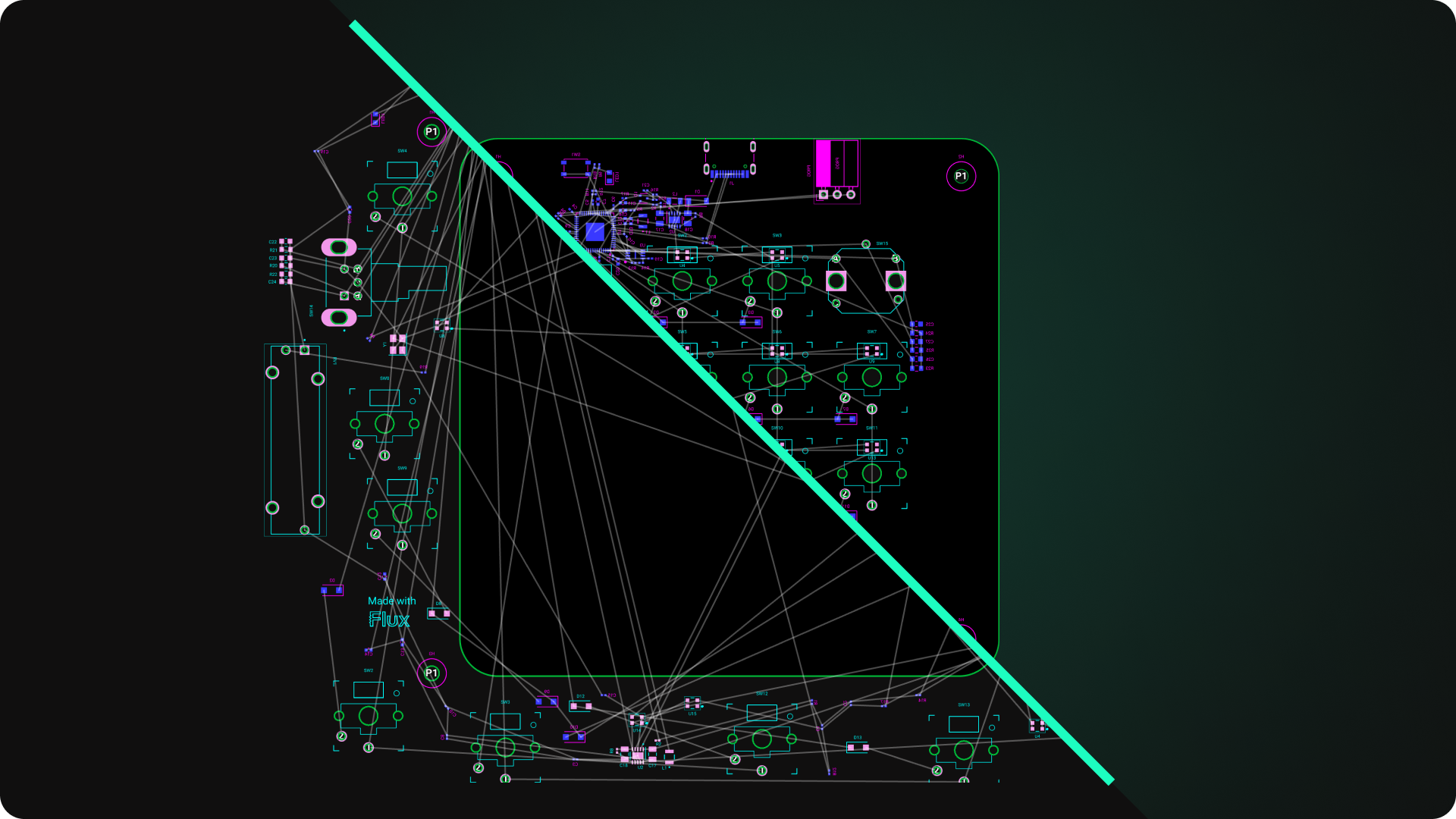
UWB Ranging Device Design
0:00
Work done
- Project description updated to: “Amplified UWB Ranging and Positioning Node with ESP32, DWM1000, GNSS, and External RF Front-End”
- System architecture defined (Mermaid flowchart saved)
Major components added
- U2 RFPA5542TR13 (PA)
- U3 MXDLN16G (LNA)
- U4 SKY13351-378LF (RF switch)
- J1 U.FL-R-SMT-1(10) (antenna)
- J2 61300621121 (programming header)
- J3 TYPE-C-6PFS (USB power)
- J4 B2B-PH-K-S (battery connector)
- L1 Generic Inductor (GNSS bias)
- C1 Generic Capacitor (GNSS bias)
Power & decoupling
- U5 XC6220B331MR 3.3 V/1 A LDO added
- C2–C8 generic capacitors placed for decoupling and bulk
- Power rails connected:
Signal integrity & control
- R1, R2, R3 set to 27 Ω and placed in series on SPI lines
- SPI signals routed through series resistors
- DWM1000 control signals wired:
- WAKEUP → ESP32:GPIO4
- ~RST → ESP32:GPIO0
- IRQ/GPIO8 → ESP32:GPIO6
- ESP32 UART pins configured for GNSS interface (UART_RX/UART_TX properties set)
Tasks remaining
- Identify GNSS module’s TX_PIN and RX_PIN via datasheet and add as component properties
- Connect GNSS TX_PIN → ESP32:UART_RX and GNSS RX_PIN → ESP32:UART_TX
- Connect RF path nets:
- Review schematic for completeness, component ratings, and missing nets
- Prepare PCB layout: footprints, 4-layer stackup, board outline, ground fills, mounting holes
- Define layout rules (50 Ω RF, power, digital) and proceed to placement & routing
Success criteria status
- Partial: Major components placed, power design and decoupling configured, SPI resistors and control signals wired
- Pending: GNSS interface wiring, full RF connectivity, matching networks, controlled-impedance routing, DRC and manufacturability checks
Recommended next step
Complete GNSS pin mapping (add TX_PIN/RX_PIN properties) and wire the GNSS interface to the ESP32 before final schematic review and moving on to PCB layout.
109 days
To get started, talk to Flux or create a New Document.
Welcome 👋
Flux accelerates your PCB design with AI.
Create your account to start using this component and bring your ideas to life.