Voltage Ripple Simulation

5:04

Reviewing simulation needs.

Reviewing the bill of materials.

Analyzing the schematic.

Preparing a simulation.

Searching for model paths.

Clarifying Schottky Model.

Establishing Circuit Connections.

Analyzing RC time constant.

Simplifying schematic details.

Running Simulator.

Evaluating data retrieval.

Evaluating simulation output.

Planning simulation plots.

Executing ripple measurement.

Evaluating ripple measurement simulation.

Running Simulator.

Considering circuit simulation.

Generating plot from data.

Extracting voltage data.

Building an ASCII chart.

Creating a simple ASCII plot.

Simulation complete.

Considering plotting options.

Linking project components.

I checked the actual project and simulated the circuit as currently drawn using the present values of C3, R3, R4, and IC1. For ripple, I used a settled window near the end of the transient, which is the correct way to measure supply ripple after startup

Output ripple at C3


MetricResult
Average settled output voltage27.961 V
Max in ripple window27.983 V
Min in ripple window27.955 V
Ripple voltage28.99 mV p-p
Measurement window45 ms to 50 ms
Total sim time50 ms
Plot of voltage across C3

Text


V(C3) / VOUT (V)
28 |                                                     *------*------*
27 |                                           *
24 |                                  *
20 |                           *
16 |
12 |
 8 |
 4 |         *
 0 |*
    +--------------------------------------------------------------- time
     0      0.16ms    1.34ms    2.89ms    4.00ms     34ms   45ms   50ms
What this means
  • The converter settles at about 28 V, not 16 V.
  • The ripple is fairly small in this simulation: about 29 mV peak-to-peak.
  • This is a light-load result, since the schematic’s main load is the feedback divider around R3 and R4.
If you want, I can next give you a zoomed ripple-only plot for 45 ms to 50 ms or simulate the circuit again with the divider changed for 16 V output.
Show ripple-only plot
Retarget 16V output
Add real load
19 days

Refine this doc
Ask about this doc
Project Specification
Version: 0.1.0 Date: ... Author: ... Status: ... Tags: ...

1. Executive Summary
What board we're building and the intended outcome in one paragraph. ...
2. Goals and Non-Goals
What must be true in this rev, and what is explicitly out of scope. ...
2.1 Goals
...
2.2 Non-Goals
...
3. System Overview
High-level description of the system and how the board fits into it. ...
3.1 Block Diagram
A space for a simple block diagram (power + data paths). ...
4. Requirements
What the design must do (behaviorally and electrically), independent of implementation details. ...
4.1 Functional Requirements
...
4.2 Electrical Requirements
Power input, rails, currents, interfaces, sensing accuracy, etc. ...
4.3 Environmental and Reliability Requirements
Operating ranges, expected lifetime, handling constraints, safety/compliance. ...
5. Constraints
Hard limits that shape the design choices. ...
5.1 Mechanical Constraints
Size, mounting, connector access, enclosure interactions. ...
5.2 Power and Thermal Constraints
Power source limits, dissipation ceilings, heat-sensitive components. ...
5.3 Layout / Implementation Constraints
High-level layout rules (keepouts, grounding intent, routing classes), without detailed PCB guidance. ...
5.4 Cost and Sourcing Constraints
Target cost range, availability requirements, preferred vendors/alternates policy. ...
6. Assumptions and Dependencies
What we assume is true, and what the design depends on (parts, standards, external systems). ...
7. Validation Criteria
What “done” means in terms of checks and evidence (not task lists). ...
7.1 Acceptance Tests
...
7.2 Review Checklist
...
Appendix (Optional)
Any supporting urls, analysis, datasets, or taxonomy notes that informed this spec. ...

    1. Executive Summary

    2. Goals and Non-Goals

    2.1 Goals

    2.2 Non-Goals

    3. System Overview

    3.1 Block Diagram

    4. Requirements

    4.1 Functional Requirements

    4.2 Electrical Requirements

    4.3 Environmental and Reliability Requirements

    5. Constraints

    5.1 Mechanical Constraints

    5.2 Power and Thermal Constraints

    5.3 Layout / Implementation Constraints

    5.4 Cost and Sourcing Constraints

    6. Assumptions and Dependencies

    7. Validation Criteria

    7.1 Acceptance Tests

    7.2 Review Checklist

    Appendix (Optional)

Documents

    Project Specification

Assets

thumbnail-boost.png

thumbnail-boost.png

thumbnail-boostThumbnail

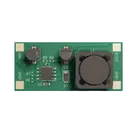
MC33063A Step-Up Converter

MC33063A Step-Up Converter thumbnail
High-level step-up converter project that uses the MC34063A family to boost an input supply to a regulated output voltage for general DC power conversion and evaluation.

Properties

Properties describe core aspects of the project.

Pricing & Availability

Distributor

Qty 1

Arrow

$0.03–$0.28

Digi-Key

$0.26–$1.13

LCSC

$0.25

Mouser

$0.99

TME

$1.05

Verical

$0.02–$0.25

Controls