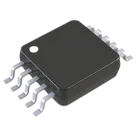
Pin Function Grouping

1:02

Read 10 knowledge entries.

Read PCA9615DPZ datasheet for pin configuration pin description pin nu.

Yes — from the PCA9615DPZ datasheet pin table, I’d group each pin exactly once like this:

Table


Functional groupPins
PowerPin 1 VDD(A) — I²C-bus side supply; Pin 10 VDD(B) — differential-side supply
GroundPin 5 VSS
Single-ended I²C / card sidePin 2 SDA; Pin 4 SCL
Enable / controlPin 3 EN
Differential clock pairPin 6 DSCLM; Pin 7 DSCLP
Differential data pairPin 8 DSDAP; Pin 9 DSDAM
I kept the groups mutually exclusive: no pin is duplicated across groups.
apply

1:02

Read schematic.

Thought for a moment

Thought for a moment

Thought for a moment

Thought for a moment

Thought for a moment

Thought for a moment

Thought for a moment

Thought for a moment

Thought for a moment

Thought for a moment

Thought for a moment

Thought for a moment

Thought for a moment

Thought for a moment

Thought for a moment

Thought for a moment

Thought for a moment

Thought for a moment

Thought for a moment

Thought for a moment

Thought for a moment

Thought for a moment

Thought for a moment

Thought for a moment

Thought for a moment

Thought for a moment

Thought for a moment

Thought for a moment

Thought for a moment

Thought for a moment

Thought for a moment

Thought for a moment

Thought for a moment

Thought for a moment

Thought for a moment

Thought for a moment

Thought for a moment

Thought for a moment

Thought for a moment

Thought for a moment

Thought for a moment

Thought for a moment

Thought for a moment

Thought for a moment

Thought for a moment

Thought for a moment

Thought for a moment

Thought for a moment

Thought for a moment

Thought for a moment

Thought for a moment

Thought for a moment

Thought for a moment

Thought for a moment

Thought for a moment

Thought for a moment

Thought for a moment

Thought for a moment

Thought for a moment

Thought for a moment

Thought for a moment

Thought for a moment

Thought for a moment

Thought for a moment

Thought for a moment

Thought for a moment

Thought for a moment

Thought for a moment

Thought for a moment

Thought for a moment

Thought for a moment

Thought for a moment

Thought for a moment

Thought for a moment

Thought for a moment

Thought for a moment

Thought for a moment

Thought for a moment

Thought for a moment

Thought for a moment

Thought for a moment

Thought for a moment

Thought for a moment

Thought for a moment

Thought for a moment

Thought for a moment

Thought for a moment

Thought for a moment

Thought for a moment

Thought for a moment

Thought for a moment

Thought for a moment

Thought for a moment

Thought for a moment

Thought for a moment

Thought for a moment

Thought for a moment

Thought for a moment

Read schematic.

Applied and verified. Each PCA9615DPZ terminal now has a mutually exclusive Pin Group, plus updated Pin Type, Section, Pin Orientation, and short Pin Description based on the datasheet pin table.
Run ERC/DRC
Check VDDA decoupling
Show pin table
Review PCA9615DPZ BOM

Set Pin Type to "Power In" on VDDA and VDDB, Set Section to "Power" on VDDA and VDDB, and 26 more changes

0:01

Set VDDA's Pin Type to "Power In"

Set VDDA's Section to "Power"

Set VDDA's Pin Group to "Power"

Set VDDA's Pin Orientation to "Top"

Set VDDA's Pin Description to "I2C side supply"

Set VDDB's Pin Type to "Power In"

Set VDDB's Section to "Power"

Set VDDB's Pin Group to "Power"

Set VDDB's Pin Orientation to "Top"

Set VDDB's Pin Description to "Differential side supply"

Set GND's Pin Type to "Ground"

Set GND's Section to "Ground"

Set GND's Pin Group to "Ground"

Set GND's Pin Orientation to "Bottom"

Set GND's Pin Description to "Ground supply voltage"

Set SDA's Pin Type to "Bi-Directional"

Set SDA's Section to "Communication"

Set SDA's Pin Group to "I2C"

Set SDA's Pin Orientation to "Left"

Set SDA's Pin Description to "Serial data I/O"

Set SCL's Pin Type to "Bi-Directional"

Set SCL's Section to "Communication"

Set SCL's Pin Group to "I2C"

Set SCL's Pin Orientation to "Left"

Set SCL's Pin Description to "Serial clock I/O"

Set EN's Pin Type to "Input"

Set EN's Section to "Control"

Set EN's Pin Group to "Control"

Set EN's Pin Orientation to "Left"

Set EN's Pin Description to "Enable input"

Set DSCL-'s Pin Type to "Bi-Directional"

Set DSCL-'s Section to "Communication"

Set DSCL-'s Pin Group to "Differential Clock"

Set DSCL-'s Pin Orientation to "Right"

Set DSCL-'s Pin Description to "Differential clock minus"

Set DSCL+'s Pin Type to "Bi-Directional"

Set DSCL+'s Section to "Communication"

Set DSCL+'s Pin Group to "Differential Clock"

Set DSCL+'s Pin Orientation to "Right"

Set DSCL+'s Pin Description to "Differential clock plus"

Set DSDA+'s Pin Type to "Bi-Directional"

Set DSDA+'s Section to "Communication"

Set DSDA+'s Pin Group to "Differential Data"

Set DSDA+'s Pin Orientation to "Right"

Set DSDA+'s Pin Description to "Differential data plus"

Set DSDA-'s Pin Type to "Bi-Directional"

Set DSDA-'s Section to "Communication"

Set DSDA-'s Pin Group to "Differential Data"

Set DSDA-'s Pin Orientation to "Right"

Set DSDA-'s Pin Description to "Differential data minus"

To get started, talk to Flux or create a New Document.

Documents

    Documents are markdown text files which describe project goals, capture details, or even simulation outputs.

    Assets

    step

    TSSOP-10_3x3mm_P0.5mm.step

    3D3D Model
    PCA9615DPZ-thumb.png

    PCA9615DPZ-thumb.png

    PCA9615DPZ-thumbThumbnail
    kicad_mod

    TSSOP-10_3x3mm_P0.5mm.kicad_mod

    Footprint_V5Footprint
    TS3A24159DGSR.svg

    TS3A24159DGSR.svg

    defaultDefault

    PCA9615DPZ

    PCA9615DPZ thumbnail
    Buffer, ReDriver 2 Channel 1MHz 10-TSSOP
    The PCA9615 is a Fast-mode Plus (Fm+) SMBus/I2C-bus buffer that extends the normal single-ended SMBus/I2C-bus through electrically noisy environments using a differential SMBus/I2C-bus (dI2C) physical layer, which is transparent to the SMBus/I 2C-bus protocol layer. It consists of two single-ended to differential driver channels for the SCL (serial clock) and SDA (serial data). The use of differential transmission lines between identical dI 2C bus buffers removes electrical noise and common-mode offsets that are present when signal lines must pass between different voltage domains, are bundled with hostile signals, or run adjacent to electrical noise sources, such as high energy power supplies and electric motors. The SMBus/I2C-bus was conceived as a simple slow speed digital link for short runs, typically on a single PCB or between adjacent PCBs with a common ground connection. Applications that extend the bus length or run long cables require careful design to preserve noise margin and reject interference. The dI2C-bus buffers were designed to solve these problems and are ideally suited for rugged high noise environments and/or longer cable applications, allow multiple targets, and operate at bus speeds up to 1 MHz clock rate. Cables can be extended to at least 3 meters (3 m), or longer cable runs at lower clock speeds. The dI2C-bus buffers are compatible with existing SMBus/I2C-bus devices and can drive Standard, Fast-mode, and Fast-mode Plus devices on the single-ended side. Signal direction is automatic, and requires no external control. To prevent bus latch up, the standard SMBus/I2C-bus side of the bus buffer, the PCA9615 employs static offset, care should be taken when connecting these to other SMBus/I2C-bus buffers that may not operate with offset. This device is a bridge between the normal 2-wire single-ended wired-OR SMBus/I2Cbus and the 4-wire dI2C-bus. Additional circuitry allows the PCA9615 to be used for ‘hot swap’ applications, where systems are always on, but require insertion or removal of modules or cards without disruption to existing signals. The PCA9615 has two supply voltages, VDD(A) and VDD(B). VDD(A), the card side supply, only serves as a reference and ranges from 2.3 V to 5.5 V. VDD(B), the line side supply, serves as the majority supply for circuitry and ranges from 3.0 V to 5.5 V.
    Key Features 2-channel differential I²C/SMBus buffer Supports: Standard-mode Fast-mode Fast-mode Plus (Fm+) up to 1 MHz Converts: Single-ended SDA/SCL ↔ differential dI²C Improved noise immunity using differential signaling Supports long cable communication: Up to approximately 3 meters or longer at lower speeds Hot-swap capability for live insertion/removal of modules Bus idle detection before reconnection Supports: Clock stretching Arbitration Multi-drop bus configurations Wide supply voltage range: VDD(A): 2.3 V to 5.5 V VDD(B): 3.0 V to 5.5 V 5.5 V tolerant I²C pins Operates from -40°C to +85°C Package: 10-pin TSSOP / MSOP Designed for electrically noisy systems and ground offset environments #CommonPartsLibrary #IntegratedCircuit

    Properties

    Integrated Circuit

    NXP Semiconductors

    PCA9615DPZ

    IC

    parametric-v1

    C3824272

    Pricing & Availability

    Distributor

    Qty 1

    Controls