Treat Flux like your intern. Tell it what you'd like to build and it'll get to work. You can also ask it questions, brainstorm ideas, and teach it your preferences. Learn More
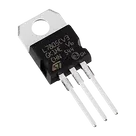
To ensure a constant 5V output from your 7805 voltage regulator, you'll want to use capacitors on both the input and output sides to improve stability and reduce noise. The 7805 datasheet typically recommends specific capacitor values for optimal performance, and while I can't access real-time databases for parts, I'll offer a standard recommendation based on typical applications. Here's what you'd usually see:
Input Capacitor: A 0.33µF ceramic capacitor is commonly recommended for the input side of the 7805. This capacitor helps to smooth out any fluctuations in the input voltage and ensures that the voltage regulator receives a steady voltage supply.
Connect C1:1 to VI:1 (assuming C1 is your input capacitor).
Connect C1:2 to GND:1.
Output Capacitor: A 0.1µF ceramic capacitor is often recommended for the output side. This helps in maintaining a steady output voltage by filtering out any noise or spikes in the output from the regulator.
Connect C2:1 to VO:1 (assuming C2 is your output capacitor).
Connect C2:2 to GND:1.
These values are typically effective for general applications, but your specific needs might vary based on the rest of your circuitry, such as the presence of large transient loads or RF sensitive circuits. It’s also a good idea to place these capacitors as close to the 7805 pins as possible to minimize any adverse effects of board layout on the regulator's performance.
If you have specific requirements or constraints (like size, temperature range, or voltage ratings) that need to be considered, please let me know, and we can refine these recommendations accordingly.
2y
Someone is typing...
2
VO
VI
GND
No files yet
Reviews
Documents
Documents are markdown text files which describe project goals, capture details, or even simulation outputs.
detoxbtw
copilot