Chat

Welcome to Flux

Treat Flux like your intern. Tell it what you'd like to build and it'll get to work. You can also ask it questions, brainstorm ideas, and teach it your preferences. Learn More

Explain this part
Write a part description
Describe each pin
Operating conditions
Electrical max ratings
Part Specifications
Application circuits
Verify Part Details
Recommend similar parts
Check availability & lifecycle
pid

2y
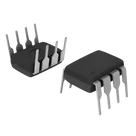
It seems like you want to create a PID controller using the TL082ACP Op-Amp. A PID controller (Proportional-Integral-Derivative) can be created using Op-Amps and a few additional components like resistors and capacitors.
A single PID control loop would look like this:
  1. Non-inverting input (1IN+ or 5IN+) of the Op-Amp is where the error signal (the difference between the setpoint and the process variable) enters the system.
  2. The output of the Op-Amp (either 1OUT or 7OUT) is the output/control signal of the PID controller.
  3. The inverting input (1IN- or 5IN-) connects the feedback. In PID this feedback signal is a sum of three components:
    • Proportional component - This is the error signal passed through a resistor.
    • Integral Component - This is the integral of the error signal formed by passing the error signal through a resistor and capacitor in series.
    • Derivative Component - This is the derivative of the error signal formed by passing the error signal through a capacitor.
For an example of a PID controller with the TL082ACP: Connect a signal corresponding to the desired value (setpoint) to 1IN+ and connect the actual value (process variable) to 1IN- through resistors and capacitors to implement the P, I, and D terms. The output of the controller will be 1OUT.
The exact values of the resistors and capacitors will depend on the specific needs of your system, such as the desired rise time, settling time, and overshoot.
Please remember to provide a power supply to VCC+ (positive supply voltage) and VCC- (negative supply voltage).
If you want to create a more complex PID system with multiple control loops, you can utilize the second op-amp in the TL082ACP in a similar way.
Please note this is a simplified description. The exact design will depend on the specifics of your system, and may need additional components such as a buffer or compensating network in more complex cases.
2y
Someone is typing...
2
2IN+
1IN_+
1IN-
2IN-


TL082ACP

TL082ACP thumbnail

Properties

Integrated Circuit

Texas Instruments

TL082ACP

U

Pricing & Availability

Distributor

Qty 1

Controls