Treat Flux like your intern. Tell it what you'd like to build and it'll get to work. You can also ask it questions, brainstorm ideas, and teach it your preferences. Learn More
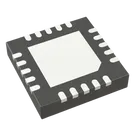
Designing an ECG (Electrocardiogram) circuit with the AD8232ACPZ-RL, a specialized IC for this purpose, involves understanding how to properly connect its pins to capture the heart's electrical signals accurately. Here's a general outline to get you started with connecting the AD8232 in an ECG application. Please adjust component values based on your specific requirements:
Power Supply Connections:
Connect +VS:Pins 1 to your positive power supply (usually +3.3V).
Connect GND:Pins 1 to the ground.
Electrode Inputs:
Connect electrodes for capturing the heart's electrical signals to +IN:Pins 1 and -IN:Pins 1. These are the positive and negative inputs from the body.
Right Leg Drive (RLD):
The RLD output helps to improve common-mode rejection. Connect RLD:Pins 1 to the right leg drive electrode on the body.
Reference Drive:
Connect REFIN:Pins 1 (reference input) to a stable reference voltage. This can often be tied to a mid-supply voltage.
REFOUT:Pins 1 provides a reference voltage output that can be used for REFIN:Pins 1 or as a reference for other parts of your system.
Output Signal:
The IAOUT:Pins 1 is the main ECG output. It can be connected to an ADC (Analog-to-Digital Converter) input of a microcontroller for digital processing.
Shutdown and Leads Off Detection:
Optional: connect *SDN:Pins 1 to a digital pin on a microcontroller to control the shutdown mode of the AD8232 for power saving.
Optional: connect LOD+:Pins 1 and LOD-:Pins 1 to microcontroller pins for detecting if the electrodes have fallen off or are not making good contact.
Filtering and Drive Circuits:
Depending on your specific requirements, additional passive components like resistors, capacitors, and inductors might be needed around OPAMP+:Pins 1, OPAMP-:Pins 1, HPDRIVE:Pins 1, and RLDFB:Pins 1 for filtering purposes and to configure the internal operational amplifiers.
Bypass Capacitor:
It's generally a good idea to place a bypass capacitor (e.g., 100nF ceramic) close to the power supply pins (+VS:Pins 1 and GND:Pins 1) to filter out noise.
Miscellaneous:
If you need to toggle between AC and DC modes for the leads off detection, use the AC/*DC:Pins 1 pin connected to a digital IO pin on your microcontroller.
HPSENSE:Pins 1 can be left unconnected unless you're implementing a specific functionality requiring the detection of the HP drive presence.
Remember, this is a guideline to start with. You'll need to refer to the AD8232 datasheet for detailed information on each pin and how to configure the device for optimal performance in your specific application. Additionally, ensure you're following any relevant biomedical device regulations or standards for your region or application.
imsanko
copilot
+VS:Pins 1to your positive power supply (usually +3.3V).GND:Pins 1to the ground.+IN:Pins 1and-IN:Pins 1. These are the positive and negative inputs from the body.RLD:Pins 1to the right leg drive electrode on the body.REFIN:Pins 1(reference input) to a stable reference voltage. This can often be tied to a mid-supply voltage.REFOUT:Pins 1provides a reference voltage output that can be used forREFIN:Pins 1or as a reference for other parts of your system.IAOUT:Pins 1is the main ECG output. It can be connected to an ADC (Analog-to-Digital Converter) input of a microcontroller for digital processing.*SDN:Pins 1to a digital pin on a microcontroller to control the shutdown mode of the AD8232 for power saving.LOD+:Pins 1andLOD-:Pins 1to microcontroller pins for detecting if the electrodes have fallen off or are not making good contact.OPAMP+:Pins 1,OPAMP-:Pins 1,HPDRIVE:Pins 1, andRLDFB:Pins 1for filtering purposes and to configure the internal operational amplifiers.+VS:Pins 1andGND:Pins 1) to filter out noise.AC/*DC:Pins 1pin connected to a digital IO pin on your microcontroller.HPSENSE:Pins 1can be left unconnected unless you're implementing a specific functionality requiring the detection of the HP drive presence.