Treat Flux like your intern. Tell it what you'd like to build and it'll get to work. You can also ask it questions, brainstorm ideas, and teach it your preferences. Learn More
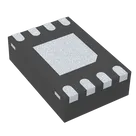
The 24LC64T-I/MC EEPROM uses three address pins (A0, A1, and A2) to set its I2C address. Each pin can be connected to either VCC (logic 1) or GND (logic 0), providing 8 possible combinations. The base address for this EEPROM is 0b1010000 for read operations.
To determine the 8 possible I2C addresses, we adjust the 3 least significant bits using the combinations of the address pins:
A2,A1,A0 = 000: Address = 0b1010000 = 0x50
A2,A1,A0 = 001: Address = 0b1010001 = 0x51
A2,A1,A0 = 010: Address = 0b1010010 = 0x52
A2,A1,A0 = 011: Address = 0b1010011 = 0x53
A2,A1,A0 = 100: Address = 0b1010100 = 0x54
A2,A1,A0 = 101: Address = 0b1010101 = 0x55
A2,A1,A0 = 110: Address = 0b1010110 = 0x56
A2,A1,A0 = 111: Address = 0b1010111 = 0x57
These hexadecimal values are the possible I2C addresses for your EEPROM.
Yes, the I2C addresses for write operations are essentially the same as for read operations with the 24LC64T-I/MC EEPROM. The only difference is in the least significant bit of the address byte, which is used to indicate whether the operation is a read (logical 1) or a write (logical 0).
The EEPROM utilizes a 7-bit address, and the operation type (read or write) is indicated by the least significant bit (LSB). Here's how it works:
For write operations, the LSB is 0.
For read operations, the LSB is 1.
Given the base address is 0b1010000 for this EEPROM:
For a write operation to address 0x50: The full address byte would be 0b10100000.
Since the operation bit is determined by the action being performed, you don't need to calculate separate addresses for read and write beyond the standard addressing above. Just remember to set the LSB accordingly during communication.
baueralex174
copilot
baueralex174
copilot