Chat
Welcome to Flux
Treat Flux like your intern. Tell it what you'd like to build and it'll get to work. You can also ask it questions, brainstorm ideas, and teach it your preferences. Learn More
Explain project
Write a project description
Find schematic issues
Create a test plan
Simulate a circuit
Prepare for Manufacturing
Component Selection Workflow
New Subsystem Wizard
Write I2C initialization code
Generate firmware skeleton
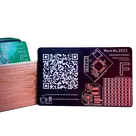
Welcome 👋
Flux helps you build PCBs faster with an AI teammate!
Create your account to collaborate, stay updated, fork your own version, and get instant answers from our AI agent.
adaza28
copilot
-
IC1
- Part Number: NT3H2111W0FTTJ
- Function: This is likely an NFC tag IC, which will allow the business card to communicate with NFC-enabled devices.
- Pins:
- LA: to Net LA
- VSS: to GND
- SCL: I²C Clock
- FD: Function or interrupt-driven
- SDA: I²C Data
- VCC: Power Supply
- VOUT: Output Voltage
- LB: to Net LB
-
LED9
- Pins:
- K: Cathode, connected to GND
- A: Anode, connected via resistor R5 for current limiting
-
C15
- Part Number: 04025A7R0CAT2A
- Description: 7 pF Capacitor
- Pins: P1 and P2 connected to NFC and LB nets respectively
-
C16
- Description: 220 nF Capacitor
- Pins:
- P1: connected to GND
- P2: connected to VCC
-
R5
- Value: 47$\Omega$ Resistor
- Pins:
- P1: to LED9:$A$
- P2: to Net $IC1 - VOUT$
Power Supply:- VCC Net: It supplies the necessary voltage to IC1 and other components.
Nets:-
LA Net:
- Connects IC1:$LA$ to C15:$P1$ and to Net LA
-
LB Net:
- Connects IC1:$LB$ to C15:$P2$ and Net LB
-
GND Net:
- Connects various component grounds such as IC1:$VSS$, LED9:$K$, and C16:$P1$.
-
Net $IC1 - VOUT$:
- Links IC1:$VOUT$, R5:$P2$, VCC:$P1$, and C16:$P2$.
-
Net $LED9 - A$:
- Links LED9:$A$ to R5:$P1$.
Notes and Boilerplates:- MCU Boilerplate: Acts as a placeholder to possibly add more functionality using a microcontroller.
- Boost Converter: Indicating possible power regulation on the card.
- Notes: Instruction for adding QR code and finding modules in the Flux library.
Build Instructions and Licensing: