17vrdnyk

/

All changes saved

0

1

Files

Schematic

PCB

Log InSign Up

Connecting Type C to Raspberry Pi

traviz

traviz

just to power raspberry pi 5 from type c female port
397 days

flux

1:01

Below is a suggestion for powering your Raspberry Pi 5 using a USB‑C female port. In essence, you want the following:
  1. Power Lines:
    • Connect the USB‑C’s VBUS (5 V) pin to the Raspberry Pi’s 5 V rail
    • Tie the USB‑C GND pins to the common ground (using the Ground component)
  2. CC Pin Configuration:
    • To ensure the Pi (as a power sink) is correctly identified by the source, add a 5.1 kΩ pull‑down resistor to one of the CC pins (typically CC1). This resistor signals that the port is a sink; if you’re not planning to include a full USB Power Delivery controller, this is a common and sufficient approach.
  3. Additional Considerations:
    • Verify that the cathode protection or any reverse-polarity protection circuit is in place if needed.
    • Make sure your power supply via the USB‑C cable is rated for the required current (the Raspberry Pi 5 typically needs a robust 5 V supply, often around 3 A).
Let me know if you’d like suggested schematic changes (e.g., wiring the [J2] USB‑C connector’s VBUS, GND, and CC pin along with adding the 5.1 kΩ resistor) to be applied in your project.
Add schematic changes
Power protection solutions
Confirm resistor application
397 days

​
Sign up to send

To get started, talk to Flux or create a New Document.

Reviews

Documents

    Documents are markdown text files which describe project goals, capture details, or even simulation outputs.

    Assets

    Assets are files uploaded to this project which can be used in various ways.

    Intimate Aqua Electronic Thumb thumbnail
    Welcome to your new project. Imagine what you can build here.

    Properties

    Properties describe core aspects of the project.

    Pricing & Availability

    Distributor

    Qty 1

    Arrow

    $0.24–$0.27

    Digi-Key

    $2.24–$3.95

    LCSC

    $4.16

    Mouser

    $3.58

    Verical

    $0.21–$0.60

    Controls

    Welcome 👋

    Flux helps you build PCBs faster with an AI teammate!

    Create your account to collaborate, stay updated, fork your own version, and get instant answers from our AI agent.
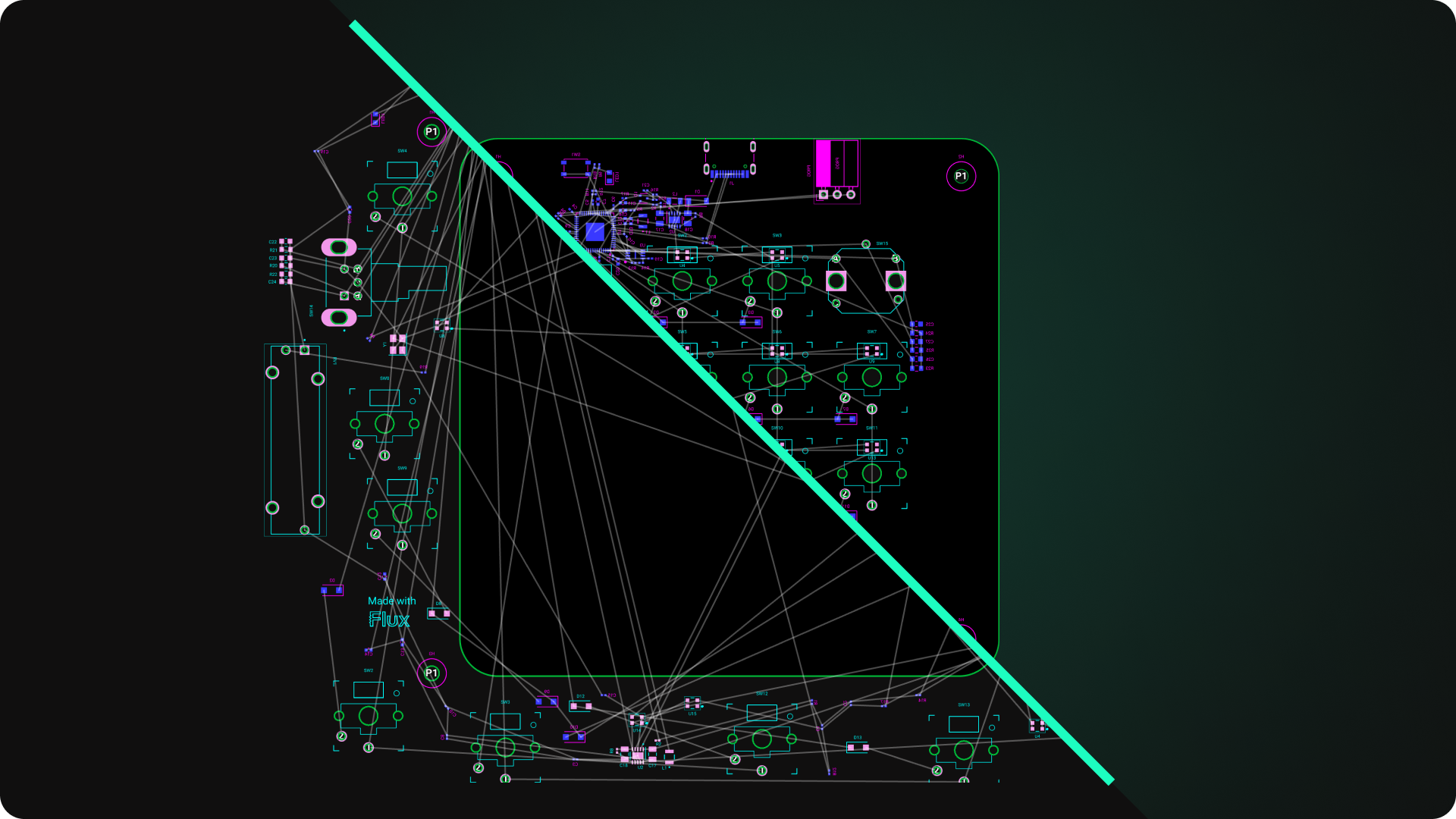
        Introducing AI Placement!
        AI Placement Demo

        AI-Powered Component Placement

        Let AI place your components intelligently. AI Placement analyzes your schematic and positions components for optimal routing, signal integrity, and board density.

        From Schematic to Layout in Seconds

        Skip the tedious manual placement. AI Placement generates a starting layout you can refine, saving hours of repetitive work on every new design.

        Works With Auto-Layout

        Pair AI Placement with Auto-Layout for a complete AI-driven PCB design flow — from component placement through trace routing, all with one click.

        Try it