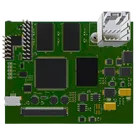
Vehicle Display System Overview

5:10

General
Project
BOM
Datasheet
File
Knowledge Base
Web

Gathering project components.

Verifying component specifications.

Exploring op-amps and connections.

Linking components together.

Using Knowledge Base Tool.

Using BOM Tool.

Looking for "Overview description of LH75401 features" in LH754xx%20ver1.2.pdf

Looking for "LCD controller or display interface features" in LH754xx%20ver1.2.pdf

Looking for "External memory interface bus and supported memory types" in LH754xx%20ver1.2.pdf

Looking for "Device description and interface width options" in 316577_j3d_monolithic_ds.pdf?rev=77975b59947145aab439595289cf09bd

Looking for "Device description and organization" in Infineon-CY7C1041CV33_Automotive_4-Mbit_(256_K_16)_Static_RAM_Datasheet-AdditionalTechnicalInformation-v04_00-EN.pdf?fileId=8ac78c8c7d0d8da4017d0ecb80544500&utm_source=cypress&utm_medium=referral&utm_campaign=202110_globe_en_

Looking for "Overview description and function" in TJA1050-3083416.pdf

Looking for "What topology is it and typical use" in 1767fb.pdf

Looking for "Overview and typical application (positive/negative outputs) for LCD bias" in 1945fa.pdf

Looking for "Overview description and intended use" in 1932f.pdf

Looking for "Overview description and typical output configuration" in suppproductinfo.tsp?distId=10&gotoUrl=https%3A%2F%2Fwww.ti.com%2Flit%2Fgpn%2Flm4861

Looking for "Overview description and function" in mc74lcx139-d.pdf

Looking for "Overview description and function" in tl3472.pdf

Looking for "Overview description and function" in suppproductinfo.tsp?distId=10&gotoUrl=https%3A%2F%2Fwww.ti.com%2Flit%2Fgpn%2Flmv341-n

Looking for "device description overview parallel NOR flash 32 Mbit and bus width options" in 316577_j3d_monolithic_ds.pdf?rev=77975b59947145aab439595289cf09bd

Looking for "device description organization and interface width for CY7C1041CV33" in Infineon-CY7C1041CV33_Automotive_4-Mbit_(256_K_16)_Static_RAM_Datasheet-AdditionalTechnicalInformation-v04_00-EN.pdf?fileId=8ac78c8c7d0d8da4017d0ecb80544500&utm_source=cypress&utm_medium=referral&utm_campaign=202110_globe_en_

Looking for "Overview or general description" in 316577_j3d_monolithic_ds.pdf?rev=77975b59947145aab439595289cf09bd

Looking for "General description overview of LM4861 audio power amplifier" in suppproductinfo.tsp?distId=10&gotoUrl=https%3A%2F%2Fwww.ti.com%2Flit%2Fgpn%2Flm4861

Looking for "General description overview of MC74LCX139" in mc74lcx139-d.pdf

Searching web for: "LM4861 datasheet PDF overview"

Found 1 results.

Searching web for: "JS28F320J3D75A datasheet PDF overview 32Mbit NOR Parallel"

Found 1 results.

Establishing component links and queries.

Here is a system-level explanation of your Vehicle Display System project.
Purpose
  • Embedded controller that drives a TFT LCD panel with backlight, interfaces to vehicle CAN, handles user input (buttons, touchscreen), and provides audio output. The power subsystem adapts the vehicle’s +12 V rails into the internal supplies and LCD bias rails.
Core components and roles

Table


ComponentRole and key features
U1System MCU: SHARP LH75401 ARM7TDMI-S SoC. Datasheet states 84 MHz CPU, integrated color LCD controller supporting STN, TFT, HR-TFT, AD-TFT, 12-bit video bus, 32 KB SRAM (16 KB TCM + 16 KB), ADC and touchscreen controller, CAN 2.0B controller, external Static Memory Controller supporting 8-bit and 16-bit devices and four chip selects.
U4Parallel NOR Flash: Micron JS28F320J3D75A, 32 Mbit StrataFlash J3 family, 8-bit or 16-bit bus organization, 75 ns random access, CFI command set.
U5, U6, U8, U9External SRAM: CY7C1041CV33 4 Mbit asynchronous SRAM. Datasheet indicates 256 K x 16 organization, 16-bit interface. Used as frame buffer and general external RAM for the MCU.
U7Address decoding: MC74LCX139 dual 2-to-4 decoder, used to generate active-low chip enables from address lines for external memory devices.
J3LCD connector: Samtec ZF5S-50-02-T-WT, 50-position 0.5 mm FFC. Breaks out LCD pixel buses (LCDVDx), clock, control, and LED backlight pins.
U18Backlight LED driver: LT1932 constant-current boost LED driver, sets and PWM dims LED current for the LCD backlight.
U17LCD bias rails: LT1945 dual micropower DC-DC with positive and negative outputs for LCD glass bias (e.g., VGH, VGL, VEE).
U13Main buck regulator: LT1767, 1.25 MHz monolithic buck regulator for primary downconversion from vehicle +12 V to local rails.
U16Auxiliary DC-DC: LT1616 buck converter for additional rails.
U20Audio power amplifier: LM4861 mono BTL class-AB speaker/headphone driver with shutdown.
U10Dual op-amp: TL3472, 4 MHz GBW, 13 V per us slew, single-supply capable. Used for signal conditioning.
U19Quad op-amp: LMV344, low-voltage, low-power, rail-to-rail output device used for analog front ends.
U11CAN transceiver: TJA1050 high-speed CAN, ISO 11898 compliant, up to 1 Mbaud, silent mode and TXD dominant time-out.
J22x10 2.54 mm header, used for JTAG, debug, or expansion lines.
J18-pin header, vehicle I-O or harness interface.
Inductors L1 L2 L3 L4 L5Power inductors for the regulators above.
Protection F1 F2, diodes D2 D5 D6PTC fuses and Schottky diodes for inrush, reverse-polarity, rail OR-ing, and surge steering on +12 V inputs.
How the pieces interact
  • MCU, external memory, and decoder
    • U1 exposes a 8 or 16-bit external static memory bus via its Static Memory Controller. The netlist shows shared address lines A0..Axx and data D0..D15 feeding U4 and the four SRAMs U5, U6, U8, U9 with OE#, WE#, and CSx signals. U7 decodes address bits to generate chip-selects and bank enables.
    • The FLASH U4 stores code or assets. The SRAMs provide high-bandwidth frame buffers and working memory for the LCD controller DMA.
  • LCD and backlight
    • The MCU’s integrated LCD controller drives the panel via the 50-pin FFC J3 using pixel buses (LCDVDx), LCD clock, and control lines. Datasheet for U1 supports TFT panels and a 12-bit video bus.
    • Backlight LEDs are driven by the constant-current boost U18 into the LED-A and LED-K nodes on the cable, with switching elements and diodes to shape current and protect.
    • LCD glass bias rails (e.g., VGH, VGL, VEE) are generated by U17 dual-output DC-DC.
  • Power tree
    • Vehicle +12 V enters through protection parts F1, F2, and Schottky diodes D2, D5, D6.
    • U13 steps +12 V down to the main logic rail(s). U16 provides a secondary rail. U17 and U18 serve the LCD biases and backlight.
  • Vehicle communications
    • The MCU’s CAN controller connects through U11 to the vehicle bus at CANH and CANL.
  • Audio path
    • Conditioning stages with U10 and U19 feed the BTL power stage U20 to drive a speaker or line-out. Control nets like PWM or enable pins provide muting and level control.
Design, implementation, and functionality
  • Display pipeline
    • The LCD controller in U1 streams pixel data from external SRAM over the LCDVDx buses into the panel via J3. External memory bandwidth and bus arbitration with the CPU and DMA are central to flicker-free rendering.
  • External memory map and decode
    • U1 supports four external memory banks with 8 or 16-bit width; U7 helps generate mutually exclusive CS lines. The FLASH U4 is a 32 Mbit device with x8 or x16 organization, and each SRAM device is 256 K x 16; this enables flexible banking and buffering.
  • Power subsystem
    • The primary buck U13 feeds logic rails and downstream converters. LCD bias generation is split by function: U18 drives LEDs; U17 creates positive and negative bias rails. Inductors L1 to L5 are sized per regulator requirements.
Key technologies and dependencies
  • LCD interface: TFT RGB over a 12-bit video bus from U1.
  • External memory: Parallel NOR flash U4, four banks of x16 SRAM U5, U6, U8, U9.
  • CAN physical layer: U11 ISO 11898 transceiver.
  • DC-DC conversion: Buck regulators U13, U16, dual positive-negative converter U17, LED driver U18.
  • Audio: Conditioning op-amps U10, U19, power amp U20.
Trade-offs and optimizations
  • MCU choice
    • The LH75401 integrates an LCD controller and ADC-touch controller, simplifying BOM and timing integration versus using an external LCD timing ASIC. Trade-off is an older ARM7 core and limited internal SRAM, thus reliance on external memory and careful bus timing.
  • Memory architecture
    • Parallel NOR U4 provides execute-in-place style reads and fast random access vs NAND; trade-off is lower density and higher cost per bit. Multiple x16 SRAMs enable high pixel bandwidth at the expense of board area and power.
  • Power stages
    • Separate rails for logic, LED backlight, and LCD bias let each stage be optimized for noise and efficiency. The trade-off is more regulators and layout complexity.
  • Audio
    • Class-AB U20 gives low noise and simplicity; trade-off is efficiency compared to class-D.
Potential challenges and performance considerations
  • External bus timing and bandwidth
    • Meeting LCD pixel timing while sharing the external bus among CPU, DMA, flash, and SRAM requires correct SMC wait-state tuning and clean decode with U7. Consider worst-case page and random accesses for U4.
  • Power integrity and EMI
    • Switching regulators need tight input and output loops, datasheet-specified inductors, and disciplined ground return. Knowledge base guidance: include the datasheet-specified inductor and verify the inductance is supported to prevent instability or regulation failure, and manage ground planes to avoid coupling switching noise into analog.
  • CAN physical layer robustness
    • Knowledge base: include 120 ohm termination on the CAN bus. Ensure proper TVS and common-mode choke as needed for automotive EMC.
  • Backlight and LCD bias
    • Ensure the LED current setpoints in U18 meet brightness and thermal limits. U17 can generate high-voltage outputs; ensure clearance, ratings, and panel requirements are met.
  • Audio noise coupling
    • Route U20 away from switching nodes and use star-grounding or split returns to avoid buzz. Keep gain-setting networks tight and use proper decoupling.
Real-world applications
  • Aftermarket or service display for a Tesla Roadster integrating vehicle status via CAN, driving a TFT panel with backlight, playing prompts or chimes, and accepting touch or buttons.
Areas for improvement, scalability, and future enhancements
  • Availability and lifecycle
    • Some parts are marked NRND or obsolete in the BOM. Consider updating U11 to an active automotive transceiver, and evaluating a modern MCU with integrated TFT and larger on-chip SRAM to reduce external memory count.
  • Power budget and headroom
    • Knowledge base suggests ensuring regulator current capacity with at least 25 percent margin. Re-validate worst-case current for backlight, logic, and audio.
  • EMC hardening
    • Add or verify CAN 120 ohm termination near the connector, common-mode choke, ESD TVS at J3 and external ports, and RC snubbers where datasheets recommend. Avoid LC or pi filters with 10 kHz cutoff on regulator outputs due to potential feedback loop instability.
  • Layout refinements
    • Follow switching regulator layout guidance: shortest high-dI/dt loops, local ceramic bypass at VIN and VOUT, separate analog ground returns for U10, U19, and U20.
  • Serviceability and test
    • Ensure JTAG connections on J2 are complete and accessible, add test points for all rails, and label panel connector J3 pin functions.
Notes tied to datasheets
  • U1 LCD controller, external memory interface, and SoC features are from the LH75401 datasheet.
  • U4 capacity, bus width options, and 75 ns speed are from JS28F320J3D family datasheet sources.
  • U5 organization 256 K x 16 from the Infineon CY7C1041CV33 datasheet.
  • U11 CAN physical layer capabilities, ISO 11898 compliance from the TJA1050 datasheet.
  • U13 is a 1.25 MHz monolithic buck regulator per its datasheet.
  • U17 is a dual converter producing positive and negative outputs suitable for LCD bias rails.
  • U18 is a constant-current LED driver with PWM dimming capability for the backlight.
  • U20 LM4861 is a single-supply BTL audio power amplifier with shutdown per the TI datasheet overview.
  • U7 MC74LCX139 is a dual 2-to-4 decoder used for memory address decoding.
  • U10 TL3472 features 4 MHz GBW and 13 V per us slew per its datasheet.
  • U19 LMV344 is a low-voltage quad op-amp with rail-to-rail output per its datasheet.
If you want, I can dive deeper into any subsystem, trace specific nets between chips, or review power headroom and CAN termination with the schematic.
Deeper power-tree review
External memory timing
CAN bus robustness
LCD/backlight details
Modernization options
58 days

Ready.


  • Ground
    A common return path for electric current. Commonly known as ground.
  • Net Portal
    Wirelessly connects nets on schematic. Used to organize schematics and separate functional blocks. To wirelessly connect net portals, give them same designator. #portal
  • Power Net Portal
    Wirelessly connects power nets on schematic. Identical to the net portal, but with a power symbol. Used to organize schematics and separate functional blocks. To wirelessly connect power net portals, give them the same designator. #portal #power
  • Generic Resistor
    A generic fixed resistor for rapid developing circuit topology. Save precious design time by seamlessly add more information to this part (value, footprint, etc.) as it becomes available. Standard resistor values: 1.0Ω 10Ω 100Ω 1.0kΩ 10kΩ 100kΩ 1.0MΩ 1.1Ω 11Ω 110Ω 1.1kΩ 11kΩ 110kΩ 1.1MΩ 1.2Ω 12Ω 120Ω 1.2kΩ 12kΩ 120kΩ 1.2MΩ 1.3Ω 13Ω 130Ω 1.3kΩ 13kΩ 130kΩ 1.3MΩ 1.5Ω 15Ω 150Ω 1.5kΩ 15kΩ 150kΩ 1.5MΩ 1.6Ω 16Ω 160Ω 1.6kΩ 16kΩ 160kΩ 1.6MΩ 1.8Ω 18Ω 180Ω 1.8KΩ 18kΩ 180kΩ 1.8MΩ 2.0Ω 20Ω 200Ω 2.0kΩ 20kΩ 200kΩ 2.0MΩ 2.2Ω 22Ω 220Ω 2.2kΩ 22kΩ 220kΩ 2.2MΩ 2.4Ω 24Ω 240Ω 2.4kΩ 24kΩ 240kΩ 2.4MΩ 2.7Ω 27Ω 270Ω 2.7kΩ 27kΩ 270kΩ 2.7MΩ 3.0Ω 30Ω 300Ω 3.0KΩ 30KΩ 300KΩ 3.0MΩ 3.3Ω 33Ω 330Ω 3.3kΩ 33kΩ 330kΩ 3.3MΩ 3.6Ω 36Ω 360Ω 3.6kΩ 36kΩ 360kΩ 3.6MΩ 3.9Ω 39Ω 390Ω 3.9kΩ 39kΩ 390kΩ 3.9MΩ 4.3Ω 43Ω 430Ω 4.3kΩ 43KΩ 430KΩ 4.3MΩ 4.7Ω 47Ω 470Ω 4.7kΩ 47kΩ 470kΩ 4.7MΩ 5.1Ω 51Ω 510Ω 5.1kΩ 51kΩ 510kΩ 5.1MΩ 5.6Ω 56Ω 560Ω 5.6kΩ 56kΩ 560kΩ 5.6MΩ 6.2Ω 62Ω 620Ω 6.2kΩ 62KΩ 620KΩ 6.2MΩ 6.8Ω 68Ω 680Ω 6.8kΩ 68kΩ 680kΩ 6.8MΩ 7.5Ω 75Ω 750Ω 7.5kΩ 75kΩ 750kΩ 7.5MΩ 8.2Ω 82Ω 820Ω 8.2kΩ 82kΩ 820kΩ 8.2MΩ 9.1Ω 91Ω 910Ω 9.1kΩ 91kΩ 910kΩ 9.1MΩ #generics #CommonPartsLibrary
  • Generic Capacitor
    A generic fixed capacitor ideal for rapid circuit topology development. You can choose between polarized and non-polarized types, its symbol and the footprint will automatically adapt based on your selection. Supported options include standard SMD sizes for ceramic capacitors (e.g., 0402, 0603, 0805), SMD sizes for aluminum electrolytic capacitors, and through-hole footprints for polarized capacitors. Save precious design time by seamlessly add more information to this part (value, footprint, etc.) as it becomes available. Standard capacitor values: 1.0pF 10pF 100pF 1000pF 0.01uF 0.1uF 1.0uF 10uF 100uF 1000uF 10,000uF 1.1pF 11pF 110pF 1100pF 1.2pF 12pF 120pF 1200pF 1.3pF 13pF 130pF 1300pF 1.5pF 15pF 150pF 1500pF 0.015uF 0.15uF 1.5uF 15uF 150uF 1500uF 1.6pF 16pF 160pF 1600pF 1.8pF 18pF 180pF 1800pF 2.0pF 20pF 200pF 2000pF 2.2pF 22pF 20pF 2200pF 0.022uF 0.22uF 2.2uF 22uF 220uF 2200uF 2.4pF 24pF 240pF 2400pF 2.7pF 27pF 270pF 2700pF 3.0pF 30pF 300pF 3000pF 3.3pF 33pF 330pF 3300pF 0.033uF 0.33uF 3.3uF 33uF 330uF 3300uF 3.6pF 36pF 360pF 3600pF 3.9pF 39pF 390pF 3900pF 4.3pF 43pF 430pF 4300pF 4.7pF 47pF 470pF 4700pF 0.047uF 0.47uF 4.7uF 47uF 470uF 4700uF 5.1pF 51pF 510pF 5100pF 5.6pF 56pF 560pF 5600pF 6.2pF 62pF 620pF 6200pF 6.8pF 68pF 680pF 6800pF 0.068uF 0.68uF 6.8uF 68uF 680uF 6800uF 7.5pF 75pF 750pF 7500pF 8.2pF 82pF 820pF 8200pF 9.1pF 91pF 910pF 9100pF #generics #CommonPartsLibrary
  • Generic Inductor
    A generic fixed inductor for rapid developing circuit topology. *You can now change the footprint and 3D model at the top level anytime you want. This is the power of #generics
  • Terminal
    Terminal
    An electrical connector acting as reusable interface to a conductor and creating a point where external circuits can be connected.
  • RMCF0805JT47K0
    47 kOhms ±5% 0.125W, 1/8W Chip Resistor 0805 (2012 Metric) Automotive AEC-Q200 Thick Film #forLedBlink
  • 875105359001
    10uF Capacitor Aluminum Polymer 20% 16V SMD 5x5.3mm #forLedBlink #commonpartslibrary #capacitor #aluminumpolymer #radialcan
  • CTL1206FYW1T
    Yellow 595nm LED Indication - Discrete 1.7V 1206 (3216 Metric) #forLedBlink

Inspect

Vehicle Display System

Vehicle Display System
Description

Created
Last updated by vasy_skral
4 Contributor(s)
vasy_skral
vasyl
nico
jharwinbarrozo

Controls

Availability & Pricing

DistributorQty 1
Arrow$29.65–$54.11
Digi-Key$62.16–$67.12
LCSC$78.71–$79.07
Mouser$69.81–$70.17
Verical$19.35–$37.38

Assets