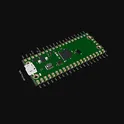
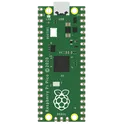
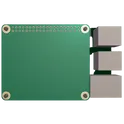
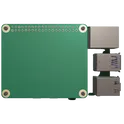
Explore the Raspberry Pi Pico Template Unleash the power of these flexible microcontroller boards, starting at just $4. The Raspberry Pi Pico series features a range of compact, high-performance boards powered by the RP2040 chip. #project-template #template #raspberry #pi #pico
13 Stars
AvocAudio is a compact tinyML community board designed for extensive audio data collection for various tinyML applications. It leverages the Raspberry Pi RP2040 and integrates a LoRa-E5 LoRaWAN Transceiver Module for connectivity. Equipped with an SD card slot for local data storage, the board ensures efficient data collection. The board operates on solar power or a lithium-ion battery, ensuring flexible and efficient energy use. #audioDevices #raspberryPi #rp2040 #lorawan #iot #solar
10 Stars
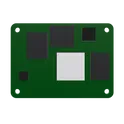
The power of Raspberry Pi 4 in a compact form factor for deeply embedded applications. Raspberry Pi Compute Module 4 incorporates a quad-core ARM Cortex-A72 processor, dual video output, and a wide selection of other interfaces. Available in 32 variants, with a range of RAM and eMMC Flash options, and with or without wireless connectivity. raspberry pi4 #rpi #pi
9 Stars
Powerful, flexible microcontroller boards, available from $4. The Raspberry Pi Pico series is a range of tiny, fast, and versatile boards built using RP2040 You may consider using the latest next-generation [Raspberry Pi Pico 2 shield](https://www.flux.ai/jharwinbarrozo/raspberry-pi-pico-2-shield) instead.
7 Stars
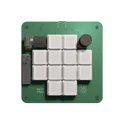
The Pico Macro Keyboard is a compact and powerful macro pad built using the latest Raspberry Pi Pico 2. Inspired by the Figma Creator Micro, this keyboard is designed for customizable control and enhanced productivity. It features mechanical switches with per-key RGB lighting, along with two rotary encoders for added functionality. With a modular 4-layer PCB and fully customizable keymaps, it seamlessly integrates with any software, making it perfect for designers, gamers, and power users alike.
6 Stars
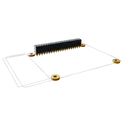
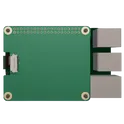
Template for Raspberry Pi 5 Model Shield. Include an official pinout so you will always know Raspberry Pi names, the alternative roles of pins, which one is SDA, or SCL, etc. On PCB you can find the 3D model of the Raspberry Pi itself along with the board outline on the silkscreen. #RaspberryPi #Raspberry #RaspberryPi5 #raspberry #Pi #RPi #Shield #template #project #project-template
4 Stars
The XIAO RP2350 packs the power of the Raspberry Pi RP2350 (switchable architecture of dual Arm Cortex-M33 cores running at 150MHz with FPU, and dual open-hardware Hazard3 RISC‑V cores, enhanced security and encryption) into the classic XIAO form factor. Measuring just 21x17.5mm, it features 19 multifunction GPIOs, an RGB LED, and a Battery Management System with ultra-low power consumption of 27μA, battery power supply, and direct battery voltage measurement. Thanks to the XIAO ecosystem, the XIAO RP2350 is compatible with a wide range of add-ons, including displays, LED matrix, Grove modules, CAN Bus, Vision AI sensors, and mmWave sensors. With native support for MicroPython, C, and C++, the XIAO RP2350 is perfect for developers of all levels looking to create compact, battery-powered applications for smart control, wearables, DIY keyboards, and more.
4 Stars
Project Overview: This project is an enhanced LED blinking circuit that goes beyond a simple 555 timer-based design. It incorporates additional features such as random blinking patterns, speed control, and a start/stop function. The project utilizes a microcontroller, such as an Arduino or Raspberry Pi, to control the blinking patterns, speed, and start/stop functionality. LED Blinking: The board features a total of 8 LEDs that blink in various random patterns. When the board is powered on, even before user interaction, the LEDs start blinking randomly, creating an eye-catching display. Each LED has its own current-limiting resistor to ensure proper current flow and prevent damage. The microcontroller is programmed to generate random blinking patterns for the LEDs, ensuring that the LEDs do not blink in a predictable or sequential order. This random blinking adds an element of unpredictability and visual interest to the project. Speed Control: The board includes two speed control buttons that allow the user to adjust the blinking speed of the LEDs. Button 1 is designated as the "fast" button, increasing the blinking speed when pressed, while Button 2 is designated as the "slow" button, decreasing the blinking speed when pressed. The speed control provides a range of blinking speeds, from a slow, gradual blink to a rapid, strobe-like effect. The microcontroller monitors the state of the speed control buttons and adjusts the blinking speed accordingly. Start/Stop Functionality: A third button serves as a start/stop control. When pressed, it toggles the blinking of the LEDs on or off. This allows the user to freeze the blinking pattern at any desired moment or resume the blinking when desired. The microcontroller handles the start/stop functionality by turning the LEDs on or off based on the state of the start/stop button. Manual Speed Adjustment: In addition to the speed control buttons, the board includes a potentiometer or variable resistor. This component allows the user to manually adjust the blinking speed of the LEDs by turning the knob or sliding the control. The manual speed adjustment provides more precise and customizable control over the blinking speed compared to the preset speeds of the buttons. The microcontroller reads the analog value from the potentiometer and adjusts the blinking speed accordingly. Power and Connectivity: The board is powered through a USB-C or USB-micro B connector, allowing it to be easily connected to a power source such as a computer or wall adapter. A voltage regulator may be included to ensure a stable and appropriate voltage supply to the components. A power switch is incorporated to conveniently turn the board on or off.
4 Stars
The Pico Macro Keyboard is a compact and powerful macro pad built using the latest Raspberry Pi Pico 2. Inspired by the Figma Creator Micro, this keyboard is designed for customizable control and enhanced productivity. It features mechanical switches with per-key RGB lighting, along with two rotary encoders for added functionality. With a modular 4-layer PCB and fully customizable keymaps, it seamlessly integrates with any software, making it perfect for designers, gamers, and power users alike.
3 Stars
The Raspberry Pi Pico 2 is now equipped with the RP2350, a cutting-edge, high-performance microcontroller designed with enhanced security and versatility in mind. Every element of its design has been upgraded, from the advanced CPU cores to the innovative PIO (Programmable I/O) interfacing subsystem. #raspberrypi #newpico #pipico2 #pipico #rp2350 #shield
3 Stars
This compact breakout board makes it easy to add high-quality audio output to your microcontroller projects using the MAX98357A/B Class D audio amplifier. Perfect for Arduino, ESP32, Raspberry Pi, or any microcontroller with I2S output capabilities. Features High-Performance Audio: Delivers Class AB audio quality with Class D efficiency (92% efficient at 1W) Powerful Output: 3.2W into 4Ω speakers at 5V supply Clean Sound: Low distortion (0.013% THD+N at 1kHz) Wide Supply Range: Operates from 2.5V to 5.5V Simplified I2S Interface: No MCLK required, just BCLK, LRCLK, and DIN Selectable Gain: Solder jumpers for easy gain selection (3dB, 6dB, 9dB, 12dB, or 15dB) Channel Selection: Configure for left, right, or combined (mono) output Filterless Design: No need for external output filtering components Compact Form Factor: Minimal board space with optimized layout Applications Smart speakers and voice assistants Portable audio devices IoT audio projects Gaming devices and sound effects Educational audio projects Digital instrument amplification The FLUX MAX98357 breakout board requires only three I/O pins plus power, making it the perfect audio solution for projects where simplicity and sound quality matter.
2 Stars
AvocAudio is a compact tinyML community board designed for extensive audio data collection for various tinyML applications. It leverages the Raspberry Pi RP2040 and integrates a LoRa-E5 LoRaWAN Transceiver Module for connectivity. Equipped with an SD card slot for local data storage, the board ensures efficient data collection. The board operates on solar power or a lithium-ion battery, ensuring flexible and efficient energy use. #audioDevices #raspberryPi #rp2040 #lorawan #iot #solar
2 Stars
AvocAudio is a compact tinyML community board designed for extensive audio data collection for various tinyML applications. It leverages the Raspberry Pi RP2040 and integrates a LoRa-E5 LoRaWAN Transceiver Module for connectivity. Equipped with an SD card slot for local data storage, the board ensures efficient data collection. The board operates on solar power or a lithium-ion battery, ensuring flexible and efficient energy use. #audioDevices #raspberryPi #rp2040 #lorawan #iot #solar
2 Stars
Through hole footprint. Waveshare Electronics 5.35mm Package None https://www.snapeda.com/parts/RP2040-ZERO/Waveshare+Electronics/view-part/?ref=eda Manufacturer Recommendations NA https://www.snapeda.com/parts/RP2040-ZERO/Waveshare+Electronics/view-part/?ref=snap RP2040-ZERO Low-Cost, High-Performance Pico-Like MCU Board Based On Raspberry Pi Microcontroller RP2040 Waveshare
2 Stars
AvocAudio is a compact tinyML community board designed for extensive audio data collection for various tinyML applications. It leverages the Raspberry Pi RP2040 and integrates a LoRa-E5 LoRaWAN Transceiver Module for connectivity. Equipped with an SD card slot for local data storage, the board ensures efficient data collection. The board operates on solar power or a lithium-ion battery, ensuring flexible and efficient energy use. #audioDevices #raspberryPi #rp2040 #lorawan #iot #solar
2 Stars
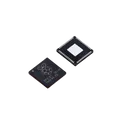
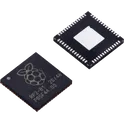
The RP2350, developed by Raspberry Pi Ltd, is a high-performance microcontroller designed to cater to a broad range of applications requiring efficient power management, advanced security features, and versatile IO options. This microcontroller stands out with its dual-core architecture, featuring either Cortex-M33 or Hazard3 processors operating at up to 150 MHz, ensuring robust performance for complex applications. It boasts a substantial 520 KB of on-chip SRAM distributed across 10 independent banks, enhancing parallel data processing capabilities. Additionally, the RP2350 supports up to 16 MB of external QSPI flash/PSRAM for extensive program and data storage, further expandable via an optional second chip-select. A notable feature of the RP2350 is its integrated on-chip switched-mode power supply, designed to generate core voltage efficiently, complemented by a low-quiescent-current LDO mode for reduced power consumption in sleep states. Security is a paramount feature of the RP2350, offering options for boot signing with key fingerprint in OTP, hardware mitigations against fault injection attacks, and a hardware SHA-256 accelerator for cryptographic operations. The microcontroller is also equipped with a comprehensive set of peripherals, including USB 1.1 controller and PHY, multiple UARTs, SPI, and I2C controllers, 24 PWM channels, and 12 programmable IO (PIO) state machines, providing extensive interface capabilities. The RP2350 is available in QFN-60 and QFN-80 packages, with or without flash-in-package options, catering to various design requirements and application needs.
2 Stars
The RP2350, developed by Raspberry Pi Ltd, represents a significant advancement in the field of microcontrollers, building upon the foundation laid by its predecessor, the RP2040. This component is designed to cater to a wide range of applications requiring dual-core processing capabilities, with the option to switch between Dual Cortex-M33 or Hazard3 processors operating at up to 150 MHz. It features an extensive 520 kB of on-chip SRAM distributed across 10 independent banks, alongside 8 KB of one-time-programmable (OTP) storage. External memory interfaces are well-supported, with provisions for up to 16 MB of external QSPI flash/PSRAM, and an additional 16 MB accessible via an optional second chip-select, facilitating extensive code and data storage options. Security features are robust, including options for boot signing enforced by on-chip mask ROM, with key fingerprints stored in OTP, and hardware mitigations against fault injection attacks. The RP2350 also boasts a comprehensive set of peripherals, including 2x UARTs, 2x SPI controllers, 2x I2C controllers, 24x PWM channels, and a USB 1.1 controller with PHY for host and device support, among others. Programmable IO (PIO) state machines enhance its flexibility, enabling the implementation of custom peripherals. For developers, the RP2350 offers low-power operation modes and a built-in boot ROM that supports direct boot from external flash or OTP, serial boot from USB or UART, and secure boot with code signature enforcement. The device is available in QFN-60 (7x7 mm) and QFN-80 (10x10 mm) packages, with or without built-in flash, catering to diverse application requirements. This microcontroller is a compelling choice for sophisticated projects that demand high performance, extensive memory and peripheral support, and advanced security features.
2 Stars
This is the project template for the Raspberry Pi Pico 2, the latest addition and update to Pi Pico line up. Raspberry pi pico 2 is equipped with the RP2350, a cutting-edge, high-performance microcontroller designed with enhanced security and versatility in mind. Every element of its design has been upgraded, from the advanced CPU cores to the innovative PIO (Programmable I/O) interfacing subsystem. The Raspberry Pi Foundation has integrated a robust security architecture centered around Arm TrustZone for Cortex-M, ensuring data protection and integrity. Additionally, new low-power states and expanded package options broaden the range of applications, making the Pico 2 an ideal choice for diverse, power-sensitive projects. To learn more about what's the key differences between the original Pi Pico and the new Pi Pico 2, read our blog https://www.flux.ai/p/blog/whats-new-in-the-raspberry-pi-pico-2-a-showdown-with-the-original-raspberry-pi-pico #project-template #template #raspberry #pi #pico2 #newpico
2 Stars
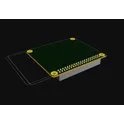
Template for Raspberry Pi 3 Model B+ Shield. Include an official pinout so you will always know Raspberry Pi names, the alternative roles of pins, which one is SDA, or SCL, etc. On PCB you can find the 3D model of the Raspberry Pi itself along with the board outline on the silkscreen. #RaspberryPi #Raspberry #raspberry #raspberrypi #Pi #RPi #Shield #template #project #project-template
2 Stars
make this for me now # Device Summary & Specification Sheet ## 1. Overview A rugged, Arduino-Uno-and-Raspberry-Pi-style single-board micro-PC featuring: - Smartphone-class CPU (Snapdragon 990) - USB-C Power Delivery + 4×AA alkaline backup + ambient-light harvester - On-board Arduino-Uno-compatible ATmega328P - External NVMe SSD via USB3 bridge & optional Thunderbolt 3 eGPU support - 5× USB 3.0 ports, HDMI in/out, Gigabit Ethernet & SFP fiber, Wi-Fi, Bluetooth, LoRa - 0.96″ OLED status display, 3.5 mm audio jack with codec --- ## 2. Key Specifications | Category | Specification | |--------------------|-------------------------------------------------------------------------------| | CPU | Snapdragon 990, octa-core up to 2.84 GHz | | Memory | 6 GB LPDDR4x DRAM | | Storage Interface | PCIe Gen3 ×4 → M.2 NVMe + USB 3.1 Gen1 bridge | | MCU | ATmega328P (Arduino-Uno-compatible) | | Power Input | USB-C PD up to 20 V/5 A; 4×AA alkaline backup; ambient-light photodiode boost | | Power Rails | 12 V, 5 V, 3.3 V, 1.8 V, 1.2 V via buck/buck-boost regulators | | USB Hub | 5× USB 3.0 downstream ports | | Display | 0.96″ 128×64 OLED via I²C/SPI | | Networking | 1 × Gigabit RJ45; 1 × SFP fiber; Wi-Fi 802.11ac + Bluetooth; LoRa SX1276 | | Video I/O | HDMI 2.0 input (RX) & output (TX) | | Audio | 3.5 mm jack + TLV320AIC3101 codec; Bluetooth audio | | Form Factor | Raspberry Pi–style header + Arduino-Uno shield headers; 4× standoff mounts | --- ## 3. Complete Parts List | Part | Function | Qty | |------------------------------------------------------------------------------------------------|-----------------------------------------------|-----| | [Snapdragon 990](https://www.flux.ai/search?type=components&q=Snapdragon%20990) | Main application CPU | 1 | | [LPDDR4x DRAM](https://www.flux.ai/search?type=components&q=LPDDR4x%20DRAM) | System memory | 1 | | [eMMC 64GB](https://www.flux.ai/search?type=components&q=eMMC%2064GB) | On-board storage | 1 | | [M.2 NVMe Connector](https://www.flux.ai/search?type=components&q=M.2%20NVMe%20Connector) | External SSD interface | 1 | | [JMS583](https://www.flux.ai/search?type=components&q=JMS583) | PCIe→USB 3.1 bridge for NVMe | 1 | | [Titan Ridge](https://www.flux.ai/search?type=components&q=Titan%20Ridge) | Thunderbolt 3/eGPU controller | 1 | | [STUSB4500](https://www.flux.ai/search?type=components&q=STUSB4500) | USB-C Power-Delivery controller | 1 | | [LTC4412](https://www.flux.ai/search?type=components&q=LTC4412) | Ideal-diode OR-ing | 1 | | [LTC3108](https://www.flux.ai/search?type=components&q=LTC3108) | Ambient-light (solar) energy harvester | 1 | | [Battery Holder 4×AA](https://www.flux.ai/search?type=components&q=Battery%20Holder%204xAA) | Alkaline backup power | 1 | | [TPS53318](https://www.flux.ai/search?type=components&q=TPS53318) | 6 V→5 V synchronous buck regulator | 1 | | [MCP1700-3302E/TO](https://www.flux.ai/search?type=components&q=MCP1700-3302E/TO) | 6 V→3.3 V LDO | 1 | | [TPS63060](https://www.flux.ai/search?type=components&q=TPS63060) | Buck-boost for 12 V rail (eGPU power) | 1 | | [ATmega328P](https://www.flux.ai/search?type=components&q=ATmega328P) | Arduino-Uno microcontroller | 1 | | [ESP32-WROOM-32](https://www.flux.ai/search?type=components&q=ESP32-WROOM-32) | Wi-Fi + Bluetooth co-processor | 1 | | [SX1276](https://www.flux.ai/search?type=components&q=SX1276) | LoRa transceiver | 1 | | [TUSB8041](https://www.flux.ai/search?type=components&q=TUSB8041) | 5-port USB 3.0 hub IC | 1 | | [Ethernet PHY](https://www.flux.ai/search?type=components&q=Ethernet%20PHY) | Gigabit Ethernet physical transceiver | 1 | | [SFP Cage](https://www.flux.ai/search?type=components&q=SFP%20Cage) | Fiber-optic SFP module connector | 1 | | [TDA19978](https://www.flux.ai/search?type=components&q=TDA19978) | HDMI 2.0 receiver (input) | 1 | | [TFP410](https://www.flux.ai/search?type=components&q=TFP410) | HDMI 2.0 transmitter (output) | 1 | | [TLV320AIC3101](https://www.flux.ai/search?type=components&q=TLV320AIC3101) | Audio codec for 3.5 mm jack & Bluetooth audio | 1 | | [Audio Jack 3.5mm](https://www.flux.ai/search?type=components&q=Audio%20Jack%203.5mm) | Headphone/mic port | 1 | | [SSD1306 OLED](https://www.flux.ai/search?type=components&q=SSD1306%20OLED) | Status display | 1 | --- ## 4. High-Level Design & Implementation Steps 1. **Schematic Creation** - Section off blocks: CPU + memory, power-supply, NVMe/USB bridge, MCU, wireless, USB hub, video, audio, I/O headers. - Place all parts from the list and wire per respective datasheet reference circuits. 2. **Power System** - Implement USB-C PD with STUSB4500 → buck/buck-boost & LDO rails. - Add LTC4412 to OR-ing battery pack into 6 V bus. - Include LTC3108 harvest input to 6 V bus (no recharge to AA). - Add decoupling & bulk caps per regulator datasheets; PTC fuses & ESD diodes on inputs. 3. **SoC & High-Speed Interfaces** - Break out Snapdragon 990 BGA with DDR4 routing (point-to-point). - Route PCIe Gen3 lanes to M.2 slot via JMS583 and to Titan Ridge for TB/eGPU. - Follow high-speed layout guidelines: impedance, length matching, EMI filters. 4. **MCU & Expansion Headers** - Place ATmega328P with UNO-style 2.54 mm headers; add ISP 6-pin, I²C pull-ups, reset circuit. 5. **Connectivity Blocks** - USB hub: TUSB8041 + ESD + chokes → five USB-A 3.0 ports. - Ethernet: RJ45 + magnetics + PHY; SFP cage + PHY/SFP interface. - Wireless: ESP32 module pad + SX1276 + antenna matching; program pads. 6. **Video & Audio** - HDMI RX (TDA19978) & TX (TFP410) blocks with TMDS ESD & termination. - Audio codec + 3.5 mm jack; route differential audio lines; add ESD. 7. **Display & Indicators** - SSD1306 OLED on I²C; add pull-ups & backlight power if needed. - LEDs for power, charge, status. 8. **PCB Layout & Mechanical** - Follow Raspberry Pi 2×20 header footprint & UNO shield hole pattern. - Add reinforcement for rugged use; standoffs at corners. - Define 4-layer stackup: • Top: signal • L2: GND • L3: PWR • Bottom: signal 9. **DRC/ERC Reviews** - Run ERC for decoupling, pull-ups, power nets. - Run DRC for high-speed clearance, differential pairs, via aspect ratios. 10. **Fabrication & Testing** - Export Gerbers, IPC-2581, BOM. - Prototype assembly; verify power sequencing, rails, interfaces. - Functional tests: USB-C PD negotiation, NVMe throughput, eGPU over TB3, wireless comm, audio, OLED. --- This spec sheet and part list should guide your Flux schematic and PCB layout workflow through to fabrication and validation. Let me know if you’d like to deep-dive into any specific block or review datasheet details next!
1 Star
AvocAudio is a compact tinyML community board designed for extensive audio data collection for various tinyML applications. It leverages the Raspberry Pi RP2040 and integrates a LoRa-E5 LoRaWAN Transceiver Module for connectivity. Equipped with an SD card slot for local data storage, the board ensures efficient data collection. The board operates on solar power or a lithium-ion battery, ensuring flexible and efficient energy use. #audioDevices #raspberryPi #rp2040 #lorawan #iot #solar
1 Star
AvocAudio is a compact tinyML community board designed for extensive audio data collection for various tinyML applications. It leverages the Raspberry Pi RP2040 and integrates a LoRa-E5 LoRaWAN Transceiver Module for connectivity. Equipped with an SD card slot for local data storage, the board ensures efficient data collection. The board operates on solar power or a lithium-ion battery, ensuring flexible and efficient energy use. #audioDevices #raspberryPi #rp2040 #lorawan #iot #solar
1 Star
AvocAudio is a compact tinyML community board designed for extensive audio data collection for various tinyML applications. It leverages the Raspberry Pi RP2040 and integrates a LoRa-E5 LoRaWAN Transceiver Module for connectivity. Equipped with an SD card slot for local data storage, the board ensures efficient data collection. The board operates on solar power or a lithium-ion battery, ensuring flexible and efficient energy use. #audioDevices #raspberryPi #rp2040 #lorawan #iot #solar
1 Star