ESP8266 Schematics
The ESP8266 is a low-cost microcontroller with built-in Wi-Fi capability. It is a versatile platform that can be used in a wide range of applications, including home automation, internet of things (IoT), and wearable electronics. The ESP8266 has a powerful processor and on-board memory, making it capable of running complex programs and connecting to the internet to transmit and receive data. One of the key use cases for the ESP8266 is in home automation, where it can be used to control and monitor various devices and appliances through a network connection. It can also be used in IoT applications, where it can collect and transmit data from sensors and other devices to the cloud for analysis and storage. Flux.ai has the world's largest community-driven public library of ESP8266 MCUs, with footprints, symbols, datasheets, and simulation models. This library is an invaluable resource for engineers and developers working with the ESP8266, providing access to a wealth of information and resources to help them design and build innovative applications.

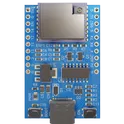
Nodemcu-12E ESP8266
NodeMCU V3 ESP8266 ESP-12E is WiFi development board that helps you to prototype your IoT product with few Lua script lines, or through Arduino IDE. The board is based on ESP8266 ESP-12E variant, unlike other ESP-12E, you won’t need to buy a separate breakout board, usb to serial adapter, or even solder it to a PCB to get started, you will only need a usb cable (Micro USB).
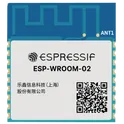
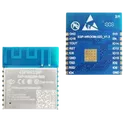
4.9k Uses35 StarsESP-WROOM-02U Reference Design
This project is a reference design for an ESP- WROOM-02U based device. It features USB-C for power and data transfer, onboard voltage regulation, and multiple peripheral connections. It also includes a CH340C for USB to serial conversion #referenceDesign #project #ESP8266 #WROOM #RF #WIFI #MCU #referenceDesign #simple-embedded #espressif #template #reference-design #polygon
0 Uses4 StarsNodemcu-12E ESP8266
NodeMCU V3 ESP8266 ESP-12E is WiFi development board that helps you to prototype your IoT product with few Lua script lines, or through Arduino IDE. The board is based on ESP8266 ESP-12E variant, unlike other ESP-12E, you won’t need to buy a separate breakout board, usb to serial adapter, or even solder it to a PCB to get started, you will only need a usb cable (Micro USB).
100 Uses4 StarsESP8266 Motor Controller
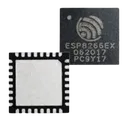
0 Uses4 StarsESP8266EX
Espressif’s ESP8266EX delivers highly integrated Wi-Fi SoC solution to meet users’ continuous demands for efcient power usage, compact design and reliable performance in the Internet of Things industry. With the complete and self-contained Wi-Fi networking capabilities, ESP8266EX can perform either as a standalone application or as the slave to a host MCU. ESP8266EX integrates antenna switches, RF balun, power amplier, low noise receive amplier, lters and power management modules. TheQFN50P500X500X80-33N
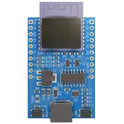
85 Uses2 StarsESP-WROOM-02D Reference Design
This project is a reference design for an ESP-WROOM-02D based device. It features USB-C for power and data transfer, onboard voltage regulation, and multiple peripheral connections. It also includes a CH340C for USB to serial conversion #referenceDesign #project #ESP8266 #WROOM #RF #WIFI #MCU #referenceDesign #simple-embedded #espressif #template #reference-design
0 Uses1 StarsESP_from_Chaina
NodeMCU V3 ESP8266 ESP-12E is WiFi development board that helps you to prototype your IoT product with few Lua script lines, or through Arduino IDE. The board is based on ESP8266 ESP-12E variant, unlike other ESP-12E, you won’t need to buy a separate breakout board, usb to serial adapter, or even solder it to a PCB to get started, you will only need a usb cable (Micro USB).
0 Uses1 StarsESP_from_Chaina
NodeMCU V3 ESP8266 ESP-12E is WiFi development board that helps you to prototype your IoT product with few Lua script lines, or through Arduino IDE. The board is based on ESP8266 ESP-12E variant, unlike other ESP-12E, you won’t need to buy a separate breakout board, usb to serial adapter, or even solder it to a PCB to get started, you will only need a usb cable (Micro USB).
0 Uses1 StarsNodemcu-12E ESP8266 cDtH
NodeMCU V3 ESP8266 ESP-12E is WiFi development board that helps you to prototype your IoT product with few Lua script lines, or through Arduino IDE. The board is based on ESP8266 ESP-12E variant, unlike other ESP-12E, you won’t need to buy a separate breakout board, usb to serial adapter, or even solder it to a PCB to get started, you will only need a usb cable (Micro USB).
0 Uses1 StarsCHAINA_ESP2
NodeMCU V3 ESP8266 ESP-12E is WiFi development board that helps you to prototype your IoT product with few Lua script lines, or through Arduino IDE. The board is based on ESP8266 ESP-12E variant, unlike other ESP-12E, you won’t need to buy a separate breakout board, usb to serial adapter, or even solder it to a PCB to get started, you will only need a usb cable (Micro USB).
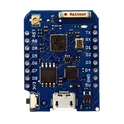
82 Uses1 StarsWEMOS D1 Mini Pro
A mini wifi board with 16MB flash, external antenna connector and built-in ceramic antenna based on ESP-8266EX analog input(3.2V max input) 16M bytes(128M bit) Flash 500mA Max charging current LOLIN I2C Port #commonpartslibrary #wemos #esp8266ex #microcontroller #developmentboard
167 Uses1 StarsNodemcu-12E ESP8266
NodeMCU V3 ESP8266 ESP-12E is WiFi development board that helps you to prototype your IoT product with few Lua script lines, or through Arduino IDE. The board is based on ESP8266 ESP-12E variant, unlike other ESP-12E, you won’t need to buy a separate breakout board, usb to serial adapter, or even solder it to a PCB to get started, you will only need a usb cable (Micro USB).
0 Uses1 StarsNodemcu-12E ESP8266
NodeMCU V3 ESP8266 ESP-12E is WiFi development board that helps you to prototype your IoT product with few Lua script lines, or through Arduino IDE. The board is based on ESP8266 ESP-12E variant, unlike other ESP-12E, you won’t need to buy a separate breakout board, usb to serial adapter, or even solder it to a PCB to get started, you will only need a usb cable (Micro USB).
0 Uses1 Stars




Page 1 of 6
Next