ESP32 Schematics
The ESP32 is a low-cost, low-power microcontroller with built-in Wi-Fi and Bluetooth capabilities. It is a highly integrated chip designed for the Internet of Things (IoT) and can be used for a variety of applications, including home automation, wearable technology, and industrial control. One of the key features of the ESP32 is its versatility and wide range of available peripherals, including sensors, displays, and communication modules. This makes it ideal for use in a variety of projects and applications, such as home security systems, smart home devices, and industrial automation systems. Flux.ai has the world's largest community-driven public library of ESP32 devices, with a range of footprints, symbols, datasheets, and simulation models available for users. This extensive library allows developers and designers to easily incorporate the ESP32 into their projects and take advantage of its powerful capabilities. Whether you are building a simple IoT device or a complex industrial control system, the ESP32 is an excellent choice due to its versatility and wide range of available resources.
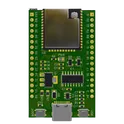
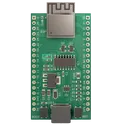
ESP32-WROOM-32UE Reference Design
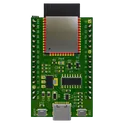
This project is a reference design for an ESP32-WROOM-32UE based device. It features USB-C for power and data transfer, onboard voltage regulation, and multiple peripheral connections. It also includes a CH340C for USB to serial conversion #referenceDesign #project #ESP32 #ESP32WROOM #RF #WIFI #MCU #referenceDesign #simple-embedded #espressif #template #reference-design
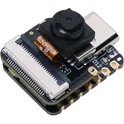
0 Uses1 StarsSeeed Studio XIAO ESP32S3 Sense a323
Seeed Studio XIAO ESP32S3 leverages dual-core ESP32S3 chip, supporting both Wi-Fi and BLE wireless connectivities, which allows battery charge. It integrates built-in camera sensor, digital microphone. It offers 8MB PSRAM, 8MB FLASH, and external SD card slot. All of these make it suitable for embedded ML, like intelligent voice and vision AI. #SeeedStudio #xiao
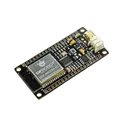
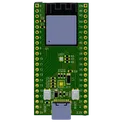
0 Uses1 StarsESP32-WROOM-32D
This project is a reference design for an ESP32-WROOM-32E based device. It features USB-C for power and data transfer, onboard voltage regulation, and multiple peripheral connections. It also includes a CH340C for USB to serial conversion #referenceDesign #project #ESP32 #ESP32WROOM #RF #WIFI #MCU #referenceDesign #simple-embedded #espressif #template #reference-design
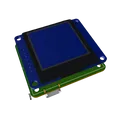
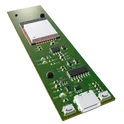
53 Uses1 StarsBluetooth Smart Mirror Reference Design
This project is a Bluetooth-controlled smart mirror design. It uses an ESP32-MINI-1 for Bluetooth connectivity, an MPU-6050 IC sensor for gesture control, and a RGB LED for visual feedback. The design also comprises of other components like capacitors, resistors, and a USB-C connector for power. #referenceDesign #edge-computing #edgeComputing #template #reference-design #reusable #module #edge-computing #edgeComputing #sublayout #esp32 #lazer #sensor
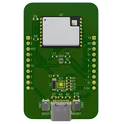
0 Uses1 StarsESP32-PICO-MINI-02 Reference Design
This project is a reference design for an ESP32-PICO-MINI-02 based device. It features USB-C for power and data transfer, onboard voltage regulation, and multiple peripheral connections. It also includes a CH340C for USB to serial conversion #referenceDesign #project #ESP32 #ESP32PICO #ESP32PICOMINI #RF #WIFI #MCU #referenceDesign #simple-embedded #espressif #template #reference-design
0 Uses1 StarsKitchen Assistant Reference Design
This is a Kitchen Assistant Reference Design that runs on an ESP32 that connects to the network. The board has a microphone and bazer for communication and a display #referenceDesign #edge-computing #edgeComputing #espressif #template #esp32 #iot #i2s #reference-design
0 Uses1 StarsESP32-S3-MINI-1 Reference Design
This project is a reference project for ESP32-S3-MINI-1 to develop your IoT ideas. The board has RGB LEDs, USB C for firmware, EN and BOOT buttons, and 2 IO connectors for development #IoT #WiFi #MCU #RF #ESP32 #project #referenceDesign #simple-embedded #espressif #template #reference-design
0 Uses1 StarsESP32-C3-WROOM-02U Reference Design
This is a ESP32-C3-WROOM-02U reference design based on the manufacturer's recommendations. On board we have an ESP module, USB C for firmware, 2 connectors with IOs and RGB LED #ESP32 #WiFi #LED #IoT #BLE #ARM #referenceDesign #simple-embedded #espressif #template
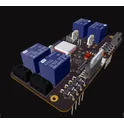
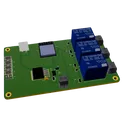
0 Uses1 StarsPlant Care System Module
This project is a plant care system that uses an ESP32-S3-MINI-1U-N8 microcontroller to automate plant care tasks. This system includes three Songle relays, multiple resistors, capacitors, and transistors, all powered at 3.3V, 5V, or 12V. It also incorporates a USB Type-C connector. #referenceDesign #edge-computing #reusable #module #edge-computing #edgeComputing #espressif #sublayout #iot #iot #ESP32 #relay
57 Uses1 Stars
ESP32-C3
Samacsys Import 400KB 22 3V~3.6V RISC-V 160MHz QFN-32-EP(5x5) Microcontroller Units (MCUs/MPUs/SOCs) ROHS QFN50P500X500X90-33N-D https://www.espressif.com/sites/default/files/documentation/esp32-c3_datasheet_en.pdf Ultra-Low-Power SoC with RISC-V Single-Core CPU 0.9 Espressif Systems ESP32-C3 356-ESP32-C3 https://www.mouser.co.uk/ProductDetail/Espressif-Systems/ESP32-C3?qs=iLbezkQI%252BsiMXe7tMG%252Bo%2FA%3D%3D #IoT #WiFi #Bluetooth #esp32 #riscv #part
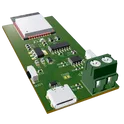
58 Uses1 StarsESP32Tag Dev Board Module
This project is a tag device that uses the ESP32-WROOM-32E to communicate with other BLE devices. It has a USB-C port for power and data, a voltage regulator for stable operation, and 18650 battery. It also has a CH340C chip for USB to serial conversion.. #referenceDesign #project #ESP32 #ESP32WROOM #RF #WIFI #MCU #tag #18650 #airtag #reusable #module #simple-embedded #espressif
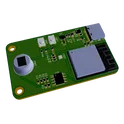
29 Uses1 StarsMotion Detector Module
This is a motion detector circuit module using an ESP32 microcontroller and PIR sensor. It features USB-C connectivity, RGB LED indication, push buttons and is powered by a 3.3V supply. #reusable #module #edge-computing #edgeComputing #espressif #sublayout #iot #PIR #esp32
148 Uses1 Stars