Switches
A switch is a device that allows electricity to flow through a circuit by completing or interrupting the connection. It is a common component in electrical and electronic systems and is used in a variety of applications, such as controlling the flow of electricity in a circuit, turning devices on and off, and routing electrical signals. One of the primary use cases for switches is to control the flow of electricity in a circuit. This can be done by manually flipping the switch or by using a control mechanism, such as a timer or a sensor. Another common use for switches is to turn devices on and off. This can be done using a switch that is built into the device or by using a separate switch that is connected to the device. In addition to these basic use cases, switches can also be used to route electrical signals. For example, a switch can be used to route a signal from one device to another or to direct a signal to a specific circuit or component. If you're looking for a wide variety of switches for your projects, flux.ai has the world's largest community-driven public library of them. The library includes footprints, symbols, datasheets, and simulation models for a wide range of switches, making it easy to find the right switch for your needs.
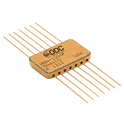
HSN-1000F
Nuclear Event Detector HSN-1000 Flatpack Package. Maxwell Technologies’ HSN-1000 radiation-hardened Hybrid Nuclear Event Detector (NED) senses ionizing radiation pulses generated by a nuclear event, such as the detonation of a nuclear weapon, and rapidly switches its output from the normal high state to a low state with a propagation delay time of less than 20ns. The active low Nuclear Event Detection signal (NED) is used to initiate a wide variety of circumvention functions, thus preventing upset and burnout of electronic components. The NED output is also used to initiate both hardware and software recovery. This high-speed, 14-pin hybrid detector is used in electronic systems as a general-purpose circumvention device to protect memory, stop data processing, and drive power supply switches as well as signal clamps.
2 Uses0 Stars
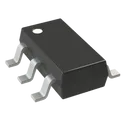
MCP16364-E/Q8B
Input Voltage Range: 4.0V (After Start-up) to 48V Adjustable Output Voltage Range: 2.0V to 24V Integrated N-Channel Buck Switch: 500 m 1A Output Current 2.2 MHz Fixed Switching Frequency Shutdown Current: 3 A Typical Quiescent Current: 18 A Typical (Not Switching) Device Selectable Switching Mode: Automatic Pulse Frequency Modulation/Pulse Width Modulation (PFM/PWM) Operation - MCP16364 PWM only Mode of Operation - MCP16365 PWM only Mode of Operation with Switching Frequency D 1 Microchip MCP16364-E/Q8B
1 Uses0 Stars