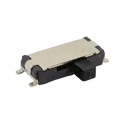
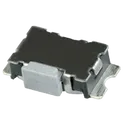
Switches
A switch is a device that allows electricity to flow through a circuit by completing or interrupting the connection. It is a common component in electrical and electronic systems and is used in a variety of applications, such as controlling the flow of electricity in a circuit, turning devices on and off, and routing electrical signals. One of the primary use cases for switches is to control the flow of electricity in a circuit. This can be done by manually flipping the switch or by using a control mechanism, such as a timer or a sensor. Another common use for switches is to turn devices on and off. This can be done using a switch that is built into the device or by using a separate switch that is connected to the device. In addition to these basic use cases, switches can also be used to route electrical signals. For example, a switch can be used to route a signal from one device to another or to direct a signal to a specific circuit or component. If you're looking for a wide variety of switches for your projects, flux.ai has the world's largest community-driven public library of them. The library includes footprints, symbols, datasheets, and simulation models for a wide range of switches, making it easy to find the right switch for your needs.

TPS259830LNRGER
Hot Swap Controller 1 Channel PCI 24-VQFN (4x4) eFuse power switch, designed to provide programmable inrush current control and circuit protection for 2.7 V to 24 V power rails. It integrates adjustable current limiting, overvoltage protection, undervoltage lockout, reverse current blocking, thermal shutdown, and fault reporting, and supports load currents up to 5 A in a compact 24-pin VQFN package. #PowerSwitch #eFuse #HotSwapController #OvervoltageProtection #CurrentLimiting #TexasInstruments
0 Uses0 StarsNPM1304-CAAA-R7
Power Management IC (PMIC) integrating battery charging, power regulation, fuel gauging, and system management for single-cell Li-ion, Li-poly, and LiFePO₄ batteries. It features a 4–100 mA linear battery charger, two 200 mA buck regulators, two configurable 50 mA LDOs or 100 mA load switches, USB-C compatible input (4.0–5.5 V) with 22 V overvoltage protection, and an I²C-compatible TWI interface with watchdog, hard reset, power-loss warning, GPIOs, and LED drivers. #PMIC #PowerManagementIC #BatteryCharger #FuelGauge #BuckRegulator #LDO #USBTypeC #I2C #TWI #NordicSemiconductor #LiIon #LiPo #LiFePO4
0 Uses0 StarsTLP170D
Photorelay with a 1-Form-A (normally open) MOSFET output, designed for isolated solid-state switching applications. It features a 200 V OFF-state output voltage, 200 mA ON-state current, 1 mA maximum trigger LED current, 8 Ω maximum ON-state resistance, 1500 Vrms minimum isolation voltage, and is housed in a 4-pin SOP (2.54SOP4) package. #Photorelay #MOSFETOutput #Optocoupler #1FormA #SolidStateRelay #Isolation #200V #200mA #SOP4 #ToshibaSemiconductor
0 Uses0 StarsK7805-3AR3
DC-DC switching regulator designed as a drop-in replacement for 7805 linear regulators, providing a regulated 5 V output at up to 3 A from a 7 V to 36 V DC input. It operates with high efficiency, requires no heatsink under normal conditions, and is supplied in a 3-pin SIP-compatible package for through-hole mounting. #DCDCRegulator #SwitchingRegulator #VoltageRegulator #BuckConverter #5VOutput #3A #7Vto36VInput #SIP3 #MORNSUN #PowerManagement
1 Uses0 Stars6N137S-TA1
High-Speed Logic Output Optocoupler – Single-channel high-speed optocoupler designed for digital signal isolation, industrial automation, PLCs, motor drives, switching power supplies, data communication, microcontroller interfaces, and embedded control systems. Features an open-collector TTL-compatible output with a 15 MBd data rate, 5 kVrms isolation voltage, and 10 kV/µs minimum common-mode transient immunity (CMTI) for reliable operation in noisy electrical environments. Provides 75 ns maximum propagation delay, 22 ns typical rise time, 6.9 ns typical fall time, and supports up to 50 mA output current. The input consists of a GaAs infrared LED with a 1.38 V typical forward voltage and 20 mA maximum forward current. Operates from a 4.5 V to 5.5 V output-side supply, over a −40°C to +85°C temperature range, and is housed in a compact 8-pin SOIC (SMD) package for space-efficient PCB designs. #LiteOn #6N137STA1 #6N137 #Optocoupler #LogicOptocoupler #DigitalIsolation #HighSpeedIsolation #IndustrialAutomation #MotorDrive #PLC #EmbeddedSystems
1 Uses0 StarsKSZ9897STXI-TR
7-Port Gigabit Managed Ethernet Switch IC – High-performance Layer 2 managed Ethernet switch designed for industrial automation, IoT gateways, embedded networking, automotive networking, IP cameras, networked audio/video systems, and communication equipment. Integrates 7 Gigabit Ethernet ports with 5 integrated 10/100/1000BASE-T PHYs, 1 SGMII interface, and 1 configurable RGMII/MII/RMII interface, enabling flexible network architectures. Supports IEEE 802.3 Ethernet standards, QoS, VLAN (802.1Q), Rapid Spanning Tree Protocol (RSTP), IGMP snooping, LinkMD® cable diagnostics, Energy Efficient Ethernet (EEE), Wake-on-LAN (WoL), port mirroring, rate limiting, and advanced packet filtering for robust managed networking. Features I²C and SPI management interfaces, operates from 1.8 V, 2.5 V, and 3.3 V supplies, and is specified for the −40°C to +85°C industrial temperature range. Packaged in a 128-pin TQFP-EP (14 × 14 mm) for high-density embedded networking designs. #Microchip #KSZ9897STXITR #KSZ9897 #GigabitEthernetSwitch #ManagedSwitch #Layer2Switch #IndustrialEthernet #SGMII #RGMII #IoTGateway #NetworkController #EmbeddedSystems
0 Uses0 Stars