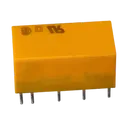
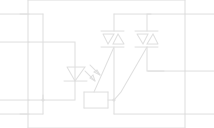
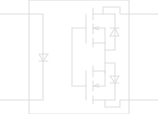
Relays
A relay is an electrically operated switch that allows a low power circuit to control a high power circuit. It consists of a coil, which is activated by an electric current, and a set of contacts that open or close when the coil is activated. Relays have a wide range of use cases, including controlling the flow of electricity in a circuit, protecting electrical components from damage, and amplifying signals. They are commonly used in automotive systems, HVAC systems, and control panels. Flux.ai has the world's largest community-driven public library of relays, with footprints, symbols, datasheets, and simulation models. This library is a valuable resource for engineers and designers looking for reliable and accurate information on relays.

2911-05-301
291105301 https://cotorelay.com/wp-content/uploads/2014/09/2900_series_reed_relay_datasheet2.pdf Reed Relays Micromin FormC Reed 7.62 816-2911-05-301 https://www.mouser.co.uk/ProductDetail/Coto-Technology/2911-05-301?qs=m0A%2FB3jbz5tBJF6yhXpDEw%3D%3D Coto Technology 2911-05-301
10 Uses1 Stars