Connectors
A connector is a device that is used to join two or more electrical or mechanical components. Connectors are an essential part of many electronic and mechanical systems, as they allow for the easy transfer of electricity, data, or other signals between different devices or components. There are many different types of connectors, each designed for specific use cases. Some common use cases for connectors include: * Connecting electronic components in circuit boards * Connecting electrical devices to power sources * Connecting mechanical components in machines and devices * Connecting data cables for networking and communication * Connecting audio and video components in home theater systems Flux.ai has the world's largest community-driven public library of connectors, with footprints, symbols, datasheets, and simulation models. This library is a valuable resource for engineers and designers who need to find and use connectors in their projects.
1844317
12 Position Terminal Block Header, Male Pins, Shrouded (4 Side) 0.138" (3.50mm) 90°, Right Angle Through Hole 1844317 (Phoenix Contact MC 1,5/12-G-3,5) is a 12-position PCB header designed for pluggable terminal block connections in industrial and automation applications. It belongs to the COMBICON MC 1.5 series and features a 3.5 mm pitch, wave-solder mounting, and tin-plated contacts for reliable wire-to-board connectivity. The connector is rated for 8 A and up to 160 V (depending on the applicable standard), making it suitable for control systems, power distribution, and signal interfaces. Key Features 12-position male PCB header 3.5 mm pitch COMBICON MC 1.5 pluggable terminal block system Rated current: 8 A Rated voltage: 160 V (application dependent) Wave solder mounting Tin-plated copper alloy contacts PBT housing with UL94 V-0 flammability rating Linear pin arrangement Green housing for industrial identification Compatible with Phoenix Contact MC 1.5 series pluggable connectors #CommonPartsLibrary #Connector #PhoenixContact #COMBICON #PCBHeader #TerminalBlock #WireToBoard #IndustrialConnector #WaveSolder #3_5mmPitch #Automation #PCBConnector
25 Uses0 StarsUSB4960-00-C
USB-C (USB TYPE-C) USB 2.0 Receptacle Connector 24 (16+8 Dummy) Position Surface Mount, Through Hole The USB4960-00-C is a vertical USB Type-C® USB 2.0 receptacle connector manufactured by GCT (Global Connector Technology). It is designed for compact embedded systems, consumer electronics, industrial equipment, and IoT devices requiring a reliable USB Type-C interface for USB 2.0 data transfer and power delivery. The connector features a hybrid Surface Mount Technology (SMT) and Through-Hole (TH) shell stake design, providing excellent PCB retention and mechanical durability. It supports up to 240 W (48 V DC) power capability and is rated for 10,000 mating cycles, making it suitable for demanding applications. Key Features USB Type-C® USB 2.0 vertical receptacle 16 active contacts with 8 dummy contacts (24-position mechanical interface) Hybrid SMT signal pins with through-hole shell stakes for enhanced mechanical strength Supports up to 48 V DC and 240 W power capability Rated for 10,000 mating cycles Gold-plated copper alloy contacts for reliable electrical performance Shielded metal shell for improved EMI protection Operating temperature: -25°C to +85°C Features locating pegs, board guide, pick-and-place cap, and solder retention for automated assembly Ideal for embedded systems, industrial electronics, consumer devices, and USB charging applications. #USBTypeC #USB20 #ReceptacleConnector #VerticalConnector #SMT #ThroughHole #GCT #PowerConnector #DataConnector #PCBConnector #EmbeddedSystems #IndustrialElectronics
12 Uses0 Stars104128-1
Connector Header Through Hole 10 position 0.100" (2.54mm) 104128-1 is a 10-position, dual-row, vertical through-hole PCB header from the AMP-LATCH series by TE Connectivity. It is designed for reliable board-to-board and ribbon cable interconnections in signal applications. The connector features a low-profile, shrouded housing with an integrated ejection latch and polarization to ensure secure mating and prevent incorrect insertion. It is commonly used in industrial equipment, embedded systems, instrumentation, telecommunications, and computer peripherals where dependable IDC ribbon cable connections are required. 10-position, 2-row connector 2.54 mm (0.100 in) pitch Vertical through-hole PCB mounting Low-profile shrouded header Integrated ejection latch for secure cable retention Polarized design to prevent mismating Gold-plated mating contacts for reliable signal transmission Tin-lead solder tails for through-hole soldering Maximum current rating: 1 A per contact Operating temperature: -65°C to +105°C UL 94V-0 flame-retardant nylon housing Suitable for board-to-board and ribbon cable signal applications #TEConnectivity #AMPLATCH #RibbonCableConnector #PCBHeader #ThroughHole #BoardToBoard #IDCConnector #VerticalHeader #SignalConnector #EmbeddedSystems #IndustrialElectronics #ElectronicComponents
2 Uses0 Stars1734451-1
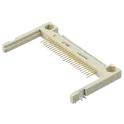
50 Position Card Connector CompactFlash® - Type I, II Surface Mount, Right Angle Gold 1734451-1 is a 50-position CompactFlash (CF) card connector from TE Connectivity. It is a low-profile, right-angle, surface-mount connector designed for interfacing CompactFlash Type I and Type II memory cards with a printed circuit board (PCB). The connector features gold-plated contacts for reliable signal transmission and durability, making it suitable for embedded systems, industrial equipment, data acquisition devices, and legacy storage applications. This part is currently marked as obsolete by the manufacturer. Key Features 50-position CompactFlash card connector Supports CompactFlash Type I and Type II cards Right-angle PCB mounting orientation Surface-mount termination (SMT) 1.27 mm contact pitch Gold-plated contact mating area Brass contacts with nickel underplating Low-profile connector design Maximum contact current rating: 0.5 A per contact Thermoplastic housing, UL 94V-0 rated Designed for signal transmission applications Board-mount connector with hold-down feature Obsolete product status #TEConnectivity #CompactFlash #CFCardConnector #MemoryConnector #PCCardSocket #EmbeddedSystems #SMTConnector #RightAngleConnector #PCBDesign #ElectronicComponents #IndustrialElectronics #DataStorage #ConnectorSolution #HardwareDesign #ObsoletePart
0 Uses0 StarsESP32-POE
ESP32-WROOM32 ESP32 802.11 b/g/n (WiFi/WLAN/Wi-Fi 4), Bluetooth® Smart 4.x Low Energy (BLE) Transceiver 2.4GHz Evaluation Board ESP32-POE is an ESP32-based IoT development board that combines Wi-Fi, Bluetooth, Ethernet connectivity, and Power over Ethernet (PoE) in a single platform. It is designed for industrial automation, smart home systems, remote monitoring, and other network-connected embedded applications where both power and data can be delivered through a single Ethernet cable. The board supports the ESP32 dual-core processor and provides expansion interfaces for sensors, storage, and peripherals. FEATURES • ESP32-WROOM-32 WiFi/BLE module • Ethernet 100Mb interface with IEEE 802.3 PoE support • LiPo battery charger • LiPo battery connector • UEXT connector • User button • Reset button • Micro USB with programmer for ESP32 programming • MicroSD card • Two extension connectors 0.1" step spaced at 1" • PCB dimensions: (75 x 28)mm ~ (3 x 1)" #ESP32 #ESP32POE #IoT #Ethernet #PoE #WiFi #Bluetooth #EmbeddedSystems #IndustrialIoT #SmartHome #OpenSourceHardware #Microcontroller #EdgeComputing #Automation #MakerProjects
5 Uses0 StarsF12-090-C2
Laminated Core 1.1VA Power Transformer 115V Primary Parallel 6.3V, Series 12.6V Secondary Parallel 180mA, Series 90mA Through Hole The F12-090-C2 specification defines the engineering requirements for an electronic connector component intended to provide reliable electrical interconnection between printed circuit boards, cable assemblies, or electronic subsystems. This specification establishes the functional, mechanical, electrical, environmental, and quality requirements necessary to ensure dependable signal transmission, secure mechanical engagement, and long-term operational reliability. The component is intended for use in embedded, industrial, communication, and electronic control systems where compact interconnect solutions and consistent electrical performance are required. The connector is designed to support repeated mating cycles while maintaining low contact resistance, stable mechanical retention, and compatibility with standard electronic assembly processes. Engineering Requirements The connector shall be manufactured using precision-formed conductive contacts and high-strength insulating materials to ensure consistent electrical conductivity, mechanical durability, and long service life. The construction shall support reliable mating and unmating operations without degradation of contact performance. Electrical characteristics shall provide low contact resistance, stable signal integrity, and reliable current-carrying capability within the specified operating conditions. The connector shall maintain electrical continuity under vibration, thermal cycling, and environmental exposure encountered during normal operation. Mechanical construction shall ensure accurate alignment of mating interfaces, secure retention, and resistance to mechanical wear resulting from repeated insertion and removal. The housing and contact system shall withstand normal handling and assembly processes without deformation or structural damage. Workmanship shall be free from defects including contamination, cracks, corrosion, plating irregularities, or mechanical deformation that could adversely affect electrical or mechanical performance. Inspection, validation, and testing shall be conducted using calibrated equipment and controlled quality procedures to verify compliance with engineering requirements. Any deviation from this specification shall require formal engineering evaluation, documented technical justification, and approval through the established engineering change control process prior to implementation. Documentation Supporting documentation shall include engineering drawings, material specifications, electrical performance data, inspection records, qualification reports, and revision-controlled manufacturing documentation. All documentation shall be maintained under formal configuration management and quality assurance systems to ensure complete product traceability. Revision Control Any modification to this specification shall be processed through the formal engineering change management system. All revisions shall undergo technical review, validation, and approval before release to ensure continued compliance with design intent and applicable industry standards. #EngineeringSpecification #Connector #ElectronicInterconnect #SignalIntegrity #EmbeddedSystems #IndustrialElectronics #ElectricalEngineering #Manufacturing #QualityAssurance #EngineeringDocumentation
0 Uses0 Stars