Raspberry Pi Projects
-
Home media center: The Raspberry Pi can be used to build a home media center, allowing you to stream movies, music, and TV shows to your TV.
-
Desktop computer: With the right accessories, the Raspberry Pi can be used as a desktop computer for everyday tasks such as browsing the internet, creating documents, and playing games.
-
Learning to code: The Raspberry Pi is a great tool for learning to code, with a range of free resources and tutorials available online.
-
Internet of Things (IoT) projects: The Raspberry Pi can be used to build Internet of Things (IoT) projects, such as a smart home system or a weather station.

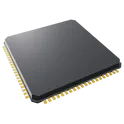
RP2040-ZERO
Pad footprint. Waveshare Electronics 5.35mm Package None https://www.snapeda.com/parts/RP2040-ZERO/Waveshare+Electronics/view-part/?ref=eda Manufacturer Recommendations NA https://www.snapeda.com/parts/RP2040-ZERO/Waveshare+Electronics/view-part/?ref=snap RP2040-ZERO Low-Cost, High-Performance Pico-Like MCU Board Based On Raspberry Pi Microcontroller RP2040 Waveshare
26 Uses
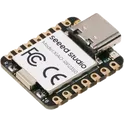
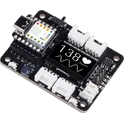
Seeed Studio Expansion Board Base
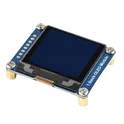
Seeed Studio XIAO Expansion Board is a powerful functional expansion board for Seeed Studio XIAO series of only half Raspberry Pi 4 size. It enables building prototypes and projects in an easy and quick way. With its rich peripherals, you could explore the infinite possibilities of Seeed Studio XIAO series. Circuit python is also well supported by this board.
4 Uses
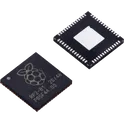
RP2354B
The RP2350, developed by Raspberry Pi Ltd, is a high-performance microcontroller designed to cater to a broad range of applications requiring efficient power management, advanced security features, and versatile IO options. This microcontroller stands out with its dual-core architecture, featuring either Cortex-M33 or Hazard3 processors operating at up to 150 MHz, ensuring robust performance for complex applications. It boasts a substantial 520 KB of on-chip SRAM distributed across 10 independent banks, enhancing parallel data processing capabilities. Additionally, the RP2350 supports up to 16 MB of external QSPI flash/PSRAM for extensive program and data storage, further expandable via an optional second chip-select. A notable feature of the RP2350 is its integrated on-chip switched-mode power supply, designed to generate core voltage efficiently, complemented by a low-quiescent-current LDO mode for reduced power consumption in sleep states. Security is a paramount feature of the RP2350, offering options for boot signing with key fingerprint in OTP, hardware mitigations against fault injection attacks, and a hardware SHA-256 accelerator for cryptographic operations. The microcontroller is also equipped with a comprehensive set of peripherals, including USB 1.1 controller and PHY, multiple UARTs, SPI, and I2C controllers, 24 PWM channels, and 12 programmable IO (PIO) state machines, providing extensive interface capabilities. The RP2350 is available in QFN-60 and QFN-80 packages, with or without flash-in-package options, catering to various design requirements and application needs.
12 Uses
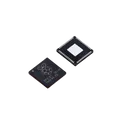
RP2354A
The RP2350, developed by Raspberry Pi Ltd, represents a significant advancement in the field of microcontrollers, building upon the foundation laid by its predecessor, the RP2040. This component is designed to cater to a wide range of applications requiring dual-core processing capabilities, with the option to switch between Dual Cortex-M33 or Hazard3 processors operating at up to 150 MHz. It features an extensive 520 kB of on-chip SRAM distributed across 10 independent banks, alongside 8 KB of one-time-programmable (OTP) storage. External memory interfaces are well-supported, with provisions for up to 16 MB of external QSPI flash/PSRAM, and an additional 16 MB accessible via an optional second chip-select, facilitating extensive code and data storage options. Security features are robust, including options for boot signing enforced by on-chip mask ROM, with key fingerprints stored in OTP, and hardware mitigations against fault injection attacks. The RP2350 also boasts a comprehensive set of peripherals, including 2x UARTs, 2x SPI controllers, 2x I2C controllers, 24x PWM channels, and a USB 1.1 controller with PHY for host and device support, among others. Programmable IO (PIO) state machines enhance its flexibility, enabling the implementation of custom peripherals. For developers, the RP2350 offers low-power operation modes and a built-in boot ROM that supports direct boot from external flash or OTP, serial boot from USB or UART, and secure boot with code signature enforcement. The device is available in QFN-60 (7x7 mm) and QFN-80 (10x10 mm) packages, with or without built-in flash, catering to diverse application requirements. This microcontroller is a compelling choice for sophisticated projects that demand high performance, extensive memory and peripheral support, and advanced security features.
6 Uses
RP2350B_clone
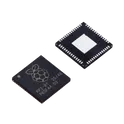
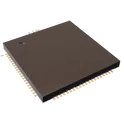
The RP2350, developed by Raspberry Pi Ltd, is a high-performance microcontroller designed to cater to a broad range of applications requiring efficient power management, advanced security features, and versatile IO options. This microcontroller stands out with its dual-core architecture, featuring either Cortex-M33 or Hazard3 processors operating at up to 150 MHz, ensuring robust performance for complex applications. It boasts a substantial 520 KB of on-chip SRAM distributed across 10 independent banks, enhancing parallel data processing capabilities. Additionally, the RP2350 supports up to 16 MB of external QSPI flash/PSRAM for extensive program and data storage, further expandable via an optional second chip-select. A notable feature of the RP2350 is its integrated on-chip switched-mode power supply, designed to generate core voltage efficiently, complemented by a low-quiescent-current LDO mode for reduced power consumption in sleep states. Security is a paramount feature of the RP2350, offering options for boot signing with key fingerprint in OTP, hardware mitigations against fault injection attacks, and a hardware SHA-256 accelerator for cryptographic operations. The microcontroller is also equipped with a comprehensive set of peripherals, including USB 1.1 controller and PHY, multiple UARTs, SPI, and I2C controllers, 24 PWM channels, and 12 programmable IO (PIO) state machines, providing extensive interface capabilities. The RP2350 is available in QFN-60 and QFN-80 packages, with or without flash-in-package options, catering to various design requirements and application needs.
6 Uses
444
The XIAO RP2350 packs the power of the Raspberry Pi RP2350 (switchable architecture of dual Arm Cortex-M33 cores running at 150MHz with FPU, and dual open-hardware Hazard3 RISC‑V cores, enhanced security and encryption) into the classic XIAO form factor. Measuring just 21x17.5mm, it features 19 multifunction GPIOs, an RGB LED, and a Battery Management System with ultra-low power consumption of 27μA, battery power supply, and direct battery voltage measurement. Thanks to the XIAO ecosystem, the XIAO RP2350 is compatible with a wide range of add-ons, including displays, LED matrix, Grove modules, CAN Bus, Vision AI sensors, and mmWave sensors. With native support for MicroPython, C, and C++, the XIAO RP2350 is perfect for developers of all levels looking to create compact, battery-powered applications for smart control, wearables, DIY keyboards, and more.
3 Uses
LoRa remote control Module
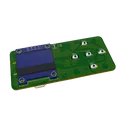
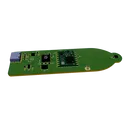
This is a LoRa remote control module built around a Raspberry Pi RP2040 SoC and the RFM95W LoRa module. The design includes user interface features such as multiple buttons and LEDs, power management components, and a temperature sensor. The project utilizes SPI, I2C, and USB interfaces for communication and control. #reusable #module #simple-embedded #raspberrypi #lora #sublayout
14 Uses