Microchip Technology
Microchip Technology is a leading provider of microcontroller, memory, and analog semiconductors. Their key products include microcontroller and microprocessor units (MCUs), memory devices, and analog and interface components for a variety of applications including automotive, industrial, medical, and consumer markets. At Flux.ai, we have the world's largest community-driven public library of Microchip products, including footprints, symbols, datasheets, and simulation models, making it easy for engineers and designers to integrate Microchip products into their designs. Whether you're designing a new automotive system, a consumer device, or a medical device, Microchip's products offer a wide range of reliable and efficient solutions for microcontroller and memory needs.
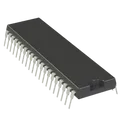
PIC16F877A-I/P
PIC PIC® 16F Microcontroller IC 8-Bit 20MHz 14KB (8K x 14) FLASH 40-PDIP The PIC16F877A-I/P is a high-performance 8-bit microcontroller from Microchip Technology, based on a Harvard architecture with separate program and data memory buses. It is designed for a wide range of embedded applications requiring reliable processing, multiple communication interfaces, and analog capability. The device integrates Flash program memory, EEPROM data storage, and numerous peripherals including ADC, timers, serial communication modules, and PWM functions. Packaged in a 40-pin PDIP form factor, it is widely used in industrial automation, consumer electronics, and educational development systems. Core Features 8-bit PIC microcontroller architecture Harvard architecture with RISC instruction set Operating frequency up to 20 MHz Single-cycle instruction execution (except branches) Memory Program Memory: 8K words (Flash) Data Memory (RAM): 368 bytes EEPROM Data Memory: 256 bytes I/O Features Up to 33 programmable I/O pins Multiple input/output ports (PORTA, PORTB, PORTC, PORTD, PORTE) High current sink/source capability on selected pins Analog Features 10-bit Analog-to-Digital Converter (ADC) Up to 8 analog input channels Programmable voltage reference Timers and Control Three timers (Timer0, Timer1, Timer2) Capture/Compare/PWM (CCP) modules Watchdog Timer (WDT) Power-on Reset (POR) and Brown-out Reset (BOR) Communication Interfaces USART (Universal Synchronous/Asynchronous Receiver/Transmitter) SPI (Serial Peripheral Interface) I²C (Inter-Integrated Circuit) via MSSP module Electrical Characteristics Operating Voltage: 4.0V to 5.5V Operating Temperature Range: -40°C to +85°C (Industrial grade) Low power consumption modes available Package Information Package Type: PDIP (Plastic Dual Inline Package) Pin Count: 40 pins Mounting Type: Through-hole Applications Industrial control systems Embedded automation Consumer electronics Sensor interfacing and data acquisition Educational and prototyping platforms #commonpartslibrary #integratedcircuit #microcontroller
872 Uses2 StarsMCP120T-450I/TT
Supervisor Open Drain or Open Collector 1 Channel SOT-23-3 The MCP120T-450I/TT is a microcontroller supervisory (voltage reset) IC from Microchip Technology designed to monitor the system supply voltage and ensure reliable startup and operation of microcontroller-based systems. It keeps the microcontroller in the reset state until the supply voltage reaches a safe operating level and automatically asserts a reset signal if the supply voltage falls below the preset threshold, protecting the system from brown-out and power-failure conditions. The device features an open-drain active-low RESET output, a 4.375 V threshold, and is housed in a compact SOT-23-3 package, making it suitable for space-constrained embedded applications. Key Features Monitors a single supply voltage with a 4.375 V reset threshold Open-drain, active-low RESET output Holds the microcontroller in reset during power-up until VDD is stable Automatically resets the system during brown-out or power-loss events 150 ms minimum reset timeout after VDD exceeds the threshold Supports 3 V, 3.3 V, and 5 V system supervision Low operating current (typically 45 µA) Wide operating temperature range: −40°C to +85°C Compact SOT-23-3 surface-mount package Hashtags #Microchip #MCP120 #VoltageSupervisor #ResetIC #BrownOutProtection #PowerOnReset #PMIC #EmbeddedSystems #Microcontroller #SOT23 #PowerManagement #CircuitProtection
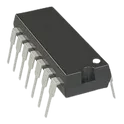
6 Uses0 StarsMCP6004-E/P
MCP6001/MCP6002/MCP6004 are low-power rail-to-rail input/output operational amplifiers from Microchip Technology designed for battery-powered, portable, industrial, automotive, and general-purpose analog applications. Operating from a single supply voltage of 1.8 V to 6.0 V, the family provides a typical gain-bandwidth product of 1 MHz, low quiescent current of only 100 µA per amplifier, and full rail-to-rail input/output operation for maximum dynamic range. Available in single, dual, and quad amplifier versions, the MCP600x series is well suited for sensor interfaces, photodiode amplifiers, analog filters, signal conditioning, portable instrumentation, IoT devices, battery-powered electronics, and embedded analog circuits requiring low power consumption and cost-effective performance. Search Keywords: MCP6001, MCP6002, MCP6004, Microchip MCP6001, Rail to Rail Op Amp, Low Power Operational Amplifier, Single Supply Op Amp, General Purpose Op Amp, Analog Signal Conditioning, Sensor Amplifier, Photodiode Amplifier, Battery Powered Amplifier, Low Voltage Op Amp, 1MHz Op Amp, Rail to Rail Input Output Amplifier, Portable Electronics Amplifier, Embedded Analog Circuit, Analog Filter Amplifier, Precision Signal Amplifier, Microchip Operational Amplifier Hashtags: #MCP6001 #MCP6002 #MCP6004 #Microchip #OperationalAmplifier #OpAmp #RailToRail #AnalogElectronics #SignalConditioning #SensorInterface #LowPowerDesign #BatteryPowered #EmbeddedSystems #AnalogCircuit #ElectronicsDesign #PCBDesign #HardwareEngineering #IoTDevices #Instrumentation #ElectricalEngineering
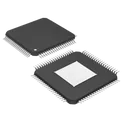
2 Uses0 StarsLAN9254-I/JRX
Ethernet Controller 10/100 Base-T/TX Bus Interface 80-TQFP-EP (12x12) The LAN9254-I/JRX is an EtherCAT SubDevice (slave) controller developed by Microchip Technology, designed to serve as the communication backbone for industrial automation devices participating in an EtherCAT network. The device integrates dual Ethernet physical layer transceivers directly on-chip, eliminating the need for external PHY components and simplifying the design of EtherCAT-enabled equipment such as servo drives, sensors, I/O modules, and other field devices used in real-time industrial control systems. Architecturally, the controller can operate as either a two-port or three-port node, depending on the network topology required. In its standard configuration it functions as a two-port device supporting daisy-chain connections typical of EtherCAT line topologies. When configured as a three-port device, it gains an additional management interface port that can connect to an external PHY or to another LAN9254, enabling star or tree network topologies and allowing the device to act as a branching point within a larger EtherCAT installation. Each integrated Ethernet PHY operates in full-duplex mode and supports automatic crossover detection, so the device can use either straight-through or crossover cabling without requiring manual configuration. Beyond pure protocol handling, the LAN9254 includes a substantial set of general-purpose digital input and output lines, allowing it to be used in simple field devices without requiring a separate microcontroller. For more complex applications, the device communicates with an external host processor through an integrated host bus interface that behaves like simple memory-mapped SRAM, supporting both 8-bit and 16-bit data widths along with multiple byte-ordering conventions, which makes it straightforward to interface with a wide range of microcontroller and microprocessor architectures. Internally, dual process data RAM buffers manage the exchange of real-time process data between the host application and the EtherCAT communication engine, while a dedicated interrupt line notifies the host of relevant internal events. A key feature of the device is its built-in distributed clock mechanism, which provides high-precision timing synchronization across all nodes in an EtherCAT network. This capability is essential for motion control and other applications where multiple devices must act in tight temporal coordination. The controller also provides configurable status indication through standard network activity and link LEDs, along with optional error and run-state indicators that give visibility into the health and operational state of the device at a glance. Power architecture on the LAN9254 is simplified through an integrated linear regulator, allowing the device to be operated from a single primary supply rail while internally generating the lower voltage needed for its core logic. This reduces the external power supply complexity that would otherwise be required to support separate core and I/O voltage domains. The "-I" designation on this particular part number indicates an industrial-grade temperature rating, making it suitable for deployment in factory floor and other demanding industrial environments where extended thermal range and long-term reliability are required. The device is housed in a surface-mount package consistent with dense industrial control board layouts and is compliant with RoHS material restrictions. Spec Sheet Identification Part Number: LAN9254-I/JRX Device Family: LAN9254 Manufacturer: Microchip Technology Functional Classification Device Type: EtherCAT SubDevice (slave) controller Network Role: Two/three-port configurable node Integrated PHYs: Dual Ethernet physical layer transceivers, on-chip Auto-MDIX Support: Yes, supports direct and crossover cabling Communication & Protocol Features Protocol: EtherCAT Topology Support: Daisy-chain (line), star, and tree topologies Additional Port Mode: Optional third port for branching/tap configurations Clock Synchronization: Integrated distributed clock for high-precision timing Host Interface Interface Type: SRAM-like host bus interface Data Width Support: Selectable bit-width host bus operation Endianness Support: Multiple byte-ordering modes Process Data Handling: Dual process data RAM buffers Interrupt Support: Configurable host interrupt line Digital I/O General-Purpose I/O: Integrated digital I/O lines for microcontroller-less operation Standalone Mode: Supports operation without external microcontroller for simple device designs Power Architecture Supply Configuration: Single primary supply rail Internal Regulation: Integrated linear regulator for core voltage generation Status Indication LED Support: Standard run and link/activity indicators per port Optional Indicators: Configurable error and run-state status indicators Environmental & Qualification Temperature Grade: Industrial ("-I" suffix) RoHS Compliance: Yes Package Package Type: Surface-mount, quad flat package style Mounting: Surface mount technology (SMT) Packaging Format Supply Format: Tape-and-reel, per part suffix designation #LAN9254 #Microchip #EtherCAT #SlaveController #SubDeviceController #IndustrialEthernet #IndustrialAutomation #MotionControl #EmbeddedSystems #FieldDevice #DigitalIO #HostBusInterface #DistributedClock #TQFP #RoHSCompliant #IndustrialGrade #EngineeringSpec #ComponentLibrary #CommonPartsLibrary #SemiconductorIC
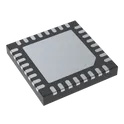
1 Uses0 StarsLAN8770M-I/PRA
4/4 Transceiver Full MII, RMII 32-VQFN (5x5) ## Engineering Specification ## General Description The **LAN8770M-I/PRA** is a Microchip Technology single-port **100BASE-T1 Ethernet physical layer transceiver** designed for automotive, industrial, and embedded networking applications. It provides Ethernet communication over a single balanced twisted pair and is suitable for compact systems requiring reliable network connectivity, low-power operation, and standard MAC interface support. The device is commonly used in automotive electronic control units, infotainment systems, telematics modules, sensor nodes, industrial control systems, and embedded Ethernet hardware. ## Device Identification Manufacturer Part Number: **LAN8770M-I/PRA** Manufacturer: **Microchip Technology** Product Family: **LAN8770** Device Category: **Integrated Circuit** Device Type: **Ethernet PHY Transceiver** Ethernet Standard: **100BASE-T1** Interface Type: **MII and RMII** Mounting Type: **Surface Mount** Package Type: **VQFN** ## Functional Description The device functions as an Ethernet physical layer transceiver that connects a host controller or microcontroller MAC interface to a single-pair Ethernet physical medium. It handles the analog and digital PHY functions required for 100BASE-T1 communication, allowing embedded systems to transmit and receive Ethernet data over a single twisted pair cable. ## Network and Interface Description The **LAN8770M-I/PRA** supports 100 Mb/s single-pair Ethernet communication and provides MII and RMII host interface options. This allows integration with microcontrollers, processors, gateways, and network controllers that support standard Ethernet MAC interfaces. The device is intended for applications where compact Ethernet connectivity and reduced cabling complexity are required. ## Electrical Description The device is designed for low-voltage operation and supports multiple supply domains according to the manufacturer’s recommended operating conditions. Proper power sequencing, decoupling, reset handling, clocking, and reference layout should be implemented to maintain stable PHY operation and signal integrity. ## Package and Mechanical Description The component is supplied in a compact surface-mount **VQFN package**, suitable for dense printed circuit board assemblies. The package supports automated assembly and is appropriate for space-constrained automotive and industrial electronic designs. ## Control and Diagnostic Description The PHY supports management and configuration through standard control interfaces used in Ethernet designs. It provides status monitoring and configuration capability for link management, operating mode selection, and system-level diagnostics. These features allow the host controller to configure and monitor Ethernet link behavior during operation. ## Automotive and Industrial Suitability The **LAN8770M-I/PRA** is suitable for embedded systems requiring robust single-pair Ethernet communication. It is applicable to automotive networking, telematics, infotainment, advanced driver assistance systems, industrial Ethernet nodes, building automation, control modules, and other connected embedded platforms. ## Mounting and Assembly Description The component is intended for surface-mount PCB assembly using standard reflow soldering processes. PCB layout should follow Microchip’s hardware design guidance, including proper power supply decoupling, controlled impedance routing, short signal paths, grounding, and separation of sensitive analog and digital sections where applicable. ## Design Considerations The design should account for Ethernet signal integrity, single-pair cable interface requirements, common-mode noise control, EMC performance, supply filtering, oscillator or clock source requirements, reset timing, thermal performance, and package solderability. The device should not be operated beyond the manufacturer’s specified electrical, thermal, or mechanical limits. ## Application Suitability The device is suitable for automotive Ethernet nodes, electronic control units, telematics modules, infotainment systems, sensor interfaces, industrial controllers, embedded gateways, connected equipment, and compact network-enabled hardware requiring 100BASE-T1 Ethernet PHY functionality. ## Hashtags #commonpartslibrary #integratedcircuit #ethernetphy #microchip #microchiptechnology #lan8770 #lan8770mipra #singlepairethernet #100baset1 #automotiveethernet #ethernettransceiver #phytransceiver #embeddednetworking #mii #rmii #vqfnpackage #smdcomponent #surfacemount #automotiveelectronics #industrialethernet #telematics #infotainment #embeddedhardware #pcbdesign #hardwaredesign #electronicscomponents #electronicparts #componentlibrary #engineeringparts #electronicsengineering
3 Uses0 StarsTC4421AVAT
Low-Side Gate Driver IC Inverting TO-220-5 The TC4421AVAT is a high-speed MOSFET driver designed to efficiently drive power MOSFETs and IGBTs in switching applications. It features a low-impedance push-pull output stage capable of sourcing and sinking significant current, enabling rapid charging and discharging of gate capacitances for fast switching. The device supports both high- and low-side configurations, providing flexibility for power supply, motor control, DC-DC conversion, and class-D amplifier designs. Its robust design ensures reliable operation under high switching frequencies, minimizing losses and improving overall system efficiency. Engineering Specifications Manufacturer: Microchip Technology Part Number: TC4421AVAT Device Type: High-Speed MOSFET Driver Output Stage: Push-Pull Drive Capability: High Source and Sink Current Input Logic Compatibility: CMOS/TTL Compatible Supply Voltage Range: Wide Operating Range Propagation Delay: Low Rise/Fall Time: Fast Switching Output Voltage Swing: Rail-to-Rail Operating Frequency: High-Frequency Switching Applications Package Type: SOIC (Small Outline Integrated Circuit) Mounting Style: Surface Mount Thermal Performance: Designed for Efficient Heat Dissipation Protection Features: Undervoltage Lockout, Robust Against Overload Operating Temperature Range: Industrial Grade RoHS Compliant: Yes Applications: Power MOSFET/IGBT Switching, DC-DC Converters, Motor Control, Power Supplies, Class-D Audio Amplifiers, Pulse-Width Modulation Circuits, High-Speed Switching Circuits Key Features High current output for rapid gate charging and discharging CMOS/TTL input logic compatible Fast propagation delay and rise/fall times Rail-to-rail output voltage swing Suitable for high-speed, high-efficiency switching designs Reliable operation in industrial and commercial environments Compact surface-mount package for easy PCB integration Supports both high-side and low-side MOSFET driving Robust against short-term overloads and undervoltage conditions #TC4421AVAT #MicrochipTechnology #MOSFETDriver #IGBTDriver #HighSpeedDriver #PWMDriver #SwitchingPower #DC_DCConverter #MotorControl #PowerElectronics #IndustrialElectronics #SurfaceMount #ElectronicComponents #HighCurrentDriver #FastSwitching #EmbeddedSystems #PCBDesign
0 Uses0 StarsLAN8720A-CP-TR-ABC
Small Footprint RMII 10/100 Ethernet Transceiver with HP Auto-MDIX Support LAN8720A-CP-TR-ABC is a low-power, single-port 10BASE-T/100BASE-TX Ethernet Physical Layer (PHY) transceiver from Microchip Technology. It is designed to connect a microcontroller, processor, or Ethernet MAC to a standard Ethernet network through an RMII (Reduced Media Independent Interface). The device is widely used in embedded networking applications such as industrial controllers, IoT gateways, IP cameras, networked printers, routers, and ESP32-based Ethernet designs. Key Features Single-chip 10/100 Mbps Ethernet PHY Supports both 10BASE-T and 100BASE-TX Ethernet operation. RMII Interface Reduced pin-count interface for easy connection to Ethernet MACs and microcontrollers. IEEE 802.3 / 802.3u Compliant Fully compliant with Fast Ethernet standards. HP Auto-MDIX Support Automatically detects and configures straight-through or crossover Ethernet cables. Auto-Negotiation Automatically selects the best available speed and duplex mode. Flexible I/O Voltage Supports LVCMOS I/O voltages from 1.6 V to 3.6 V, simplifying interfacing with different processors. Integrated 1.2 V Regulator Allows operation from a single 3.3 V supply, reducing external components. Low-Power Architecture Features multiple power-saving modes through Microchip's flexPWR® technology. Built-in Diagnostics and Reliability Features Loopback modes, automatic polarity correction, link-status monitoring, and wake-up detection. Compact Package Available in a 24-pin SQFN/QFN (4 mm × 4 mm) package for space-constrained designs #CommonPartsLibrary #IntegratedCircuit
114 Uses0 StarsMCP9808T-E/MS
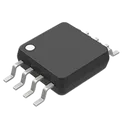
Temperature Sensor Digital, Local -40°C ~ 125°C 10 b 8-MSOP The MCP9808T-E/MS is a high-accuracy digital temperature sensor developed by Microchip Technology for precision thermal monitoring applications. The device communicates through a standard I²C-compatible serial interface and is optimized for low-power embedded systems requiring accurate ambient temperature measurement. It integrates internal temperature sensing, analog-to-digital conversion, programmable alert functionality, and configurable power management within a compact MSOP package. The sensor is designed for applications including industrial monitoring, consumer electronics, IoT devices, thermal management systems, medical instrumentation, and battery-powered portable equipment. Its low operating current and shutdown capability make it suitable for energy-efficient systems where thermal accuracy and minimal power consumption are critical. The device supports programmable temperature limits and interrupt generation for over-temperature events, enabling autonomous thermal supervision without continuous host processor intervention. The MCP9808T-E/MS maintains high measurement accuracy across a wide operating temperature range and offers stable digital output without requiring external calibration components. Electrical Characteristics Supply voltage operation supports low-voltage and standard logic systems. Low operating current enables efficient continuous monitoring. Shutdown mode significantly reduces power consumption during inactive periods. Digital I²C interface supports standard and fast communication modes. Integrated temperature conversion engine provides direct digital temperature output. Temperature Sensing Features High-accuracy ambient temperature measurement. Wide operating temperature range suitable for industrial environments. Programmable resolution for balancing conversion speed and precision. Configurable upper, lower, and critical temperature alert thresholds. Integrated hysteresis control for stable thermal event detection. Communication Interface I²C-compatible serial communication interface. Configurable slave addressing for multi-device bus operation. Supports read and write access to internal configuration registers. Compatible with common microcontrollers and embedded processors. Functional Features Integrated alert output for thermal event signaling. Programmable interrupt and comparator operating modes. Internal registers support temperature monitoring and device configuration. Power-on reset circuitry ensures predictable startup behavior. Device identification registers support system-level verification. Mechanical Characteristics Package type is MSOP with compact surface-mount footprint. Suitable for automated PCB assembly processes. RoHS-compliant and lead-free manufacturing. Typical Applications Industrial temperature monitoring systems. Portable battery-powered electronics. Embedded microcontroller systems. Thermal protection and supervision circuits. Consumer and IoT sensing devices. Medical and laboratory instrumentation. #CommonPartsLibrary #Sensor #Transducer #Temperature-Sensor #MCP9808
29 Uses0 Stars