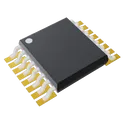
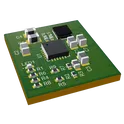
The HOTCHIP HT4936S is a sophisticated mobile power management integrated circuit designed by Hotchip, optimized for portable power solutions that require efficient charging and power management capabilities. This advanced component integrates features for charging and discharging through a common port, automatic load detection for boost startup and shutdown, four-light battery level indication, and a low battery alert functionality. The HT4936S stands out for its ability to manage 1A input/output with minimal external components, leveraging synchronous rectification to enhance efficiency and reduce thermal footprint. Additionally, it supports a versatile charging protocol accommodating both 4.20V and 4.35V batteries, and is packaged in a compact SOP16 form factor, ensuring a low-cost, space-efficient solution for a wide range of mobile power applications including power banks, backup power supplies, and lithium battery chargers. It incorporates protection features against battery overcharge, over-discharge, and thermal overload, thereby ensuring reliable operation across a range of conditions. Furthermore, the HT4936S facilitates direct LED drive and includes an NTC thermistor input for temperature monitoring, making it an all-encompassing solution for power management in consumer electronics.
8 Uses
3 Stars
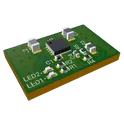
This project is a reference design based on the ISL6292, a single cell Li-Ion battery charger. It manages the power between an external power source (VIN), a Li-Ion battery (BAT), and a system power rail (SYS). Key features include power-path management, battery thermistor monitoring, and charge status indication. #Module #ISL6292 #ReferenceDesign #charger #BatteryManagement #reusable #module #bms #renesas #sublayout
0 Uses
1 Star
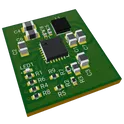
This project is a reference design based on the BQ25895, a single cell Li-Ion battery charger. It manages the power between an external power source (VIN), a Li-Ion battery (BAT), and a system power rail (SYS). Key features include power-path management, battery thermistor monitoring, and charge status indication. #Module #BQ25895 #ReferenceDesign #charger #BatteryManagement #reusable #module #bms #texas-instruments #sublayout
25 Uses
1 Star
This project is a reference design based on the BQ24295, a single cell Li-Ion battery charger. It manages the power between an external power source (VIN), a Li-Ion battery (BAT), and a system power rail (SYS). Key features include power-path management, battery thermistor monitoring, and charge status indication. #Module #BQ24295 #ReferenceDesign #charger #BatteryManagement #reusable #module #bms #texas-instruments #sublayout
10 Uses
1 Star
The 10D-9 is an NTC (Negative Temperature Coefficient) thermistor primarily used as an inrush current limiter in power supply circuits. It has a nominal resistance of 10 Ω at 25°C and a disk diameter of approximately 9 mm. When power is first applied, the thermistor's high resistance limits the surge current. As it heats up during normal operation, its resistance decreases significantly, allowing current to flow with minimal power loss. Key Features 10 Ω nominal resistance at 25°C. NTC characteristic – resistance decreases as temperature increases. Inrush current suppression for protecting power supplies and electronic equipment from startup current spikes. Low residual resistance after warm-up, minimizing power loss during normal operation. High reliability and long-term stability. Radial leaded package with epoxy/silicone-coated thermistor disk. Typical operating temperature range up to -40°C to +175°C (manufacturer-dependent). Typical Applications Switching Mode Power Supplies (SMPS) AC/DC adapters Battery chargers LED drivers UPS systems Motor drives and controllers Monitors, TVs, and PC power supplies Electronic ballasts and lighting equipment #CommonPartsLibrary #Thermistor
25 Uses
0 Stars
10KF3950 is an NTC (Negative Temperature Coefficient) thermistor with a nominal resistance of 10 kΩ at 25°C and a B-value of 3950 K. Its resistance decreases as temperature increases, making it suitable for temperature sensing, compensation, monitoring, and control applications in electronic circuits. It is commonly available in compact SMD packages such as 0402, 0603, and 0805. Key Features Resistance at 25°C: 10 kΩ B Constant (25/50°C): 3950 K ±1% Resistance Tolerance: ±1% Operating Temperature Range: -40°C to +125°C Rated Power: 100 mW Fast thermal response due to small chip size High sensitivity to temperature changes RoHS compliant Available in 0402, 0603, and 0805 SMD packages for space-constrained designs Typical Applications Battery pack temperature monitoring Power supply thermal protection Consumer electronics Industrial control systems Automotive electronics HVAC equipment Smart home devices Temperature compensation circuits #CommonPartsLibrary #thermistor #NTC
106 Uses
0 Stars
The NTC5D-15 is a negative temperature coefficient thermistor designed for inrush current limiting and surge current suppression in power electronic circuits. It provides high resistance at ambient temperature to restrict excessive startup current and gradually decreases in resistance as it self-heats during operation, allowing normal current flow with minimal power loss. This component is commonly used in switched-mode power supplies, battery chargers, motor drives, lighting equipment, consumer electronics, industrial control systems, and other AC or DC power applications requiring reliable inrush current protection. Key Features Negative temperature coefficient thermistor technology Designed for inrush current limiting applications High surge current handling capability Low resistance during normal operating conditions Fast thermal response characteristics Stable electrical performance over repeated power cycles High reliability and long operational life Radial leaded through-hole package Suitable for AC and DC power systems Helps protect power supplies, rectifiers, capacitors, and switching devices from excessive startup current Electrical Characteristics NTC thermistor element Inrush current limiter function Low steady-state resistance after self-heating High energy absorption capability Wide operating temperature range Stable resistance-temperature behavior Suitable for continuous current operation within specified ratings Applications Switched-mode power supplies AC-DC converters Battery charging systems LED drivers and lighting equipment Industrial automation systems Motor control circuits Consumer electronics Home appliances Telecommunications equipment Power distribution modules Mechanical Characteristics Radial lead configuration Through-hole mounting Epoxy-coated thermistor body Compact package size for PCB installation RoHS-compliant construction depending on manufacturer version #commonpartslibrary #passivecomponent #thermistor #ntc #inrushcurrentlimiter #surgeprotection #powermanagement #powersupply #circuitprotection #industrialelectronics #powerelectronics #electroniccomponent
36 Uses
0 Stars
NTC Thermistor 10k 0805 (2012 Metric) The TX08F103F3435ER is a surface-mount NTC (Negative Temperature Coefficient) thermistor designed to measure temperature by changing its resistance as temperature varies. It is commonly used in compact electronics for temperature monitoring, control, and protection circuits. It comes in a small 0805 (2012 metric) SMD package, making it suitable for high-density PCB designs. ⭐ Key Features NTC thermistor (negative temperature coefficient type) Nominal resistance: 10 kΩ @ 25°C B-value: 3435 K (B25/85) High precision: ±1% resistance tolerance B-value tolerance: ±1% SMD package: 0805 (2012 metric size) Wide operating temperature range: -40°C to +125°C Low power dissipation (max ~130 mW) Fast thermal response due to small package size RoHS compliant and suitable for automated PCB assembly Designed for temperature sensing, compensation, and control applications #commonpartslibrary #ntc #thermistor
23 Uses
0 Stars
Stand-alone single-cell linear battery charger with power path BQ24074RGTT is a highly integrated standalone linear charger and power-path management IC from Texas Instruments designed for single-cell Li-Ion/Li-Polymer battery-powered portable devices. It supports charging directly from USB ports or external adapters while simultaneously powering the system load through integrated Dynamic Power Path Management (DPPM). The device is commonly used in portable electronics, IoT devices, wireless accessories, handheld medical devices, and battery-powered embedded systems. Key Features Single-cell Li-Ion/Li-Polymer battery charger Up to 1.5 A programmable charge current Integrated Dynamic Power Path Management (DPPM) USB-compliant charging support Selectable 100 mA / 500 mA USB current limits Programmable input current limit up to 1.5 A Supports both USB input and wall adapters Input overvoltage protection up to 28 V absolute maximum Integrated thermal regulation and thermal shutdown Reverse-current and short-circuit protection Programmable pre-charge and fast-charge safety timers Battery temperature monitoring via NTC thermistor input Charge status outputs for charging/done indication Current monitoring output (ISET) Compact 16-pin VQFN (3×3 mm) package Wide operating temperature range suitable for industrial applications Typical Applications TWS charging cases and earbuds Portable medical devices IoT and asset tracking systems Handheld gaming accessories Video doorbells and IP cameras Portable embedded systems and development boards Important Design Notes Designed specifically for 1-cell battery applications Requires proper thermal PCB layout due to linear charging architecture DPPM allows the system to operate even with a deeply discharged or missing battery Recommended for compact designs needing integrated charging and system power-path control #CommonPartsLibrary #IntegratedCircuit #PowerManagement
329 Uses
0 Stars
Charger IC Multi-Chemistry 36-VQFN (5x6) The BQ25750RRVR is a highly integrated switch-mode battery charge controller and power-path management device designed for single-cell to multi-cell lithium-ion and lithium-polymer battery-powered systems. The device supports bidirectional power conversion, enabling both battery charging and system power delivery through USB Type-C and other DC power sources. It integrates high-efficiency buck-boost charging architecture to maintain optimal charging performance across a wide input voltage range. The device is intended for portable electronics, industrial handheld equipment, USB Power Delivery applications, embedded systems, and battery-powered computing platforms requiring advanced power management and flexible charging capability. Integrated power-path management allows simultaneous system operation and battery charging while maintaining battery protection and system stability. The BQ25750RRVR supports programmable charging parameters through an I2C interface, including charge voltage, charge current, input current limit, and system power regulation. The device includes comprehensive protection functions such as overvoltage protection, overcurrent protection, thermal regulation, battery temperature monitoring, and fault reporting. High switching frequency operation enables reduced external component size and compact PCB implementation. Features Integrated synchronous buck-boost battery charger Supports USB Power Delivery and wide DC input sources Bidirectional power conversion capability I2C programmable charging and system parameters Integrated power-path management High-efficiency charging operation Supports multi-cell lithium-ion and lithium-polymer batteries Programmable input current and charge current limits Dynamic power management and system voltage regulation Integrated ADC monitoring for voltage, current, and temperature Battery supplement mode during adapter removal OTG boost mode support Thermal regulation and thermal shutdown protection Input overvoltage and overcurrent protection Battery overvoltage protection Safety timer and watchdog timer support NTC thermistor interface for battery temperature monitoring Interrupt and fault status reporting Compact WQFN package suitable for space-constrained designs Electrical Characteristics Wide input operating voltage range Programmable battery charge voltage High charge current capability Integrated low RDS(on) MOSFET drivers High switching frequency operation High conversion efficiency across operating range Low standby and shutdown current consumption Accurate input and charge current regulation Integrated analog-to-digital converter telemetry Interface and Control I2C serial communication interface Programmable charging profiles Configurable protection thresholds Status and interrupt reporting ADC telemetry reporting Enable and control pins for system integration Protection Features Input overvoltage protection Input overcurrent protection Battery overvoltage protection Thermal shutdown protection Thermal regulation control Short-circuit protection Watchdog timer protection Safety charging timer Battery temperature qualification support Package Information Package Type: WQFN Package Suffix: RRV Compact thermally enhanced package Surface-mount device Suitable for automated PCB assembly processes Applications USB Type-C charging systems Portable computers and tablets Industrial handheld devices Power banks and battery packs Embedded battery-powered systems Portable instrumentation Consumer electronics Smart battery charging platforms #commonpartslibrary #integratedcircuit #powermanagement #batterycharger
13 Uses
0 Stars
Charger IC Lithium Ion 49-WLP (3.46x3.46) The MAX77962 is a high-performance wide-input 3.2A buck-boost charger with a Smart Power Selector™ and operates as a reverse buck without an additional inductor, allowing the IC to power USB On-the-Go (OTG) accessories. The device integrates low-loss power switches, and provides small solution size, high efficiency, low heat, and fast battery charging. The reverse buck has true-load disconnect and is protected by an adjustable output current limit. The device is highly flexible and programmable through I2C configuration or autonomously through resistor configuration. The battery charger includes a Smart Power Selector to accommodate a wide range of battery sizes and system loads. The Smart Power Selector allows the system to start up gracefully when an input source is available even when the battery is deeply discharged (dead battery) or missing. For battery safety/authentication reasons, the IC can be configured to keep charging disabled, and allow the DC-DC to switch and regulate the SYS voltage. The system processor can later enable charging using the appropriate I2C commands. Alternatively, the IC can be configured to automatically start charging. ● 3.5V to 23V Input Operating Range, 30VDC Withstand Voltage ● 97% Peak Efficiency at 9VIN/7.4VOUT/1.5AOUT ● Reverse Leakage Protection ● 50mA to 3.15A Programmable Input Current Limit ● 50mA to 3.2A Programmable Constant Current Charge ● Remote Differential Voltage Sensing ● 600kHz or 1.2MHz Switching Frequency Options ● System Instant On with Smart Power Selector PowerPath ● Charge Safety Timer ● Die Temperature Regulation with Thermal Foldback Loop ● Input Power Management with Adaptive Input Current Limit (AICL) and Input Voltage Regulation ● 10mΩ BATT to SYS Switch, Up to 10A Overcurrent Threshold ● Reverse Buck Mode 5.1V/1.5A to Support USB OTG ● JEITA Compliant with NTC Thermistor Monitor ● I 2C or Resistor Programmable ● 3.458mm x 3.458mm 49-Bump WLP #CommonPartsLibrary #IntegratedCircuit #PowerManagement #MAX77962
0 Uses
0 Stars
Battery Battery Monitor IC Lithium Ion 9-DSBGA The BQ27220YZFR is a highly integrated single-cell battery fuel gauge IC developed for rechargeable lithium-ion and lithium-polymer battery applications. The device utilizes Texas Instruments’ Impedance Track™ algorithm to provide highly accurate battery capacity measurement, state-of-charge estimation, runtime prediction, and battery health monitoring across varying load and temperature conditions. The device is designed for compact portable electronics, wearable devices, IoT products, handheld instruments, and low-power embedded systems requiring precise battery monitoring and extended operating life. The BQ27220YZFR supports system-side fuel gauging without requiring battery pack-side electronics, simplifying battery integration and reducing overall system cost. The fuel gauge continuously monitors battery voltage, current, and temperature to estimate available capacity, remaining runtime, full charge capacity, and state-of-health information. Integrated low-power operation enables ultra-low standby current consumption suitable for always-on battery-powered products. Communication with the host processor is implemented through a standard I²C interface, allowing configuration access, telemetry reporting, and battery parameter monitoring. The device also integrates protection and alert functionality through programmable interrupt outputs and battery condition monitoring features. The BQ27220YZFR is optimized for use with single-cell lithium-based chemistries and supports learning cycles for adaptive battery characterization over product lifetime. Internal data flash memory stores battery profile information and calibration parameters to improve long-term gauging accuracy. The device is supplied in a compact lead-free wafer chip-scale package suitable for space-constrained PCB designs and portable electronics requiring minimal footprint and low-profile assembly. Electrical Characteristics Device Type Single-cell battery fuel gauge and battery monitor IC Battery Chemistry Support Lithium-ion and lithium-polymer rechargeable batteries Input Voltage Range Supports single-cell battery operation Fuel Gauging Method Impedance Track™ algorithm Communication Interface I²C serial interface Measurement Functions Battery voltage monitoring Battery current monitoring Battery temperature monitoring State-of-charge estimation Remaining capacity calculation Full charge capacity estimation State-of-health reporting Runtime prediction Power Consumption Ultra-low operating current for portable applications Temperature Monitoring External thermistor support Host Alert Features Interrupt and alert reporting capability Data Storage Integrated nonvolatile configuration memory Calibration Features Automatic learning and battery characterization support Protection Monitoring Battery condition and system monitoring functions Package Type DSBGA wafer chip-scale package Mounting Style Surface mount Operating Temperature Range Industrial temperature operation suitable for portable electronics Functional Features High-accuracy fuel gauging over battery lifetime Adaptive battery modeling and aging compensation Low-power operation for battery-powered systems Integrated battery profiling capability Real-time remaining runtime estimation Automatic battery learning cycles Compact PCB footprint for portable devices System-side implementation without smart battery pack requirement Programmable battery alert functionality Support for low-power embedded processors and mobile systems Optimized for wearable and IoT applications RoHS compliant and lead-free package construction #commonpartslibrary #integratedcircuit #powermanagement #batterymanagement
10 Uses
0 Stars
Charger IC Lithium Ion/Polymer 16-WQFN (3x3) The BQ25302RTER is a highly integrated single-cell lithium-ion and lithium-polymer battery charger and power-path management IC developed by Texas Instruments. The device is optimized for compact portable and wearable applications requiring efficient battery charging from USB or low-voltage DC power sources. It integrates a switching charger, power-path management, system voltage regulation, battery FET, and protection features into a compact package suitable for space-constrained designs. The device supports programmable charging current and voltage regulation while maintaining high power conversion efficiency through its switching charger architecture. Integrated power-path management allows the system load to operate simultaneously while charging the battery, improving system reliability and startup behavior when the battery is deeply discharged or absent. The BQ25302RTER includes input current limiting, thermal regulation, battery temperature monitoring support, and multiple safety timers to ensure safe charging operation. The charger automatically manages preconditioning, fast charging, charge termination, and recharge cycles for lithium-based battery chemistries. The device also supports USB-compliant input operation and includes configurable features through an I2C-compatible interface. Its compact WQFN package and high integration level reduce external component count and PCB area, making it suitable for wearable electronics, portable medical devices, IoT products, handheld instruments, wireless accessories, and battery-powered embedded systems. Electrical Characteristics Input operating voltage supports standard USB and low-voltage DC input sources suitable for portable electronics applications. Supports single-cell lithium-ion and lithium-polymer battery charging with programmable charge voltage regulation. Integrated high-efficiency switching charger architecture minimizes power dissipation and improves thermal performance compared to linear chargers. Programmable fast-charge current supports flexible battery capacity scaling and application-specific charging requirements. Integrated power-path management allows simultaneous battery charging and system power delivery. Includes programmable input current limiting to support USB current compliance and adapter protection. Automatic charge cycle management includes precharge, fast charge, termination, and recharge operation. Supports battery temperature qualification using external thermistor monitoring. Integrated thermal regulation dynamically reduces charge current during high-temperature operating conditions. Low quiescent current operation improves standby battery life in portable products. Protection Features Integrated overvoltage protection for input power safety. Battery overcurrent and short-circuit protection enhance system reliability. Thermal shutdown circuitry protects the device during excessive junction temperature conditions. Safety timers monitor charging duration and prevent abnormal charging operation. Input current limiting protects USB ports and weak power adapters from overload conditions. Undervoltage lockout prevents improper operation during insufficient input supply conditions. Interface and Control I2C-compatible serial interface enables configuration and monitoring of charger parameters. Status reporting supports system-level battery and charging management. Programmable charging parameters allow firmware-controlled optimization for different battery chemistries and capacities. Interrupt and status functions support embedded power management architectures. Package Information Supplied in a compact WQFN package optimized for portable and space-constrained PCB layouts. Package design supports efficient thermal dissipation and automated surface-mount assembly processes. RoHS-compliant and suitable for modern lead-free manufacturing requirements. Typical Applications Wearable electronics Wireless earbuds and audio accessories Portable medical devices IoT and embedded battery-powered systems Handheld consumer electronics Portable instrumentation Rechargeable sensor modules Compact USB-powered battery charging systems #CommonPartsLibrary #IntegratedCircuit #PowerManagement #battery charger
3 Uses
0 Stars