Sensors
A sensor is a device that detects and measures a physical property or phenomenon, such as temperature, pressure, or motion. Sensors are used in a wide range of applications, including industrial automation, environmental monitoring, healthcare, and transportation. Flux.ai is the world's largest community-driven public library of sensors, with footprints, symbols, datasheets, and simulation models. Our extensive collection of sensors covers a variety of use cases and industries, making it easy to find the perfect sensor for your application. Whether you need a temperature sensor for HVAC systems, a pressure sensor for automotive applications, or a motion sensor for security systems, Flux.ai has you covered. Our comprehensive library of sensors is constantly updated with the latest and most innovative technologies, ensuring that you have access to the best sensors available. So, if you need a sensor for your next project, be sure to check out Flux.ai and take advantage of our extensive collection and expert support.
AHT30
Fully calibrated temperature and humidity sensor with digital output and I²C interface The AHT30 is a high-precision digital temperature and humidity sensor developed by AOSONG Electronics. It integrates a capacitive humidity sensing element, a temperature sensor, and a dedicated ASIC in a compact DFN package. The device provides fully calibrated digital output through an I²C interface, offering low power consumption, excellent long-term stability, and reliable performance in demanding environmental conditions. It is widely used in smart home devices, HVAC systems, industrial controls, weather monitoring equipment, IoT devices, and consumer electronics. Key Features Fully calibrated digital temperature and humidity sensor I²C digital communication interface Relative humidity measurement range: 0% to 100% RH Temperature measurement range: -40°C to +85°C High accuracy: up to ±2% RH and ±0.3°C (typical) Wide operating voltage: 2.2 V to 5.5 V Low power consumption Fast response time Excellent long-term stability Strong anti-interference capability Compact DFN package suitable for reflow soldering Optimized ASIC with improved MEMS sensing technology Applications Smart home and IoT devices HVAC and air quality monitoring Weather stations Consumer electronics Medical equipment Industrial monitoring and control systems Refrigerators, dehumidifiers, and air conditioners Hashtags #AHT30 #AOSONG #TemperatureSensor #HumiditySensor #EnvironmentalSensor #I2C #MEMS #SmartHome #IoT #HVAC #IndustrialAutomation #WeatherMonitoring #EmbeddedSystems #ElectronicsDesign #PCBDesign
0 Uses0 StarsESP32-POE
ESP32-WROOM32 ESP32 802.11 b/g/n (WiFi/WLAN/Wi-Fi 4), Bluetooth® Smart 4.x Low Energy (BLE) Transceiver 2.4GHz Evaluation Board ESP32-POE is an ESP32-based IoT development board that combines Wi-Fi, Bluetooth, Ethernet connectivity, and Power over Ethernet (PoE) in a single platform. It is designed for industrial automation, smart home systems, remote monitoring, and other network-connected embedded applications where both power and data can be delivered through a single Ethernet cable. The board supports the ESP32 dual-core processor and provides expansion interfaces for sensors, storage, and peripherals. FEATURES • ESP32-WROOM-32 WiFi/BLE module • Ethernet 100Mb interface with IEEE 802.3 PoE support • LiPo battery charger • LiPo battery connector • UEXT connector • User button • Reset button • Micro USB with programmer for ESP32 programming • MicroSD card • Two extension connectors 0.1" step spaced at 1" • PCB dimensions: (75 x 28)mm ~ (3 x 1)" #ESP32 #ESP32POE #IoT #Ethernet #PoE #WiFi #Bluetooth #EmbeddedSystems #IndustrialIoT #SmartHome #OpenSourceHardware #Microcontroller #EdgeComputing #Automation #MakerProjects
5 Uses0 StarsEE-SX4081
Optical Sensor Through-Beam 0.197" (5mm) PCB Mount The EE-SX4081 specification defines the engineering requirements for a slot-type photomicrosensor designed for non-contact object detection and position sensing in electronic and electromechanical systems. This specification establishes the functional, electrical, mechanical, environmental, and quality requirements necessary to ensure accurate optical sensing, reliable switching performance, and long-term operational stability. The component is intended for use in industrial automation, office equipment, consumer electronics, and embedded control systems requiring precise detection of object presence, motion, or position. The integrated infrared emitter and phototransistor receiver provide dependable sensing through interruption of the optical path, enabling high-speed, contactless detection in compact system designs. Engineering Requirements The photomicrosensor shall be manufactured using qualified optoelectronic components and controlled production processes to ensure consistent sensing performance, mechanical integrity, and long service life. The optical assembly shall maintain accurate alignment between the emitter and receiver to provide stable detection characteristics throughout the specified operating conditions. Electrical characteristics shall provide reliable switching response, stable output behavior, and low power consumption while maintaining consistent sensitivity across the intended operating voltage and temperature ranges. The sensor shall exhibit reliable performance under normal ambient light conditions and shall maintain signal integrity during continuous operation. Mechanical construction shall ensure precise slot dimensions, secure mounting capability, and resistance to vibration, mechanical shock, and thermal cycling encountered during normal operation. The package shall be suitable for printed circuit board assembly and shall withstand standard soldering and handling processes without degradation. Workmanship shall be free from defects including contamination, optical misalignment, package damage, corrosion, or structural irregularities that could affect sensing accuracy or reliability. Inspection, validation, and testing shall be performed using calibrated equipment and controlled quality procedures to verify compliance with engineering requirements. Any deviation from this specification shall require formal engineering evaluation, documented technical justification, and approval through the established engineering change control process before implementation. Documentation Supporting documentation shall include engineering drawings, electrical specifications, optical performance data, qualification reports, inspection records, and revision-controlled manufacturing documentation. All documentation shall be maintained under formal configuration management and quality assurance systems to ensure complete traceability throughout the product lifecycle. Revision Control Any modification to this specification shall be processed through the formal engineering change management system. All revisions shall undergo technical review, validation, and approval before release to ensure continued compliance with design intent and applicable engineering standards. #EngineeringSpecification #Photomicrosensor #OpticalSensor #SlotSensor #IndustrialAutomation #EmbeddedSystems #Optoelectronics #QualityAssurance #EngineeringDocumentation #ElectronicComponents
0 Uses0 StarsMMICT5848-00-012
27 Hz ~ 18 kHz Digital, I2S Microphone MEMS (Silicon) 1.62 V ~ 1.98 V Omnidirectional (-37dB ±1dB @ 94dB SPL) Solder Pads TDK InvenSense T5848 TDK T5848 is a low-noise digital MEMS microphone with a bottom-port acoustic interface and industry-standard I²S digital audio output. The device integrates a MEMS microphone element, impedance converter, ADC, decimation filtering, anti-aliasing filtering, power management, and a 24-bit digital audio interface in a compact 3.5 mm × 2.65 mm × 0.98 mm package. The T5848 supports multiple operating modes including High Quality, Low Power, Sleep, and Always-On Voice (AOV) modes, making it ideal for battery-powered and voice-activated applications. With up to 68 dBA SNR, 133 dB SPL acoustic overload point, and extended frequency response from 27 Hz to 18 kHz, the T5848 is optimized for wearables, IoT devices, smart TVs, gaming systems, teleconferencing equipment, voice assistants, and always-listening audio applications. Search Keywords: T5848, TDK T5848, MEMS Microphone, Digital MEMS Microphone, I2S Microphone, Bottom Port Microphone, Always On Voice Microphone, AOV Microphone, Low Power MEMS Microphone, Wearable Microphone, IoT Audio Sensor, Voice Recognition Microphone, Digital Audio Input, 24-bit I2S Microphone, DSP Microphone, Smart Speaker Microphone, Voice Assistant Microphone, TDK InvenSense Microphone, Teleconference Audio Microphone, Embedded Audio Sensor Hashtags: #T5848 #TDK #InvenSense #MEMSMicrophone #DigitalMicrophone #I2SMicrophone #AudioSensor #AlwaysOnVoice #VoiceRecognition #WearableElectronics #IoTDevices #EmbeddedAudio #VoiceAssistant #SmartDevices #DSP #ElectronicsDesign #PCBDesign #EmbeddedSystems #HardwareEngineering #AudioElectronics
9 Uses0 StarsS-8261ABJMD-G3JT2G
Battery Battery Protection IC Lithium Ion/Polymer SOT-23-6 S-8261ABJMD-G3JT2G is a high-accuracy lithium-ion/lithium-polymer battery protection IC designed for single-cell battery packs. It integrates voltage detection and timing circuits to protect rechargeable batteries against overcharge, overdischarge, overcurrent, and short-circuit conditions, helping improve battery safety, reliability, and lifespan. The device is commonly used in portable electronics, battery packs, IoT devices, and handheld equipment. It is housed in a compact SOT-23-6 package suitable for space-constrained designs. Key Features Single-cell Li-ion / Li-polymer battery protection IC High-accuracy overcharge detection High-accuracy overdischarge detection Overcurrent and short-circuit protection Built-in delay circuits to prevent false triggering Low current consumption (typical operating current in the µA range) Wide operating voltage range Support for 0 V battery charging function Compact SOT-23-6 package RoHS compliant and lead-free version available Typical Applications Li-ion battery packs Li-polymer battery packs Portable consumer electronics Wireless sensors and IoT devices Handheld instruments Rechargeable battery-powered equipment #BatteryProtectionIC #LiIonBattery #LiPoBattery #PowerManagement #BatteryPackProtection #OverchargeProtection #OverdischargeProtection #ShortCircuitProtection #SOT23 #ABLIC #SeikoInstruments #PortableElectronics #RechargeableBattery #PMIC #SingleCellBattery
2 Uses0 Stars2450AT18A100E
Mini 2.45 GHz Antenna The 2450AT18A100E is a high-frequency ceramic SMT antenna featuring a small 3.2 mm × 1.6 mm × 1.3 mm package, optimized for space-constrained RF designs. It operates from 2400 MHz to 2500 MHz with a 50 Ω impedance and provides a compact alternative to traditional PCB trace antennas while maintaining reliable RF performance. Key Features Operating Frequency: 2400 MHz – 2500 MHz (2.4 GHz ISM Band) Center Frequency: 2450 MHz Antenna Type: Mini Ceramic Chip Antenna / SMT RF Antenna Package Size: 3.2 mm × 1.6 mm × 1.3 mm Impedance: 50 Ω Peak Gain: Approximately +0.5 dBi (typical) Average Radiation Efficiency: Approximately 76% (based on Johanson evaluation board) Maximum Input Power: 2 W continuous wave (CW) Operating Temperature Range: -40 °C to +125 °C Mounting Type: Surface Mount Technology (SMT) Applications: Bluetooth / BLE devices Wi-Fi 2.4 GHz modules Zigbee / IEEE 802.15.4 systems IoT sensors and embedded wireless products #2450AT18A100E #JohansonTechnology #ChipAntenna #SMTAntenna #RFDesign #2GHzAntenna #Bluetooth #WiFi #Zigbee #IoT #WirelessCommunication #EmbeddedSystems #PCBDesign #RFAntenna #Antena #Chip #SurfaceMount
18 Uses0 StarsMCP6042-I/SN
Standard (General Purpose) Amplifier 2 Circuit Rail-to-Rail 8-SOIC The MCP6042-I/SN specification defines the engineering requirements for a low-power dual operational amplifier designed for precision analog signal conditioning applications. This specification establishes the functional, electrical, mechanical, environmental, and quality requirements necessary to ensure stable and accurate analog performance across a wide range of embedded, industrial, and consumer electronic systems. The device is intended for use in applications requiring low offset voltage, low input bias current, and stable operation under low supply conditions. It is suitable for signal buffering, sensor signal conditioning, filtering, and general-purpose analog amplification in battery-powered and low-energy electronic systems. Engineering Requirements The operational amplifier shall be manufactured using advanced CMOS process technology to ensure low power consumption, high input impedance, and stable analog performance. The device shall maintain consistent operation under defined electrical, thermal, and environmental conditions without degradation of signal integrity. The amplifier architecture shall support dual independent channels with stable gain characteristics and predictable linear response across the intended operating range. Output performance shall remain stable under capacitive loading and dynamic signal conditions typical of embedded analog systems. Electrical characteristics shall ensure low noise operation, low offset behavior, and reliable signal amplification with minimal distortion. The device shall maintain functional stability during power-up, power-down, and transient operating conditions. Mechanical and package construction shall be suitable for surface-mount assembly and shall ensure robust handling during manufacturing, soldering, and system integration. Workmanship shall be free from defects such as contamination, cracks, bonding issues, or structural inconsistencies that could affect electrical or mechanical reliability. Inspection, validation, and testing shall be performed using controlled procedures and calibrated measurement systems to ensure compliance with all applicable engineering and quality requirements. Any deviation from this specification shall require formal engineering review, documented justification, and approval through established change control processes. Documentation Supporting documentation shall include official datasheets, electrical characterization reports, qualification data, inspection records, and revision-controlled manufacturing documentation. All records shall be maintained under formal configuration management and quality assurance systems to ensure traceability and consistency. Revision Control Any modification to this specification shall be managed through the formal engineering change control system. All revisions shall undergo technical review, validation, and approval prior to implementation to ensure continued compliance with design intent and applicable standards. #EngineeringSpecification #OperationalAmplifier #AnalogIC #MicrochipTechnology #LowPowerDesign #SignalConditioning #EmbeddedSystems #ElectronicsDesign #QualityAssurance #EngineeringDocumentation
0 Uses0 StarsSTM32G491RET6
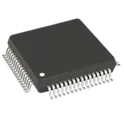
ARM® Cortex®-M4F STM32G4 Microcontroller IC 32-Bit 170MHz 512KB (512K x 8) FLASH 64-LQFP (10x10) The STM32G491RET6 from STMicroelectronics is a high-performance 32-bit microcontroller based on the Arm® Cortex®-M4 core with Floating Point Unit (FPU), designed for advanced embedded applications requiring high computational performance, precise analog processing, and real-time control. It belongs to the STM32G4 series and integrates enhanced analog peripherals, motor-control timers, communication interfaces, security features, and hardware accelerators such as CORDIC and FMAC. The device operates at up to 170 MHz, provides 512 KB Flash memory, and includes 96 KB SRAM, making it suitable for applications such as motor control, digital power conversion, industrial automation, robotics, and embedded control systems. Key Features Core: Arm® Cortex®-M4 32-bit CPU with FPU, DSP instructions, and MPU Maximum CPU Frequency: Up to 170 MHz (up to 213 DMIPS) Memory: 512 KB Flash memory with ECC support 96 KB SRAM with parity checking features Quad-SPI memory interface Operating Voltage: 1.71 V to 3.6 V Package: LQFP-64 Advanced Analog Features: 3 × 12-bit ADCs with high-speed conversion 4 × 12-bit DAC channels 4 × Rail-to-Rail operational amplifiers 4 × Fast analog comparators Internal voltage reference buffer Hardware Accelerators: CORDIC accelerator for trigonometric calculations FMAC (Filter Math Accelerator) for digital filtering applications Timers & Motor Control: Advanced PWM timers for motor-control applications Multiple 16-bit and 32-bit timers Support for encoder and PWM control Communication Interfaces: 2 × FDCAN interfaces 5 × USART/UART 3 × SPI interfaces 3 × I²C interfaces USB 2.0 Full-Speed interface SAI audio interface Security Features: True Random Number Generator (TRNG) CRC calculation unit Unique device ID Debug & Programming: SWD and JTAG debugging support Typical Applications Motor control and BLDC controllers Digital power converters Industrial automation equipment Robotics and motion control Smart sensors and embedded control systems Power management applications #STM32G491RET6 #STM32G4 #STMicroelectronics #ARM_CortexM4 #Microcontroller #MCU #EmbeddedSystems #MotorControl #DigitalPower #IndustrialAutomation #Robotics #IoT #ElectronicsDesign #PCBDesign
30 Uses0 Stars