Memory
A memory IC, or integrated circuit, is a type of electronic device that stores and retrieves data. It is used in a wide range of electronic devices, including computers, smartphones, and other electronic devices. Memory ICs come in a variety of types, including DRAM, SRAM, and Flash memory, and are used for different purposes depending on the device and application. One of the primary use cases for memory ICs is in computer systems, where they are used to store data and instructions that are accessed by the processor. Memory ICs are also used in a variety of other electronic devices, such as digital cameras, MP3 players, and mobile phones, to store data and enable various functions. Flux.ai has the world's largest community-driven public library of memory ICs, with a wide variety of footprints, symbols, datasheets, and simulation models available. This extensive library allows users to easily access and use memory ICs in their projects, making it an invaluable resource for engineers and developers.
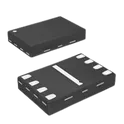
W25Q16JVUXIQ
SPI Flash Serial Flash Memory with Dual/Quad SPI The W25Q16JVUXIQ is a 16-Mbit (2-MByte) Serial NOR Flash memory device from Winbond. It is designed for embedded systems that require non-volatile code and data storage with minimal pin count, low power consumption, and high-speed access. The device supports standard SPI, Dual SPI, and Quad SPI interfaces, making it suitable for firmware storage, boot memory, IoT devices, microcontrollers, consumer electronics, and execute-in-place (XIP) applications. Key Features 16-Mbit (2-MByte) Flash Memory Capacity Operating Voltage: 2.7 V to 3.6 V Standard SPI, Dual SPI, and Quad SPI Interface Support Maximum SPI Clock Frequency: 133 MHz Equivalent Data Transfer Rates: 266 MHz (Dual SPI) 532 MHz (Quad SPI) Continuous Read and XIP (Execute-In-Place) Capability 4 KB Sector Erase, 32 KB Block Erase, 64 KB Block Erase, and Chip Erase 256-Byte Programmable Page Size Minimum 100,000 Program/Erase Cycles per Sector More Than 20 Years Data Retention Ultra-Low Power Consumption Typical power-down current below 1 µA 64-Bit Unique Serial Number Three 256-Byte Security Registers with OTP Protection JEDEC ID and SFDP Support Software and Hardware Write Protection Operating Temperature Options up to +85°C and +105°C Compact 8-Pad USON Package (2 mm × 3 mm) suitable for space-constrained designs #CommonPartsLibrary #IntegratedCircuit #Memory
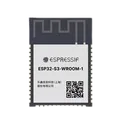
279 Uses0 StarsESP32-S3-WROOM-1-N8
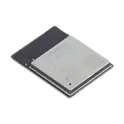
ESP32-S3-WROOM-1-N8 is a high-performance Wi-Fi and Bluetooth Low Energy (BLE) module from Espressif Systems. It is built around the ESP32-S3 SoC, featuring a dual-core Xtensa LX7 processor, integrated 2.4 GHz Wi-Fi and Bluetooth 5 LE connectivity, 8 MB SPI flash memory, and a PCB antenna. The module is optimized for AIoT, edge computing, human-machine interfaces, smart devices, and industrial IoT applications. Key Features Dual-core Xtensa® LX7 CPU running up to 240 MHz for high-performance embedded applications. 8 MB onboard SPI Flash (N8 variant) for firmware and data storage. 2.4 GHz Wi-Fi (802.11 b/g/n) with data rates up to 150 Mbps. Bluetooth 5 LE support including: Long Range mode 2 Mbps PHY Bluetooth Mesh Extended Advertising AI acceleration support through ESP32-S3 vector instructions for machine learning and signal-processing workloads. USB 1.1 OTG and USB Serial/JTAG integrated, simplifying debugging and USB device applications. Up to 45 GPIOs with extensive peripheral support: SPI I²C I²S UART PWM ADC Touch Sensors TWAI® (CAN-compatible) Camera Interface LCD Interface SDIO Host MCPWM Integrated 40 MHz crystal oscillator, RF matching circuitry, and PCB antenna for reduced external component count. Operating voltage range: 3.0 V to 3.6 V. Compact surface-mount module suitable for space-constrained designs. Typical Applications Smart home and home automation devices HMI displays and touchscreen products Voice recognition and audio processing Edge AI and machine learning applications Industrial IoT gateways and sensors Video streaming and camera systems USB-connected embedded devices Smart agriculture and healthcare equipment N8 specifically indicates 8 MB Flash and no PSRAM, making it a good choice for applications requiring substantial program storage but not large external RAM. #RF-transceiver #Module #ESP32
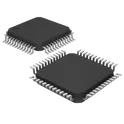
501 Uses0 StarsSTM32G0B1CBT6
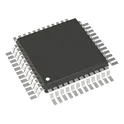
ARM-MSeries LQFP-48(7x7) Microcontrollers (MCU/MPU/SOC) ROHS ST Microelectronics STM32G0B1CBT6 LQFP-48_L7.0-W7.0-P0.50-LS9.0-BL LCSC Part Number: C2847904 JLCPCB Part Class: Extended Part Manufactured by ST(意法半导体) STMicroelectronics STM32G0B1 series 32-bit Arm Cortex-M0+ microcontroller, up to 64MHz CPU frequency, 1.7V to 3.6V operating voltage, up to 512KB Flash memory and 144KB SRAM, USB 2.0 full-speed device/host support, USB Type-C Power Delivery controller, FDCAN, I2C, USART, SPI, HDMI CEC, 12-bit ADC, 12-bit DACs, timers, RTC, DMA, CRC unit, SWD debug interface, 96-bit unique ID, operating temperature options up to -40°C to +125°C, available in LQFP, UFQFPN, UFBGA and WLCSP packages. Search Keywords: STM32G0B1, STM32G0B1xB, STM32G0B1xC, STM32G0B1xE, STMicroelectronics STM32G0B1, STM32G0B1 MCU, STM32G0B1 microcontroller, Arm Cortex-M0+ microcontroller, STM32G0 64MHz MCU, STM32G0B1 USB Type-C PD, STM32G0B1 USB FS, STM32G0B1 FDCAN, STM32G0B1 512KB Flash, STM32G0B1 144KB SRAM, STM32G0B1 LQFP, STM32G0B1 UFQFPN, STM32G0B1 UFBGA, STM32G0B1 WLCSP, STM32G0B1 datasheet Hashtags: #STM32G0B1 #STM32G0B1xB #STM32G0B1xC #STM32G0B1xE #STMicroelectronics #STM32MCU #STM32G0 #ArmCortexM0Plus #32bitMicrocontroller #64MHzMCU #512KBFlashMCU #144KBSRAM #USBTypeCPD #USBFS #FDCAN #I2CMCU #SPIMCU #USARTMCU #ADCmicrocontroller #DACmicrocontroller #LQFP #UFQFPN #UFBGA #WLCSP
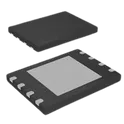
157 Uses0 StarsW25Q128JVPIQ
SPI Flash Memory with Dual/Quad SPI The W25Q128JV (128M-bit) Serial Flash memory provides a storage solution for systems with limited space, pins and power. The 25Q series offers flexibility and performance well beyond ordinary Serial Flash devices. They are ideal for code shadowing to RAM, executing code directly from Dual/Quad SPI (XIP) and storing voice, text and data. The device operates on a single 2.7V to 3.6V power supply with current consumption as low as 1µA for power-down. All devices are offered in space-saving packages. The W25Q128JV array is organized into 65,536 programmable pages of 256-bytes each. Up to 256 bytes can be programmed at a time. Pages can be erased in groups of 16 (4KB sector erase), groups of 128 (32KB block erase), groups of 256 (64KB block erase) or the entire chip (chip erase). The W25Q128JV has 4,096 erasable sectors and 256 erasable blocks respectively. The small 4KB sectors allow for greater flexibility in applications that require data and parameter storage. (See Figure 2.) The W25Q128JV supports the standard Serial Peripheral Interface (SPI), Dual/Quad I/O SPI: Serial Clock, Chip Select, Serial Data I/O0 (DI), I/O1 (DO), I/O2 and I/O3. SPI clock frequencies of W25Q128JV of up to 133MHz are supported allowing equivalent clock rates of 266MHz (133MHz x 2) for Dual I/O and 532MHz (133MHz x 4) for Quad I/O when using the Fast Read Dual/Quad I/O. These transfer rates can outperform standard Asynchronous 8 and 16-bit Parallel Flash memories. New Family of SpiFlash Memories – W25Q128JV: 128M-bit / 16M-byte – Standard SPI: CLK, /CS, DI, DO – Dual SPI: CLK, /CS, IO0, IO1 – Quad SPI: CLK, /CS, IO0, IO1, IO2, IO3 – Software & Hardware Reset(1) Highest Performance Serial Flash – 133MHz Single, Dual/Quad SPI clocks – 266/532MHz equivalent Dual/Quad SPI – 66MB/S continuous data transfer rate – Min. 100K Program-Erase cycles per sector – More than 20-year data retention Efficient “Continuous Read” – Continuous Read with 8/16/32/64-Byte Wrap – As few as 8 clocks to address memory – Allows true XIP (execute in place) operation Low Power, Wide Temperature Range – Single 2.7 to 3.6V supply – <1µA Power-down (typ.) – -40°C to +85°C operating range – -40°C to +105°C operating range Flexible Architecture with 4KB sectors – Uniform Sector/Block Erase (4K/32K/64K-Byte) – Program 1 to 256 byte per programmable page – Erase/Program Suspend & Resume Advanced Security Features – Software and Hardware Write-Protect – Power Supply Lock-Down – Special OTP protection – Top/Bottom, Complement array protection – Individual Block/Sector array protection – 64-Bit Unique ID for each device – Discoverable Parameters (SFDP) Register – 3X256-Bytes Security Registers with OTP locks – Volatile & Non-volatile Status Register Bits Space Efficient Packaging – 8-pin SOIC 208-mil – 16-pin SOIC 300-mil (additional /RESET pin) – 8-pad WSON 6x5-mm / 8x6-mm – 24-ball TFBGA 8x6-mm (6x4/5x5 ball array) – 24-ball WLCSP – Contact Winbond for KGD and other options #CommonPartsLibrary #IntegratedCircuit #Memory
75 Uses0 StarsSTM32L031K6T6TR
ST Microelectronics STM32L031K6T6TR LQFP-32_L7.0-W7.0-P0.80-LS9.0-BL LCSC Part Number: C2054289 JLCPCB Part Class: Extended Part Manufactured by ST(意法半导体) STMicroelectronics STM32L031x4/6 ultra-low-power 32-bit ARM Cortex-M0+ microcontroller family, operating up to 32MHz, with up to 32KB Flash memory, 1KB EEPROM and 8KB SRAM. Features 12-bit ADC with hardware oversampling, ultra-low-power comparators, timers, RTC, watchdogs, SysTick, I2C, SPI, USART and low-power UART interfaces. Supports multiple internal/external clock sources, low-power modes, backup registers and operation from 1.8V to 3.6V supply, with power-down operation down to 1.65V. Suitable for low-power embedded, battery-powered, sensor, industrial and portable applications. Search Keywords: STM32L031x4, STM32L031x6, STM32L031, STMicroelectronics STM32L031, STM32L031 MCU, STM32L0 microcontroller, ARM Cortex-M0+ MCU, ultra low power STM32, 32MHz microcontroller, STM32 32KB Flash, STM32 EEPROM MCU, STM32L031 I2C SPI USART, STM32L031 low power UART, STM32L031 ADC, STM32L031 datasheet Hashtags: #STM32L031 #STM32L031x4 #STM32L031x6 #STMicroelectronics #STM32L0 #CortexM0Plus #ARMMicrocontroller #UltraLowPowerMCU #32MHzMCU #32KBFlash #EEPROMMCU #I2CMCU #SPIMCU #USARTMCU #LowPowerUART #ADC12bit
52 Uses0 StarsSD-111S
Standard SD card socket with a push-push insertion/ejection mechanism for removable SD memory cards. Surface-mount design with 9 contacts, 2.82 mm height above the PCB, and an operating temperature range of -20°C to +60°C; suitable for embedded systems, consumer electronics, and other compact devices requiring removable storage. #SDCardSocket #MemoryConnector #PushPush #SMD #HanboElectronic
10 Uses0 StarsESP32-S3FH4R2
2.4GHz Wi-Fi+Bluetooth LE SoC ESP32-S3FH4R2 is a highly integrated low-power Wi-Fi and Bluetooth LE System-on-Chip (SoC) from Espressif Systems. It is based on a dual-core Xtensa® LX7 processor running at up to 240 MHz and is designed for IoT, smart home, industrial control, AIoT, audio processing, and embedded applications. The ESP32-S3FH4R2 variant includes 4 MB of in-package Quad SPI Flash and 2 MB of in-package Quad SPI PSRAM, reducing external component count and simplifying PCB design. Key Features Dual-core Xtensa® LX7 CPU Up to 240 MHz operating frequency 32-bit architecture with floating-point unit (FPU) SIMD instructions for AI and signal-processing workloads Integrated Memory 4 MB in-package Flash 2 MB in-package PSRAM 512 KB on-chip SRAM 384 KB ROM Additional RTC memory for low-power operation Wireless Connectivity IEEE 802.11 b/g/n 2.4 GHz Wi-Fi Bluetooth® 5 Low Energy (LE) Long-range and low-power wireless communication support Rich Peripheral Set Up to 45 programmable GPIOs USB OTG and USB Serial/JTAG SPI, I²C, I²S, UART, SDIO TWAI® (CAN 2.0 compatible) Camera interface LCD interface PWM, pulse counter, RMT, DMA controller Analog Features Two 12-bit SAR ADCs Temperature sensor 14 capacitive touch sensing inputs Security Features Secure Boot Flash Encryption AES, SHA, RSA, HMAC hardware accelerators True Random Number Generator (RNG) Digital Signature peripheral Low-Power Operation Multiple power-saving modes ULP-RISC-V coprocessor ULP-FSM coprocessor Deep-sleep support with RTC memory retention
30 Uses0 StarsESP32-S3-MINI-1-N8
ESP32-S3-MINI-1-N8 is a compact, low-power Wi-Fi and Bluetooth module from Espressif Systems based on the ESP32-S3 SoC. It integrates a dual-core Xtensa LX7 processor, 8 MB flash memory, crystal oscillator, RF matching circuitry, and a PCB antenna in a small SMD package, making it ideal for IoT devices, smart home products, industrial automation, HMI applications, AIoT edge devices, and USB-connected embedded systems. Key Features Dual-core 32-bit Xtensa LX7 CPU Up to 240 MHz operating frequency Includes single-precision floating-point unit (FPU) for enhanced processing performance. Integrated Memory 8 MB Quad SPI Flash (N8 variant) 512 KB SRAM 384 KB ROM 16 KB RTC SRAM. Wireless Connectivity 2.4 GHz Wi-Fi 4 (802.11 b/g/n) Data rates up to 150 Mbps Bluetooth 5 LE with Bluetooth Mesh support Simultaneous Wi-Fi and Bluetooth operation through an integrated coexistence mechanism. Rich Peripheral Set Up to 39 GPIOs USB 2.0 OTG USB Serial/JTAG SPI, I²C, I²S, UART PWM, MCPWM SDIO Host ADC Touch sensing Temperature sensor TWAI® (CAN 2.0 compatible) Timers and watchdogs. Integrated Components On-board 40 MHz crystal oscillator PCB antenna RF matching network Compact certified module design. Operating Conditions Supply voltage: 3.0 V to 3.6 V Operating temperature: −40°C to +85°C. Compliance RoHS and REACH compliant RF-certified module for simplified product development. #RF_transceiver #Module #Esp32
711 Uses0 StarsESP32-WROOM-32UE-N16
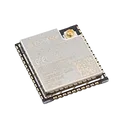
2.4GHz -98dBm SMD,19.2x18mm RF Transceiver Modules and Modems RoHS The ESP32-WROOM-32UE-N16 is a 2.4 GHz wireless MCU module built around the ESP32 SoC. It combines a dual-core processor, integrated Wi-Fi (802.11 b/g/n) and Bluetooth 4.2 (Classic + BLE), along with rich peripherals. The “UE” variant specifically uses a U.FL / IPEX connector for an external antenna, making it ideal for applications that require better RF performance or flexible antenna placement (e.g., enclosed products or long-range communication). The “N16” indicates 16 MB external flash memory, suitable for large firmware, OTA updates, and data-heavy applications. Processing Dual-core Xtensa LX6 32-bit CPU Clock speed up to 240 MHz Memory 16 MB Flash (N16 variant) ~520 KB SRAM + 448 KB ROM Connectivity Wi-Fi: 802.11 b/g/n (up to 150 Mbps) Bluetooth: v4.2 (BR/EDR + BLE) Frequency: 2.4 GHz band Antenna External antenna via U.FL connector Better range and flexibility vs PCB antenna Interfaces / Peripherals GPIO (≈26 usable pins) UART, SPI, I2C, I2S, SDIO ADC, DAC PWM (LED & motor control) Capacitive touch sensing Security Hardware encryption: AES, SHA, RSA Secure boot & flash encryption support Power Operating voltage: 3.0V – 3.6V (typ. 3.3V) Multiple low-power modes for battery applications Environmental Operating temperature: -40°C to +85°C Physical Surface-mount module (~38 pins / 52 pads depending on reference) Compact and RF-shielded design Typical Applications Smart home devices (IoT) Industrial automation Wireless sensors and data loggers Wearables and consumer electronics Remote monitoring systems #Module #ESP32
51 Uses0 Stars