Interface ICs
An interface IC is a type of integrated circuit that is designed to facilitate communication between two devices or systems. These devices are commonly used in electronic systems to enable the transfer of data and control signals between different components or subsystems. Some common use cases for interface ICs include connecting microcontrollers to peripherals such as sensors or displays, linking multiple processors together in a network, and enabling communication between devices using different communication protocols. Flux.ai has the world's largest community-driven public library of interface ICs, with footprints, symbols, datasheets, and simulation models. This library is a valuable resource for engineers and designers who need access to accurate and up-to-date information on these important components. Whether you are working on a new design project or simply looking to learn more about interface ICs, Flux.ai is an excellent resource to help you find the information you need.
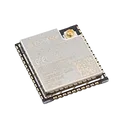
ESP32-WROOM-32UE-N16
2.4GHz -98dBm SMD,19.2x18mm RF Transceiver Modules and Modems RoHS The ESP32-WROOM-32UE-N16 is a 2.4 GHz wireless MCU module built around the ESP32 SoC. It combines a dual-core processor, integrated Wi-Fi (802.11 b/g/n) and Bluetooth 4.2 (Classic + BLE), along with rich peripherals. The “UE” variant specifically uses a U.FL / IPEX connector for an external antenna, making it ideal for applications that require better RF performance or flexible antenna placement (e.g., enclosed products or long-range communication). The “N16” indicates 16 MB external flash memory, suitable for large firmware, OTA updates, and data-heavy applications. Processing Dual-core Xtensa LX6 32-bit CPU Clock speed up to 240 MHz Memory 16 MB Flash (N16 variant) ~520 KB SRAM + 448 KB ROM Connectivity Wi-Fi: 802.11 b/g/n (up to 150 Mbps) Bluetooth: v4.2 (BR/EDR + BLE) Frequency: 2.4 GHz band Antenna External antenna via U.FL connector Better range and flexibility vs PCB antenna Interfaces / Peripherals GPIO (≈26 usable pins) UART, SPI, I2C, I2S, SDIO ADC, DAC PWM (LED & motor control) Capacitive touch sensing Security Hardware encryption: AES, SHA, RSA Secure boot & flash encryption support Power Operating voltage: 3.0V – 3.6V (typ. 3.3V) Multiple low-power modes for battery applications Environmental Operating temperature: -40°C to +85°C Physical Surface-mount module (~38 pins / 52 pads depending on reference) Compact and RF-shielded design Typical Applications Smart home devices (IoT) Industrial automation Wireless sensors and data loggers Wearables and consumer electronics Remote monitoring systems #Module #ESP32
48 Uses0 StarsESP32-S3-WROOM-1-N8R2
WiFi 802.11a/b/g/n, Bluetooth v5.0 Transceiver Module 2.4GHz PCB Trace The ESP32-S3-WROOM-1-N8R2 is a compact, low-power Wi-Fi and Bluetooth® Low Energy (BLE) module developed by Espressif Systems. It is based on the ESP32-S3 system-on-chip (SoC), which integrates a dual-core Xtensa® LX7 processor optimized for high performance and edge AI processing. This module includes 8 MB of external SPI flash memory and 2 MB of PSRAM, enabling efficient handling of memory-intensive applications such as graphical interfaces, buffering, and embedded machine learning workloads. Designed for flexibility and scalability, the module integrates RF components, power management, and a wide range of peripherals into a surface-mount package suitable for IoT, industrial, and consumer electronics applications. Key Features Dual-core Xtensa® LX7 processor operating up to 240 MHz Integrated 2.4 GHz Wi-Fi (802.11 b/g/n) Bluetooth 5 Low Energy support Embedded 8 MB SPI flash memory Integrated 2 MB PSRAM AI acceleration through vector instruction support USB OTG (full-speed) capability Multiple low-power operating modes Built-in hardware security features Extensive peripheral interface support Functional Overview The module consists of several integrated subsystems, including a dual-core processing unit, memory subsystem (flash and PSRAM), RF subsystem for wireless communication, peripheral interface controllers, power management circuitry, and a hardware-based security engine. Electrical Characteristics Operating voltage range: 3.0 V to 3.6 V (typical 3.3 V) Operating temperature range: -40°C to +85°C RF operating frequency: 2.4 GHz Current consumption varies depending on operating mode, ranging from microamp levels in deep sleep to hundreds of milliamps during active transmission Processor and Memory The module features a dual-core Xtensa® LX7 CPU capable of running at frequencies up to 240 MHz. It includes approximately 512 KB of internal SRAM, supplemented by 8 MB of external flash memory and 2 MB of PSRAM for extended data storage and processing. Wireless Connectivity The ESP32-S3-WROOM-1-N8R2 supports Wi-Fi communication compliant with 802.11 b/g/n standards in the 2.4 GHz band. It also supports Bluetooth 5 Low Energy for short-range wireless communication. The module includes an integrated PCB antenna and supports RF output power up to approximately +20 dBm. Peripheral Interfaces The module provides a wide range of interfaces, including general-purpose input/output (GPIO) pins, SPI, I2C, UART, and I2S for audio applications. It also supports PWM for LED control, a 12-bit analog-to-digital converter (ADC), and USB OTG functionality. Pin functions are multiplexed to maximize flexibility. Power Management Power efficiency is achieved through multiple operating modes, including active mode, modem sleep, light sleep, and deep sleep. The module includes an RTC subsystem for low-power timekeeping and supports dynamic frequency scaling to optimize performance and energy consumption. Security Features The module incorporates several hardware-based security mechanisms, including secure boot, flash encryption, and digital signature verification. It also includes a hardware random number generator and cryptographic accelerators supporting AES, SHA, RSA, and ECC algorithms. Mechanical Characteristics The module is designed for surface-mount integration and measures approximately 18 mm by 25.5 mm. It includes an onboard PCB antenna and is suitable for compact embedded designs. Pin Configuration Overview GPIO pins are multiplexed to support various peripheral functions such as analog inputs, communication interfaces, and control signals. Dedicated pins are provided for power supply, module enable, and boot configuration. Typical Applications Internet of Things (IoT) devices Smart home systems Industrial automation and monitoring Edge AI and machine learning applications Wearable electronics Audio and multimedia systems USB-enabled embedded devices Compliance The module is designed to meet Wi-Fi and Bluetooth standards and is compliant with RoHS requirements. Certification such as FCC or CE may apply depending on the specific module variant and deployment. Ordering Information The ESP32-S3-WROOM-1-N8R2 variant includes 8 MB of flash memory and 2 MB of PSRAM. #commonpartslibrary #integratedcircuit #transceiver #wireless #rf
329 Uses0 StarsADXL355BEZ
Accelerometer X, Y, Z Axis ±2g, 4g, 8g 1.5kHz 14-CLCC (6x6) General Description The ADXL355BEZ is a low noise, low drift, low power, three-axis MEMS accelerometer intended for high-precision sensing applications. It delivers high-resolution digital acceleration data with excellent long-term stability and minimal temperature-induced variation. The device integrates a complete sensing chain, including the MEMS sensor element, analog conditioning, analog-to-digital conversion, and digital filtering. Output data is provided through SPI or I²C interfaces, enabling straightforward integration into embedded and industrial systems. Key Features Three-axis acceleration sensing (X, Y, Z) Selectable full-scale ranges: ±2 g, ±4 g, ±8 g Low noise density (~25 µg/√Hz) Low offset and minimal temperature drift High-resolution 20-bit digital output Integrated digital filtering SPI and I²C communication interfaces Low power consumption (~200 µA typical) Wide supply voltage range (2.25 V to 3.6 V) Integrated temperature sensor Hermetically sealed package Applications Structural health monitoring Vibration measurement and analysis Tilt and inclination sensing Industrial condition monitoring Navigation and inertial systems Seismic detection Robotics and stabilization platforms Functional Description The ADXL355BEZ includes an integrated sensing and processing architecture composed of: Three-axis MEMS sensing element Analog front-end signal conditioning High-resolution ADC Digital filtering and decimation stages Temperature sensing element Digital communication interface (SPI/I²C) Configuration and control registers Electrical Characteristics (Typical) Supply voltage: 2.25 V to 3.6 V Supply current: ~200 µA Output data rate: up to 4 kHz Noise density: ~25 µg/√Hz Resolution: 20-bit Interface: SPI / I²C Mechanical and Package Information Package type: LGA (Land Grid Array) Approximate dimensions: 3 mm × 5 mm × 1 mm Hermetically sealed for improved environmental robustness Interface and Communication Supports SPI (4-wire) and I²C protocols Outputs 20-bit acceleration data per axis Data format: two’s complement Measurement Ranges ±2 g ±4 g ±8 g Environmental Specifications Operating temperature range: -40°C to +125°C Storage temperature range: -55°C to +150°C Power Management Supports measurement and standby modes Designed for low-power operation in continuous sensing applications Compliance and Reliability Industrial-grade device Designed for long-term stability RoHS compliant #commonpartslibrary #sensor #accelerometer
28 Uses0 StarsADXL354BEZ
Accelerometer X, Y, Z Axis ±2g, 4g 1.5kHz 14-CLCC (6x6) General Description The ADXL354BEZ is a low noise, low drift, low power, 3-axis MEMS accelerometer designed for high precision sensing applications. It provides analog voltage outputs proportional to acceleration along the X, Y, and Z axes. The device is optimized for applications requiring high resolution and long-term stability, including structural health monitoring, condition monitoring, tilt sensing, and seismic measurements. The sensor features excellent temperature stability, minimal offset drift, and selectable measurement ranges. Its very low noise density makes it suitable for vibration analysis and other sensitive measurement environments. Key Features 3-axis MEMS accelerometer with analog outputs Selectable measurement ranges of ±2 g, ±4 g, and ±8 g Ultra-low noise density of approximately 20 µg/√Hz Low offset drift across temperature Low power consumption of approximately 150 µA (typical) High resolution and measurement stability Integrated temperature sensor output Hermetically sealed package for improved environmental robustness Functional Description The ADXL354BEZ measures acceleration using capacitive MEMS sensing elements arranged along three orthogonal axes. When acceleration is applied, the internal sensing structure experiences displacement, causing a change in capacitance. This change is converted into an analog voltage output for each axis. Each axis produces a continuous-time analog signal, allowing direct interfacing with external analog-to-digital converters or signal conditioning circuits. Internal signal conditioning ensures low noise performance and stable output behavior. Electrical Characteristics (Typical) The device operates with a supply voltage ranging from 2.25 V to 3.6 V. Typical supply current during normal operation is approximately 150 µA. The noise density for all three axes is around 20 µg/√Hz. The bandwidth is user selectable and can reach up to approximately 1.5 kHz. The output signals are analog and ratiometric with respect to the supply voltage. Mechanical Characteristics The ADXL354BEZ is housed in a compact leadless chip carrier (LCC) package with approximate dimensions of 5 mm by 5 mm. It is designed for surface-mount installation. The sensing axes are aligned orthogonally to provide accurate three-dimensional acceleration measurement. Performance Characteristics High resolution suitable for precision sensing applications Low temperature coefficient and minimal drift over time High linearity across the full-scale measurement range Excellent long-term stability Low cross-axis sensitivity for improved accuracy Pin Configuration Overview The device includes power supply and ground connections, along with individual analog outputs for each axis labeled XOUT, YOUT, and ZOUT. A self-test pin is provided for functionality verification, and a temperature output pin allows monitoring of internal device temperature. Operating Conditions The device is designed to operate over a temperature range from −40°C to +125°C. Storage temperature ranges from −65°C to +150°C. The recommended supply voltage range is 2.25 V to 3.6 V. Applications Structural health monitoring Industrial condition monitoring Seismic and geophysical sensing Tilt and inclination measurement Platform stabilization systems Vibration analysis Advantages Extremely low noise performance for high sensitivity applications Stable operation across wide temperature ranges Simple analog interface without the need for digital communication protocols Robust packaging suitable for harsh environments Compliance and Reliability The ADXL354BEZ is RoHS compliant and designed for industrial-grade applications. It offers high reliability and long-term performance stability in demanding operating conditions. #commonpartslibrary #sensor #accelerometer
3 Uses0 StarsADXL335BCPZ-RL7
Accelerometer X, Y, Z Axis ±3g 1.6kHz (X,Y), 550Hz (Z) 16-LFCSP-LQ (4x4) The ADXL335BCPZ-RL7 is a low-power, complete 3-axis accelerometer with analog voltage outputs proportional to acceleration. It measures acceleration along the X, Y, and Z axes with a full-scale range of ±3 g. This device integrates a micro-electromechanical system (MEMS) sensor with signal conditioning circuitry, enabling direct analog output without the need for external amplification. The RL7 suffix indicates tape-and-reel packaging for automated assembly. The ADXL335BCPZ-RL7 is designed for compact, battery-powered, and motion-sensitive applications where low power consumption and ease of integration are critical. Functional Overview The accelerometer operates using a capacitive sensing structure. Acceleration causes displacement of an internal mass, changing capacitance, which is converted into a proportional analog voltage output. Each axis operates independently and provides a continuous analog signal that can be read by a microcontroller’s ADC. External capacitors allow the user to configure bandwidth per axis, enabling optimization for noise or response speed. Electrical Characteristics Supply Voltage Range: 1.8 V to 3.6 V Supply Current: Typical: 350 µA Measurement Range: ±3 g Sensitivity (Typical): 300 mV/g Zero-g Bias Level: Approximately VCC / 2 Bandwidth: Adjustable via external capacitors Typical limits: X, Y axes: up to 1600 Hz Z axis: up to 550 Hz Output Characteristics Output Type: Analog (ratiometric to supply voltage) Axes: Three independent outputs (XOUT, YOUT, ZOUT) Output Impedance: Approximately 32 kΩ Noise Density: X/Y axes: ~150 µg/√Hz Z axis: ~300 µg/√Hz Mechanical Characteristics Package Type: 16-lead LFCSP Package Dimensions: Approximately 4 mm × 4 mm × 1.45 mm Mounting: Surface mount Packaging Option: Tape and reel (RL7) Environmental Specifications Operating Temperature Range: −40°C to +85°C Storage Temperature Range: −65°C to +150°C Shock Survival: Up to 10,000 g Interface Requirements External Components: Capacitors required for bandwidth selection (one per axis) Interface Type: Analog voltage outputs compatible with ADC inputs Pin Description (Summary) ST: Self-test input XOUT: X-axis analog output YOUT: Y-axis analog output ZOUT: Z-axis analog output VCC: Power supply GND: Ground NC: No connection / reserved Applications Tilt and orientation sensing Motion and vibration detection Portable electronics Gaming controllers Wearable devices Industrial monitoring systems Key Features Three-axis acceleration measurement Low power consumption Analog output for simple interfacing Compact MEMS package Adjustable bandwidth Wide temperature operating range Tape-and-reel packaging for automated manufacturing #commonpartslibrary #integratedcircuit #sensor #accelerometer
2 Uses0 StarsADXL345TCCZ-EP
Accelerometer X, Y, Z Axis ±2g, 4g, 8g, 16g 0.05Hz ~ 1.6kHz 14-LGA (3x5) The ADXL345-EP is an extended performance version of the ADXL345, which is a small, thin, ultralow power, 3-axis accelerometer with high resolution (13-bit) measurement at up to ±16 g. Digital output data is formatted as 16-bit twos complement and is accessible through either a SPI (3- or 4-wire) or I2 C digital interface. The ADXL345-EP is well suited for extended temperature range industrial and aerospace equipment. It measures the static acceleration of gravity in tilt-sensing applications, as well as dynamic acceleration resulting from motion or shock. Its high resolution (3.9 mg/LSB) enables measurement of inclination changes less than 1.0°. Several special sensing functions are provided. Activity and inactivity sensing detect the presence or lack of motion by comparing the acceleration on any axis with user-set thresholds. Tap sensing detects single and double taps in any direction. Freefall sensing detects if the device is falling. These functions can be mapped individually to either of two interrupt output pins. An integrated memory management system with a 32-level first in, first out (FIFO) buffer can be used to store data to minimize host processor activity and lower overall system power consumption. Low power modes enable intelligent motion-based power management with threshold sensing and active acceleration measurement at extremely low power dissipation. The ADXL345-EP is supplied in a small, thin, 3 mm × 5 mm × 1 mm, 14-lead, enhanced plastic package. Ultralow power: as low as 23 µA in measurement mode and 0.1 µA in standby mode at VS = 2.5 V (typical) Power consumption scales automatically with bandwidth User-selectable resolution from 10 to 13 bits 4 mg/LSB scale factor in all g ranges 32-sample FIFO minimizes host processor load Single tap, double tap, and free-fall detection Activity/inactivity monitoring Supply voltage range: 2.0 V to 3.6 V I/O voltage range: 1.7 V to VS SPI (3- and 4-wire) and I2C digital interfaces Flexible interrupt modes mappable to either interrupt pin Measurement ranges selectable via serial command Bandwidth selectable via serial command 10,000 g shock survival Pb free/RoHS compliant #commonpartslibrary #integratedcircuit #accelerometer
7 Uses0 StarsADXL345BCCZ
Accelerometer X, Y, Z Axis ±2g, 4g, 8g, 16g 0.05Hz ~ 1.6kHz 14-LGA (3x5) The ADXL345 is a small, thin, ultralow power, 3-axis accelerometer with high resolution (13-bit) measurement at up to ±16 g. Digital output data is formatted as 16-bit twos complement and is accessible through either a SPI (3- or 4-wire) or I2C digital interface. The ADXL345 is well suited for mobile device applications. It measures the static acceleration of gravity in tilt-sensing applications, as well as dynamic acceleration resulting from motion or shock. Its high resolution (3.9 mg/LSB) enables measurement of inclination changes less than 1.0°. Several special sensing functions are provided. Activity and inactivity sensing detect the presence or lack of motion by comparing the acceleration on any axis with user-set thresholds. Tap sensing detects single and double taps in any direction. Free-fall sensing detects if the device is falling. These functions can be mapped individually to either of two interrupt output pins. An integrated memory management system with a 32-level first in, first out (FIFO) buffer can be used to store data to minimize host processor activity and lower overall system power consumption. Low power modes enable intelligent motion-based power management with threshold sensing and active acceleration measurement at extremely low power dissipation. The ADXL345 is supplied in a small, thin, 3 mm × 5 mm × 1 mm, 14-lead, plastic package. ► Ultralow power: as low as 23 µA in measurement mode and 0.1 µA in standby mode at VS = 2.5 V (typical) ► Power consumption scales automatically with bandwidth ► User-selectable resolution ► Fixed 10-bit resolution ► Full resolution, where resolution increases with g range, up to 13-bit resolution at ±16 g (maintaining 4 mg/LSB scale factor in all g ranges) ► Embedded memory management system with FIFO technology minimizes host processor load ► Single tap/double tap detection ► Activity/inactivity monitoring ► Free-fall detection ► Supply voltage range: 2.0 V to 3.6 V ► I/O voltage range: 1.7 V to VS ► SPI (3- and 4-wire) and I2C digital interfaces ► Flexible interrupt modes mappable to either interrupt pin ► Measurement ranges selectable via serial command ► Bandwidth selectable via serial command ► Wide temperature range (−40°C to +85°C) ► 10,000 g shock survival ► Pb free/RoHS compliant #CommonPartsLibrary #IntegratedCircuit #Sensor #Transducer #Motion-Sensor #Accelerometer #ADXL345
56 Uses0 Stars