Interface ICs
An interface IC is a type of integrated circuit that is designed to facilitate communication between two devices or systems. These devices are commonly used in electronic systems to enable the transfer of data and control signals between different components or subsystems. Some common use cases for interface ICs include connecting microcontrollers to peripherals such as sensors or displays, linking multiple processors together in a network, and enabling communication between devices using different communication protocols. Flux.ai has the world's largest community-driven public library of interface ICs, with footprints, symbols, datasheets, and simulation models. This library is a valuable resource for engineers and designers who need access to accurate and up-to-date information on these important components. Whether you are working on a new design project or simply looking to learn more about interface ICs, Flux.ai is an excellent resource to help you find the information you need.
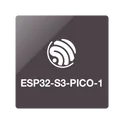
ESP32-S3-PICO-1-N8R8
The ESP32-S3-PICO-1-N8R8 is a highly integrated System-in-Package (SiP) module from Espressif based on the ESP32-S3 SoC. It is designed for compact, low-power IoT applications requiring strong wireless performance, rich peripherals, and minimal external components. This variant (N8R8) integrates 8 MB of SPI flash and 8 MB of PSRAM, making it suitable for memory-intensive applications such as AIoT, voice processing, and graphical user interfaces. The module integrates RF circuitry, crystal oscillator, power management, and memory into a single package, significantly reducing PCB size and BOM cost while improving reliability. ⚡ Key Features Processor & Performance Dual-core Xtensa LX7 microprocessor Up to 240 MHz clock speed Hardware acceleration for AI/ML and vector operations Memory 8 MB SPI Flash 8 MB PSRAM Internal SRAM for fast access tasks Wireless Connectivity 2.4 GHz Wi-Fi 802.11 b/g/n Bluetooth 5 (LE) support Integrated RF front-end Peripherals GPIO, SPI, I2C, UART, ADC, PWM USB 1.1 OTG support RMT, I2S, SD/MMC interface Touch sensor support Power & Efficiency Low-power sleep modes for battery-powered devices Integrated power management circuitry (SiP-level integration) Wide operating voltage: 3.0V – 3.6V Integration Advantages Built-in crystal oscillator Integrated RF matching components Reduced external component count (SiP design) Compact footprint for space-constrained designs 📌 Typical Applications Smart home devices IoT sensors and controllers Voice-enabled AI devices Wearables HMI (Human Machine Interface) Industrial monitoring systems
7 Uses0 StarsEC25MXGA-128-SNNS
Cellular LTE, WCDMA Transceiver Module 1.561GHz, 1.575GHz, 1.602GHz Antenna Not Included Surface Mount EC25MXGA Quectel EC25 LTE Cat 4 cellular module for M2M and IoT applications, 3GPP Rel-11 compliant, up to 150Mbps downlink and 50Mbps uplink, supports LTE with fallback to UMTS/HSPA+/EDGE/GSM/GPRS networks, integrated GNSS with GPS/GLONASS/BDS/Galileo/QZSS support, USB interface and standard drivers for Windows/Linux/Android, compact unified form factor compatible with Quectel EC21/EC20/EG25/EG21 and UC200A-GL modules.
15 Uses0 StarsTAS5830DADR
Amplifier IC 1-Channel (Mono) or 2-Channel (Stereo) Class D 32-HTSSOP The TAS5830DADR is a high-performance closed-loop Class-D audio amplifier designed for stereo and mono audio applications requiring high efficiency, low distortion, and advanced digital audio processing. The device integrates a digital audio processor with support for multiple audio input formats and high-resolution sampling rates, making it suitable for smart speakers, wireless speakers, soundbars, and battery-powered audio systems. The amplifier incorporates advanced Class-H control algorithms to improve power efficiency during dynamic audio playback while maintaining high audio fidelity. Integrated digital signal processing features include equalization, dynamic range control, automatic gain limiting, rattle suppression, and frequency limiting. The device supports both software-controlled and hardware-controlled operating modes for flexible system integration. The TAS5830DADR is optimized for compact audio designs requiring reduced external components, high power density, and comprehensive protection functions such as over-current, over-temperature, undervoltage, and overvoltage protection. Device Overview Device Type Closed-loop digital input Class-D audio amplifier with integrated DSP Manufacturer Texas Instruments Package Type HTSSOP package Applications Smart speakers Wireless Bluetooth speakers Soundbars Subwoofers Battery-powered audio systems Key Features Audio Performance High-efficiency Class-D modulation Low total harmonic distortion and noise High signal-to-noise ratio Stereo and mono output configurations Integrated closed-loop feedback architecture Digital Audio Support I2S audio interface support Left-justified and right-justified audio formats TDM audio input support High-resolution audio sampling capability Operation without master clock requirement Integrated DSP Functions Multi-band dynamic range control Parametric equalization Automatic gain limiting Dynamic equalization Mixer and volume control Frequency limiter Rattle suppression Power Management Integrated Class-H algorithm support PWM control interface for external DC-DC converter tracking High power efficiency operation Flexible supply voltage configuration Protection Features Over-current protection Cycle-by-cycle current limiting Over-temperature warning and shutdown Undervoltage lockout Overvoltage lockout Power supply monitoring Control Interface I2C software control Hardware configuration mode support Configurable switching frequency and gain settings Electrical Characteristics Supply Configuration Wide PVDD operating range Support for multiple logic voltage levels Audio Sampling Support Standard and high-resolution audio sample rates supported Efficiency High conversion efficiency optimized for portable and high-power audio systems System Integration Design Advantages Reduced external component count Simplified PCB layout requirements Flexible operating modes for software or hardware implementation Suitable for compact audio products Recommended Use Cases Portable speaker platforms Consumer audio systems High-efficiency embedded audio applications Digital audio amplification systems Compliance and Reliability Operating Temperature Range Industrial operating temperature support Reliability Features Integrated fault detection and automatic protection handling for robust system operation Summary The TAS5830DADR is a high-efficiency digital input Class-D amplifier combining advanced DSP functionality, flexible digital audio support, and integrated protection features in a compact package. Its closed-loop architecture and Class-H efficiency optimization make it well suited for modern high-performance consumer audio products requiring excellent sound quality and efficient power management. #commonpartslibrary #integratedcircuit #linearamplifier #opamp
8 Uses0 StarsSO_IVEG600
IC HALF BRIDGE DRVR 5.5A/6A 16SO STDRIVEG600 single-chip half-bridge gate driver for enhancement-mode GaN FETs and N-channel power MOSFETs, high-side voltage up to 600V, suitable for bus voltages up to 500V, designed for high-speed GaN and Si FET driving, high current capability, short propagation delay, supply voltage down to 5V, UVLO protection on high-side and low-side sections, interlocking function to prevent cross-conduction, 3.3V CMOS/TTL compatible logic inputs for MCU/DSP interface.
0 Uses0 Stars77313-118-22LF
Connector Header Through Hole 22 position 0.100" (2.54mm) Pin Header 02x22 2.54mm Vertical The 77313-118-22LF is a 2.54 mm pitch unshrouded vertical pin header connector from the Amphenol ICC (FCI) BergStik® series. It is designed for board-to-board and wire-to-board interconnections in embedded systems, industrial electronics, prototyping, and general PCB applications. The connector features a double-row, 22-position through-hole configuration with gold-plated phosphor bronze contacts for reliable electrical performance and durability. Key Features 22-position dual-row header 2.54 mm (0.100") pitch Vertical through-hole mounting Unshrouded male pin header BergStik® series Gold-plated contacts for improved conductivity and corrosion resistance Phosphor bronze contacts with thermoplastic housing Current rating: up to 3 A per contact Operating temperature: −65°C to +130°C UL94 V-0 flame-rated housing RoHS compliant Suitable for: MCU and development boards Mezzanine board stacking Ribbon cable interfaces General-purpose PCB interconnects #CommonPartsLibrary #Connector #Header
9 Uses0 StarsBME690
Gas, Humidity, Pressure, Temperature Sensor Digital Output The BME690 is a compact 4-in-1 environmental sensor from Bosch Sensortec designed for advanced indoor air-quality monitoring. It integrates gas, humidity, temperature, and barometric pressure sensing into a single low-power MEMS device. The sensor is optimized for battery-powered and high-condensation environments, making it suitable for smart home, industrial, wearable, and IoT applications. Key Features 4-in-1 environmental sensing: Gas sensing Relative humidity Temperature Barometric pressure Detects: Volatile Organic Compounds (VOCs) Volatile Sulfur Compounds (VSCs) Other air-quality-related gases Supports indoor air quality (IAQ) monitoring Provides: IAQ index bVOC equivalent CO₂ equivalent outputs Improved robustness for high-condensation environments Ultra-small package: 3.0 × 3.0 × 0.93 mm 8-pin metal LGA package Low power consumption suitable for battery-powered devices Interfaces: I²C up to 3.4 MHz SPI up to 10 MHz Wide operating range: Temperature: −40°C to +85°C Humidity: 0–100% RH Pressure: 300–1100 hPa Supply voltage: VDDIO: 1.2 V to 3.6 V VDD: 1.71 V to 3.6 V Humidity accuracy: ±3% RH Temperature accuracy: ±0.5°C Pressure accuracy: ±0.5 hPa absolute Supports AI-based gas classification using Bosch BME AI-Studio Pin-compatible evolution of the BME688 platform Designed for: Smart home devices HVAC systems Air-quality mapping Food freshness monitoring Wearables Industrial sensing applications #CommonPartsLibrary #Sensor
14 Uses0 Stars112-036-213R001
36 Position Receptacle Connector SCSI Through Hole, Right Angle Solder The 112-036-213R001 is a 36-position SCSI Centronics-style female receptacle connector designed for board-mounted I/O and high-reliability cable-to-board connections. It is part of the NorComp 112 series and is commonly used in industrial, computing, and communication equipment where rugged parallel signal interfaces are required. It features a right-angle through-hole PCB mount design with a metal shell and bail-lock mechanism to ensure secure mating and resistance to vibration and accidental disconnects. Key Features 36-position (2-row) Centronics / SCSI interface Female receptacle connector Right-angle through-hole PCB mounting Bail-lock mechanism for secure retention Outer shell / shrouded contact design Gold-plated contacts for reliable low-resistance connection 4-40 threaded flange for mechanical mounting Designed for cable-to-board I/O applications Electrical & Mechanical Highlights Number of contacts: 36 Contact arrangement: dual-row Contact finish: gold flash plating Mounting: PCB through-hole, right-angle Locking: metal bail latch system Connector type: SCSI / Centronics style I/O connector Typical Applications Industrial controllers Legacy computing / SCSI equipment Printers and scanners Measurement and test equipment High-reliability board I/O interfaces #CommonPartsLibrary #Connector
2 Uses0 Stars124018402112A
USB-C (USB TYPE-C) USB 3.2 Gen 2 (USB 3.1 Gen 2, Superspeed + (USB 3.1)) Receptacle Connector 24 Position Board Cutout, Surface Mount, Right Angle; Through Hole The 124018402112A is a surface-mount Nano SIM card connector manufactured by Amphenol. It is designed for compact mobile and embedded applications requiring a reliable Nano SIM (4FF) interface. The connector features a push-push card insertion mechanism, low-profile construction, and gold-plated contacts for improved durability and signal integrity. It is commonly used in: Cellular IoT devices LTE/5G modules GPS trackers Embedded systems Smartphones and handheld devices Industrial wireless equipment Key Features Supports Nano SIM (4FF) cards Surface-mount (SMT) package Push-push insertion/ejection mechanism Compact low-profile design Gold-plated contacts for reliable connection High durability mating cycle rating Card detect switch support Shielded metal housing Optimized for automated PCB assembly RoHS compliant Typical Electrical / Mechanical Characteristics Number of Contacts: 6-pin Nano SIM interface Mounting Type: SMT Card Type: Nano SIM (4FF) Contact Material: Copper alloy with gold plating Housing Material: High-temperature thermoplastic Operating Temperature: Industrial temperature range #CommonPartsLibrary #Connector #USB-C
2 Uses0 StarsOPA4391PWR
Standard (General Purpose) Amplifier 4 Circuit Push-Pull, Rail-to-Rail 14-TSSOP The OPA4391PWR is a precision quad operational amplifier designed for low-noise, high-speed signal conditioning in a wide range of analog applications. It integrates four independent amplifier channels within a single compact package, making it suitable for space-constrained designs that require consistent performance across multiple signal paths. The device offers a combination of low offset voltage, wide bandwidth, and fast slew rate, enabling accurate amplification of both small and rapidly changing signals. It is commonly used in instrumentation, data acquisition systems, active filtering, and audio signal processing where stability and signal integrity are critical. Functional Overview The device consists of four matched operational amplifiers that share common power supply connections while maintaining independent signal paths. Each amplifier is capable of operating in standard configurations such as inverting, non-inverting, differential, and buffer modes. The architecture supports rail-to-rail output swing, allowing efficient use of the available supply voltage. Internal design optimization ensures low distortion and stable operation across a broad range of load conditions. Electrical Characteristics The OPA4391PWR is optimized for low input offset voltage and low input bias current, contributing to high accuracy in precision applications. It features wide gain bandwidth and a high slew rate, supporting fast transient response and high-frequency operation. The amplifier maintains low noise performance, making it suitable for sensitive analog front-end designs. Power consumption is balanced to provide efficient operation without compromising dynamic performance. Operating Conditions The device operates over a wide supply voltage range, supporting both single-supply and dual-supply configurations. It is designed to function reliably across an extended temperature range, ensuring consistent performance in varying environmental conditions. Proper decoupling and layout practices are recommended to maintain stability and minimize noise coupling. Package and Mechanical Characteristics The OPA4391PWR is provided in a compact surface-mount package suitable for automated assembly processes. The package is designed to facilitate efficient thermal dissipation and reliable electrical connections. Pin configuration allows straightforward integration into standard PCB layouts for quad operational amplifiers. Applications This device is intended for use in precision analog circuits including signal conditioning, sensor interfaces, active filters, audio amplification, and data acquisition systems. Its combination of low noise, high speed, and multi-channel integration makes it well-suited for both industrial and consumer electronics applications. Design Considerations Careful PCB layout is recommended to optimize performance, including short signal paths, proper grounding, and adequate power supply decoupling. Input and output traces should be routed to minimize interference and crosstalk between channels. Thermal management should be considered in high-performance or high-density designs to ensure long-term reliability. #commonpartslibrary #integratedcircuit #linearamplifier #opamp
9 Uses0 Stars