Interface ICs
An interface IC is a type of integrated circuit that is designed to facilitate communication between two devices or systems. These devices are commonly used in electronic systems to enable the transfer of data and control signals between different components or subsystems. Some common use cases for interface ICs include connecting microcontrollers to peripherals such as sensors or displays, linking multiple processors together in a network, and enabling communication between devices using different communication protocols. Flux.ai has the world's largest community-driven public library of interface ICs, with footprints, symbols, datasheets, and simulation models. This library is a valuable resource for engineers and designers who need access to accurate and up-to-date information on these important components. Whether you are working on a new design project or simply looking to learn more about interface ICs, Flux.ai is an excellent resource to help you find the information you need.
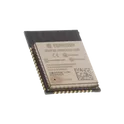
ESP32-WROOM-32E
ESP32-WROOM-32E is a powerful, general-purpose Wi-Fi and Bluetooth MCU module from Espressif Systems. It is built around the ESP32 SoC and integrates a dual-core processor, wireless connectivity, flash memory, and numerous peripherals in a compact module suitable for IoT, industrial control, smart home, wearable, and wireless communication applications. KB ROM 520 KB SRAM 16 KB RTC SRAM for low-power operation - Integrated PCB antenna on the WROOM-32E version Optional 8 MB and 16 MB flash variants available on request Converter) TWAI® (CAN-compatible interface) T applications CE-RED SRRC Bluetooth BQB RoHS and REACH compliant devices Smart lighting systems Remote control and automation equipment 4 MB flash memory, extensive peripheral interfaces, and low-power operation in a compact package. Its strong wireless capabilities and rich I/O make it one of the most widely used modules for IoT and embedded system development. #Module #Esp32
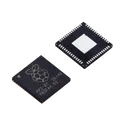
461 Uses0 StarsRP2040
133MHz LQFN-56(7x7) Microcontrollers (MCU/MPU/SOC) ROHS RP2040 The RP2040 is a high-performance, low-cost 32-bit microcontroller developed by Raspberry Pi Ltd.. It features dual ARM Cortex-M0+ processor cores, flexible digital interfaces, and a unique Programmable I/O (PIO) subsystem that enables custom hardware protocols and timing-critical applications. The device is widely used in embedded systems, IoT devices, robotics, industrial control, consumer electronics, and educational projects. Key Features Dual ARM Cortex-M0+ CPU cores operating up to 133 MHz (up to 200 MHz under specific conditions) 264 KB on-chip SRAM organized in six independent memory banks External QSPI Flash interface with Execute-In-Place (XIP) support and up to 16 MB Flash memory capability 30 multifunction GPIO pins with extensive peripheral multiplexing 2 × UART interfaces 2 × SPI controllers 2 × I²C controllers 16 PWM channels for motor control and signal generation USB 1.1 Host and Device support with integrated PHY 12-bit ADC with four external analog inputs and internal temperature sensor, up to 500 ksps sampling rate 12-channel DMA controller for efficient data transfers Programmable I/O (PIO) subsystem with 8 state machines for implementing custom communication interfaces and precise timing applications Integrated PLLs and programmable LDO regulator for clock and power management Operating voltage range: 1.8 V to 3.3 V Available in a compact 7 mm × 7 mm QFN-56 package Typical Applications IoT and connected devices Industrial automation Robotics and motor control Human-machine interfaces (HMI) Consumer electronics USB peripherals Sensor data acquisition systems Educational and maker projects Custom communication protocol implementations using PIO #CommonPartsLibrary #IntegratedCircuit #Microcontroller
160 Uses0 StarsMAX31865AAP+T
15Bit 3V~3.6V SPI SSOP-20-208mil Analog to Digital Converters (ADCs) ROHS The MAX31865 is an easy-to-use resistance-to-digital converter optimized for platinum resistance temperature detectors (RTDs). An external resistor sets the sensitivity for the RTD being used and a precision delta-sigma ADC converts the ratio of the RTD resistance to the reference resistance into digital form. The MAX31865’s inputs are protected against overvoltage faults as large as Q45V. Programmable detection of RTD and cable open and short conditions is included. ● Integration Lowers System Cost, Simplifies Design Efforts, and Reduces Design Cycle Time • Simple Conversion of Platinum RTD Resistance to Digital Value • Handles 100Ω to 1kΩ (at 0°C) Platinum RTDs (PT100 to PT1000) • Compatible with 2-, 3-, and 4-Wire Sensor Connections • SPI-Compatible Interface • 20-Pin TQFN and SSOP Packages ● High Accuracy Facilitates Meeting Error Budgets • 15-Bit ADC Resolution; Nominal Temperature Resolution 0.03125NC (Varies Due to RTD Nonlinearity) • Total Accuracy Over All Operating Conditions: 0.5NC (0.05% of Full Scale) max • Fully Differential VREF Inputs • 21ms (max) Conversion Time ● Integrated Fault Detection Increases System Reliability • ±45V Input Protection • Fault Detection (Open RTD Element, RTD Shorted to Out-of-Range Voltage, or Short Across RTD Element) #CommonPartsLibrary #IntegratedCircuit #PowerManagement
216 Uses0 StarsA7670C-LASE
SMD,24x24mm RF Transceiver Modules and Modems RoHS A7670C-LASE is a compact LTE Cat 1 wireless communication module from SIMCom Wireless Solutions designed for IoT and M2M applications. It supports 4G LTE and 2G fallback connectivity, providing reliable cellular data communication for industrial, automotive, security, POS, and remote monitoring systems. The module uses a compact 24 mm × 24 mm LGA+LCC package, making it suitable for space-constrained designs. Key Features LTE Cat 1 cellular module with up to 10 Mbps downlink and 5 Mbps uplink data rates. Supports LTE-FDD, LTE-TDD, GSM, GPRS, and EDGE networks. Compact 24 mm × 24 mm LGA+LCC package for easy migration from 2G, NB-IoT, and Cat-M designs. Operating voltage range of 3.4 V to 4.2 V. Multiple interfaces including: USB 2.0 UART I²C SPI GPIO ADC Integrated TCP/IP protocol stack for internet connectivity. Supports major operating systems including Windows, Linux, and Android through USB drivers. Firmware Over-The-Air update (FOTA/DFOTA) support. Supports LBS (Location Based Service) positioning. TLS/SSL security protocol support for secure communications. AT command compatible cellular modem architecture. Typical Applications Vehicle telematics and fleet management Industrial IoT gateways and routers POS terminals Security and surveillance systems Remote monitoring and telemetry Healthcare and telemedicine devices
83 Uses0 StarsCD74HC4067M
The CD74HC4067M is a high-speed CMOS analog multiplexer and demultiplexer designed to route one of multiple analog or digital signals to a common input/output line. Built using advanced high-speed CMOS technology, this device provides low ON-state resistance, wide signal bandwidth, and low power consumption, making it suitable for signal routing, data acquisition systems, sensor expansion, communication interfaces, industrial control systems, and embedded electronics. The integrated channel selection logic enables efficient switching between multiple signal paths while maintaining signal integrity and minimizing distortion. Features High-speed CMOS analog multiplexer and demultiplexer architecture Multiple single-ended channels connected to a common input/output Low ON-state resistance for reduced signal loss Wide analog signal handling capability Bidirectional signal switching support Compatible with both analog and digital signals Low power consumption during operation Break-before-make switching characteristic High noise immunity Wide operating supply voltage range Direct interface compatibility with microcontrollers and digital logic devices Low crosstalk and low leakage current performance Surface-mount package optimized for automated assembly Applications Sensor multiplexing systems Data acquisition equipment Industrial automation controllers Embedded electronics Test and measurement instruments Communication systems Audio signal routing Battery monitoring systems Medical instrumentation Consumer electronic products Microcontroller input expansion Analog signal selection networks Electrical Characteristics CMOS logic implementation Analog and digital signal switching capability Low propagation delay Low channel capacitance Low leakage current High switching speed Wide bandwidth operation ESD protection features High input impedance Low standby power consumption Mechanical Characteristics Surface-mount integrated circuit package Compact footprint for high-density PCB layouts RoHS-compliant construction Suitable for automated pick-and-place assembly Standard industry package dimensions Design Considerations Use proper decoupling capacitors near supply pins Keep analog signal traces short to minimize noise pickup Ensure signals remain within specified supply voltage limits Consider ON-resistance effects in precision analog applications Implement appropriate PCB grounding techniques for optimal performance Avoid exceeding maximum switching current ratings #commonpartslibrary #integratedcircuit #analog #digital #multiplexer #demultiplexer #signalrouting #analogswitch #dataacquisition #embeddedsystems #industrialelectronics #texasinstruments
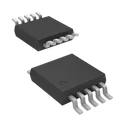
108 Uses0 StarsINA228AIDGSR
Power Supply Controller Digital Power Monitor 10-VSSOP The INA228 is an ultra-precise digital power monitor with a 20-bit delta-sigma ADC specifically designed for current-sensing applications. The device can measure a full-scale differential input of ±163.84 mV or ±40.96 mV across a resistive shunt sense element with common-mode voltage support from –0.3 V to +85 V. The INA228 reports current, bus voltage, temperature, power, energy and charge accumulation while employing a precision ±0.5% integrated oscillator, all while performing the needed calculations in the background. The integrated temperature sensor is ±1°C accurate for die temperature measurement and is useful in monitoring the system ambient temperature. The low offset and gain drift design of the INA228 allows the device to be used in precise systems that do not undergo multi-temperature calibration during manufacturing. Further, the very low offset voltage and noise allow for use in mA to kA sensing applications and provide a wide dynamic range without significant power dissipation losses on the sensing shunt element. The low input bias current of the device permits the use of larger currentsense resistors, thus providing accurate current measurements in the micro-amp range. The device allows for selectable ADC conversion times from 50 µs to 4.12 ms as well as sample averaging from 1x to 1024x, which further helps reduce the noise of the measured data. • High-resolution, 20-bit delta-sigma ADC • Current monitoring accuracy: – Offset voltage: ±1 µV (maximum) – Offset drift: ±0.01 µV/°C (maximum) – Gain error: ±0.05% (maximum) – Gain error drift: ±20 ppm/°C (maximum) – Common mode rejection: 154 dB (minimum) • Power monitoring accuracy: – 0.5% full scale, –40°C to +125°C (maximum) • Energy and charge accuracy: – 1.0% full scale (maximum) • Fast alert response: 75 μs • Wide common-mode range: –0.3 V to +85 V • Bus voltage sense input: 0 V to 85 V • Shunt full-scale differential range: ±163.84 mV / ±40.96 mV • Input bias current: 2.5 nA (maximum) • Temperature sensor: ±1°C (maximum at 25°C) • Programmable resistor temperature compensation • Programmable conversion time and averaging • 2.94-MHz high-speed I2C interface with 16 pinselectable addresses • Operates from a 2.7-V to 5.5-V supply: – Operational current: 640 µA (typical) – Shutdown current: 5 µA (maximum) #CommonPartsLibrary #IntegratedCircuit #PowerManagement
285 Uses0 StarsINA226AQDGSRQ1
Current Monitor Regulator High/Low-Side 10mA 10-VSSOP The INA226-Q1 is a current shunt and power monitor with an I2C™- or SMBUS-compatible interface. The device monitors both a shunt voltage drop and bus supply voltage. Programmable calibration value, conversion times, and averaging, combined with an internal multiplier, enable direct readouts of current in amperes and power in watts. The INA226-Q1 senses current on common-mode bus voltages that can vary from 0V to 36V, independent of the supply voltage. The device operates from a single 2.7V to 5.5V supply, drawing a typical of 330μA of supply current. The device is specified over the operating temperature range between –40°C and 125°C and features up to 16 programmable addresses on the I2C-compatible interface • AEC-Q100 qualified with the following results: – Device temperature grade 1: –40°C to 125°C – Device HBM ESD classification 2 – Device CDM ESD classification C4B • Functional Safety-Capable – Documentation available to aid functional safety system design • Senses bus voltages from 0V to 36V • High-side or low-side sensing • Reports current, voltage, and power • High accuracy: – Gain error: 0.1% (maximum) – Offset: 10μV (maximum) • Configurable averaging options • 16 programmable addresses • Operates from 2.7V to 5.5V power supply • 10-pin DGS (VSSOP) package #CommonPartsLibrary #IntegratedCircuit #PowerManagement
117 Uses0 StarsCPDT-12V
The CPDT-12V is an electromechanical relay designed for switching and control applications in industrial, automotive, consumer, and embedded electronic systems. Operating from a nominal twelve-volt coil supply, this relay provides reliable isolation between low-power control circuitry and higher-power loads. Its compact construction, robust contact mechanism, and dependable switching performance make it suitable for power distribution, automation controls, battery-powered equipment, protection circuits, and general-purpose switching applications. The relay incorporates a magnetic coil and mechanical contact assembly that enables safe control of AC or DC loads while maintaining electrical isolation between the control and load sides. Its durable design supports repeated switching operations and long service life in demanding environments. Features Electromechanical relay with nominal twelve-volt coil operation Provides galvanic isolation between control and load circuits Suitable for AC and DC load switching Reliable contact performance for power and signal applications Compact package for PCB mounting Low control power requirement Durable contact system for long operational life Fast switching response characteristics Compatible with industrial and embedded control systems Designed for automation, protection, and power management circuits Applications Industrial automation equipment Power control modules Battery-powered systems Automotive electronics Home appliance control circuits Smart energy management devices Security and alarm systems Embedded controller interfaces Motor and actuator switching General-purpose load control applications Electrical Characteristics Nominal coil voltage: twelve volts DC Electromagnetic actuation mechanism Isolated contact structure Designed for low-voltage control interfaces Supports switching of resistive and inductive loads Stable operation across specified environmental conditions Mechanical Characteristics PCB-mount relay construction Compact footprint for space-constrained designs Durable housing for electrical and mechanical protection Secure terminal arrangement for reliable soldering and connection Engineered for repeated switching cycles Environmental Characteristics Suitable for indoor industrial and commercial environments Resistant to normal operating vibration and mechanical shock conditions Designed for reliable operation across standard electronic equipment temperature ranges #commonpartslibrary #relay #electromechanicalrelay #switchingdevice #powermanagement #industrialautomation #controlsystems #pcbmount #automationelectronics #circuitprotection #embeddedsystems #industrialelectronics
55 Uses0 StarsLSM6DSOXTR
The LSM6DSOXTR is a low-power inertial measurement unit integrating a three-axis accelerometer and a three-axis gyroscope within a compact surface-mount package. Designed for motion tracking, gesture recognition, activity monitoring, and sensor fusion applications, the device incorporates embedded machine learning capabilities and programmable finite state machines to enable intelligent edge processing with reduced host processor workload. The sensor supports high-performance motion sensing while maintaining low power consumption, making it suitable for wearable devices, IoT products, industrial monitoring systems, smart home equipment, and portable electronics. Engineering Specification Device Type Six-axis inertial measurement unit featuring a three-axis accelerometer and three-axis gyroscope. Sensor Functions Motion sensing, orientation detection, vibration monitoring, gesture recognition, activity tracking, tilt sensing, and sensor fusion. Integrated Features Embedded machine learning core, finite state machine engine, sensor hub functionality, timestamp generation, event detection, and programmable interrupt generation. Communication Interface Supports digital communication through I²C, SPI, and I³C interfaces for integration with microcontrollers and embedded processors. Power Characteristics Optimized for low-power operation with multiple performance modes supporting battery-powered and always-on applications. Measurement Capabilities Provides configurable acceleration and angular rate measurement ranges with programmable output data rates and digital filtering options. Embedded Intelligence Includes on-chip machine learning and event classification capabilities to enable local data processing and reduce system power consumption. Package Style Compact surface-mount LGA package suitable for space-constrained electronic designs. Applications Wearable electronics, asset tracking devices, industrial sensors, robotics, smart appliances, navigation systems, handheld devices, health monitoring equipment, and IoT products. Manufacturer STMicroelectronics. Hashtags #LSM6DSOXTR #STMicroelectronics #IMU #MotionSensor #Accelerometer #Gyroscope #SensorFusion #MachineLearningCore #EmbeddedSystems #WearableElectronics #IndustrialAutomation #IoT #SmartDevices #MEMS #CommonPartsLibrary
162 Uses0 StarsSIM800L
The SIM800L is a compact quad-band GSM/GPRS cellular communication module designed for embedded wireless applications requiring voice, SMS, and packet data connectivity. It integrates a complete GSM/GPRS protocol stack and supports communication over standard cellular networks, enabling reliable remote monitoring, control, telemetry, asset tracking, and Internet of Things deployments. The module features low power consumption, a compact surface-mount package, and a UART-based AT command interface for straightforward integration with microcontrollers, processors, and embedded systems. It supports voice calls, SMS messaging, GPRS data transmission, and network services while providing flexible interfacing options for audio and peripheral connectivity. Designed for industrial and consumer electronic applications, the SIM800L delivers dependable wireless communication performance in compact and power-sensitive designs. Its broad network compatibility and extensive software support make it a widely adopted solution for GSM-based connected devices. Features Quad-band GSM/GPRS cellular connectivity Voice call functionality with integrated audio interface SMS text messaging support GPRS packet data communication capability Standard AT command interface UART serial communication interface Low-power operating modes Compact surface-mount package Embedded TCP/IP protocol support Real-time clock functionality DTMF detection and generation Caller identification support SIM card interface integration Antenna interface for cellular communication Wide operating temperature capability Suitable for battery-powered applications Applications Internet of Things devices Remote monitoring systems Wireless telemetry equipment Smart metering solutions Asset tracking systems Vehicle tracking devices Industrial automation equipment Security and alarm systems Wireless data loggers Remote control applications Point-of-sale terminals Embedded communication systems Electrical Characteristics GSM/GPRS cellular network operation Low-voltage power supply architecture Serial UART host interface Integrated RF transceiver SIM card support interface Audio input and output connectivity Low standby power consumption Hardware and software power management support Mechanical Characteristics Compact SMT module package PCB-mountable design Integrated RF connection interface Embedded system integration optimized Lightweight construction Compliance and Reliability GSM standard compliant GPRS standard compliant Industrial embedded communication suitable Designed for long-term operational reliability Compatible with standard cellular infrastructure #commonpartslibrary #wirelesscommunication #gsmmodule #gprs #sim800l #cellularmodule #iot #embeddedsystems #telemetry #wirelessconnectivity #industrialelectronics #communicationmodule #remotecontrol #trackingdevice #machinetomachine #smtmodule
46 Uses0 Stars