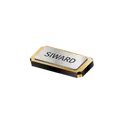
Crystals
A crystal is a solid material in which the atoms, molecules, or ions are arranged in an orderly repeating pattern extending in all three spatial dimensions. Crystalline materials are known for their beauty and symmetry, and they have a wide range of practical uses in fields such as electronics, jewelry, and construction. One of the key uses of crystals is in electronic devices, where they are used as semiconductors to control the flow of electricity. Crystalline materials are also used in the production of jewelry, as they can be cut and polished to create stunning gemstones. In construction, crystalline materials such as quartz and granite are often used as decorative building materials due to their durability and attractive appearance. If you are looking for high-quality crystals for your next project, flux.ai has the world's largest community-driven public library of them, with footprints, symbols, datasheets, and simulation models. Our library is constantly expanding and is a valuable resource for anyone working with crystalline materials. So, if you want to find the perfect crystal for your needs, be sure to check out flux.ai's extensive collection.
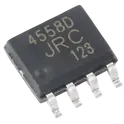
CH9101N
USB to Serial Port Chip CH9101 CH9101N is a high-speed USB-to-UART bridge IC developed by WCH (Qinheng Electronics). It converts a USB 2.0 Full-Speed interface into a standard asynchronous UART serial interface, enabling seamless communication between a computer and microcontrollers, embedded systems, industrial equipment, and other UART-based devices. The device features an integrated clock oscillator and power-on reset circuitry, minimizing external components and simplifying PCB design. Housed in a compact SOP-8 package, the CH9101N supports UART logic voltages from 1.8 V to 5 V, making it suitable for a wide range of low-power and mixed-voltage applications. It is commonly used for USB debugging, firmware downloading, serial communication, and IoT development. Key Features USB 2.0 Full-Speed compliant device interface USB-to-UART bridge with baud rates up to 3 Mbps Supports 1.8 V, 2.5 V, 3.3 V, and 5 V UART I/O levels Integrated clock oscillator (no external crystal required) Built-in power-on reset circuitry Full-duplex UART communication Supports hardware flow control (RTS/CTS) Compatible with standard virtual COM port (VCP) drivers Compact SOP-8 package with minimal external components Suitable for MCU programming, debugging, and serial communication applications #CH9101N #WCH #USBtoUART #USBBridge #UART #USB20 #SerialCommunication #EmbeddedSystems #Microcontroller #IoT #IndustrialAutomation #Debugging #FirmwareDownload #SOP8 #InterfaceIC
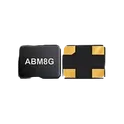
0 Uses0 StarsABM8G-24.000MHZ-18-D2Y-T
24 MHz ±20ppm Crystal 18pF 60 Ohms 4-SMD, No Lead The ABM8G-24.000MHZ-18-D2Y-T is a compact 24.000 MHz surface-mount quartz crystal from Abracon's ABM8G series, designed to provide a stable and accurate clock reference for digital electronic systems. Housed in a miniature 3.2 × 2.5 mm, 4-pad SMD package, it is optimized for space-constrained applications while delivering reliable frequency performance over a wide operating temperature range. This crystal is commonly used in microcontrollers, wireless modules, communication equipment, networking devices, industrial electronics, and precision timing circuits. It operates in the fundamental mode with an 18 pF load capacitance, making it suitable for a broad range of oscillator circuits. Key Features 24.000 MHz fundamental-mode quartz crystal Compact 3.2 × 2.5 × 1.0 mm 4-pad SMD package 18 pF load capacitance ±20 ppm frequency tolerance ±30 ppm frequency stability Maximum 60 Ω ESR Wide operating temperature range: −40°C to +85°C Glass-sealed ceramic package for high reliability Compatible with standard IR reflow soldering processes Low-profile design suitable for compact PCB layouts Ideal for embedded systems, communications, wireless devices, and clock generation applications. #Abracon #QuartzCrystal #24MHz #ABM8G #SMDCrystal #TimingDevice #ClockSource #EmbeddedSystems #WirelessElectronics #IndustrialElectronics #PCBDesign #ElectronicsComponents
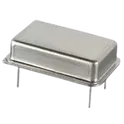
157 Uses0 StarsECS-100AX-018
1.8432 MHz XO (Standard) TTL Oscillator 5V 14-DIP, 4 Leads (Full Size, Metal Can) 1.8432 MHz 5V DIP-4 oscillator The ECS-100AX-018 is a 1.8432 MHz crystal-based TTL clock oscillator from ECS Inc. designed to provide a stable and accurate clock source for digital systems. It operates from a 5 V supply and delivers a TTL-compatible output, making it suitable for microprocessors, microcontrollers, UART/serial communication circuits, industrial controllers, and legacy digital logic applications. The device is housed in a 14-pin DIP metal can package (4 active leads) for through-hole PCB mounting. Key Features 1.8432 MHz fixed output frequency Crystal-based XO (Crystal Oscillator) architecture 5 V supply voltage TTL-compatible output Frequency stability of ±100 ppm Low maximum supply current of 15 mA Through-hole 14-DIP (4-lead metal can) package Operating temperature range: 0°C to +70°C Suitable for clock generation in digital and communication systems RoHS compliant #ECSInc #ClockOscillator #CrystalOscillator #TTL #1_8432MHz #5V #ThroughHole #DIP14 #TimingDevice #DigitalClock #EmbeddedSystems #IndustrialElectronics #PCBDesign
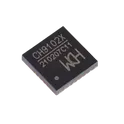
1 Uses0 StarsCH9102X
The CH9102X is a high-speed USB-to-UART bridge IC developed by WCH (Jiangsu Qinheng Microelectronics). It enables seamless communication between a USB host and UART-based embedded systems, making it ideal for programming, debugging, firmware updates, and serial data communication. The device integrates a USB 2.0 Full-Speed interface, an internal clock, power-on reset, and firmware, eliminating the need for an external crystal oscillator. The CH9102X variant supports 3.3 V UART I/O and is widely used on development boards such as ESP32 and other MCU-based designs. Key Features USB 2.0 Full-Speed (12 Mbps) compliant device interface USB-to-UART bridge supporting baud rates from 50 bps to 4 Mbps 3.3 V UART I/O (CH9102X variant) Integrated clock oscillator (no external crystal required) Built-in power-on reset circuit Hardware full-duplex UART with independent TX/RX buffers Supports 5, 6, 7, or 8 data bits Supports None, Odd, Even, Mark, and Space parity Supports RTS/CTS hardware flow control Supports MODEM signals: RTS, CTS, DTR, DSR, DCD, and RI TNOW output for automatic RS-485 transmit/receive control Compatible with built-in CDC drivers and vendor VCP drivers on major operating systems Available in compact RoHS-compliant QFN packages #CH9102X #USBtoUART #USBBridge #UART #SerialConverter #WCH #USB20 #EmbeddedSystems #ESP32 #MCU #RS485 #FirmwareUpdate #Debugging #IoT #PCBDesign
30 Uses0 StarsXTL721-S999-301
32.768 kHz ±20ppm Crystal 9pF 70 kOhms 2-SMD, No Lead The XTL721-S999-301 specification defines the engineering requirements for a crystal oscillator component intended to provide a stable and accurate timing reference for electronic systems. This specification establishes the functional, electrical, mechanical, environmental, and quality requirements necessary to ensure precise frequency generation, reliable operation, and long-term stability in embedded, industrial, communication, and consumer electronic applications. The component is intended for use in applications requiring accurate clock generation and synchronization, including microcontroller-based systems, communication interfaces, digital signal processing, and timing circuits. It provides a highly stable frequency reference with low phase noise and excellent frequency stability to support reliable system operation under varying environmental conditions. Engineering Requirements The crystal component shall be manufactured using high-purity quartz material and precision fabrication processes to ensure consistent resonant frequency characteristics, low aging effects, and dependable long-term performance. The construction shall provide stable oscillation characteristics throughout the specified operating temperature and environmental conditions. Electrical characteristics shall ensure accurate frequency stability, low equivalent series resistance, and reliable oscillation startup when used with compatible oscillator circuits. The component shall maintain stable timing performance under normal supply variations, temperature fluctuations, and continuous operating conditions. Mechanical construction shall be suitable for automated surface-mount assembly and compatible with standard solder reflow manufacturing processes. The package shall provide mechanical robustness and resistance to vibration, mechanical shock, thermal cycling, and handling without degradation of electrical performance or structural integrity. Workmanship shall be free from defects including contamination, package cracking, seal failure, lead deformation, or structural inconsistencies that could adversely affect frequency accuracy or operational reliability. Inspection, validation, and testing shall be performed using calibrated equipment and controlled quality procedures to verify compliance with engineering and manufacturing requirements. Any deviation from this specification shall require formal engineering evaluation, documented technical justification, and approval through the established engineering change control process before implementation. Documentation Supporting documentation shall include engineering drawings, frequency performance specifications, electrical characterization reports, qualification records, inspection reports, reliability data, material declarations, and revision-controlled manufacturing documentation. All documentation shall be maintained under formal configuration management and quality assurance systems to ensure complete product traceability. Revision Control Any modification to this specification shall be managed through the formal engineering change management process. All revisions shall undergo technical review, validation, and approval before release to ensure continued compliance with design intent and applicable engineering standards. #EngineeringSpecification #CrystalOscillator #QuartzCrystal #TimingDevice #ClockGenerator #EmbeddedSystems #IndustrialElectronics #FrequencyControl #QualityAssurance #EngineeringDocumentation
0 Uses0 Stars