Microcontrollers
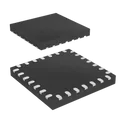
A microcontroller is a small, low-cost computer-on-a-chip that can be used to control electronic devices and systems. It consists of a central processing unit (CPU), memory, input/output (I/O) ports, and other peripherals integrated onto a single chip. Microcontrollers are commonly used in a wide range of applications, including automotive systems, home appliances, industrial automation, and consumer electronics. One of the key benefits of microcontrollers is their ability to interact with their environment through sensors and actuators, making them well-suited for use in embedded systems. These systems are often found in devices that require real-time control or data processing, such as medical equipment, aircraft, and factory automation systems. Flux.ai is home to the world's largest community-driven public library of microcontrollers, with footprints, symbols, datasheets, and simulation models for a wide range of devices. Whether you're a professional engineer looking for a specific microcontroller for your next project, or a hobbyist exploring the possibilities of microcontroller-based systems, Flux.ai has the resources you need to get started.
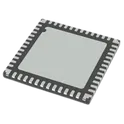
dsPIC33CK256MP205-I/M4
dsPIC dsPIC™ 33CK, Functional Safety (FuSa) Microcontroller IC 16-Bit 100MHz 256KB (256K x 8) FLASH 48-UQFN (6x6) 28/36/48/64/80-Pin Digital Signal Controllers with High-Resolution PWM and CAN Flexible Data (CAN FD) Operating Conditions • 3.0V to 3.6V, -40°C to +125°C, DC to 100 MIPS • 3.0V to 3.6V, -40°C to +150°C, DC to 70 MIPS Core: 16-Bit dsPIC33CK CPU • 32-256 Kbytes of Program Flash with ECC and 8-24K RAM • Fast 6-Cycle Divide • LiveUpdate • Code Efficient (C and Assembly) Architecture • 40-Bit Wide Accumulators • Single-Cycle (MAC/MPY) with Dual Data Fetch • Single-Cycle, Mixed-Sign MUL Plus Hardware Divide • 32-Bit Multiply Support • Four Sets of Interrupt Context Saving Registers which Include Accumulator and STATUS for Fast Interrupt Handling • Zero Overhead Looping • RAM Memory Built-In Self-Test (MBIST) Clock Management • Internal Oscillator • Programmable PLLs and Oscillator Clock Sources • Reference Clock Output • Fail-Safe Clock Monitor (FSCM) • Fast Wake-up and Start-up • Backup Internal Oscillator Power Management • Low-Power Management Modes (Sleep, Idle, Doze) • Integrated Power-on Reset and Brown-out Reset High-Speed PWM • Eight PWM Pairs • Up to 250 ps PWM Resolution • Dead Time for Rising and Falling Edges • Dead-Time Compensation • Clock Chopping for High-Frequency Operation • PWM Support for: - DC/DC, AC/DC, inverters, PFC, lighting - BLDC, PMSM, ACIM, SRM motors • Fault and Current Limit Inputs • Flexible Trigger Configuration for ADC Triggering Timers/Output Compare/Input Capture • One General Purpose Timer • Peripheral Trigger Generator (PTG): - Up to 15 trigger sources to other peripheral modules - CPU independent state machine-based instruction sequencer • Nine MCCP/SCCP modules which Include Timer, Capture/Compare and PWM: - One MCCP - Eight SCCPs - 16 or 32-bit time base - 16 or 32-bit capture - 4-deep capture buffer • Fully Asynchronous Operation, Available in Sleep Modes #CommonPartsLibrary #IntegratedCircuit #Microcontroller #DSPIC33CK256MP
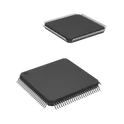
10 Uses0 StarsSTM32F407VGT6
ARM Microcontrollers - MCU ARM M4 1024 FLASH 168 Mhz 192kB SRAM 100-LQFP (14x14) Arm® Cortex®-M4 32b MCU+FPU, 210DMIPS, up to 1MB Flash/192+4KB RAM, USB OTG HS/FS, Ethernet, 17 TIMs, 3 ADCs, 15 comm. interfaces & camera • Core: Arm® 32-bit Cortex®-M4 CPU with FPU, Adaptive real-time accelerator (ART Accelerator) allowing 0-wait state execution from Flash memory, frequency up to 168 MHz, memory protection unit, 210 DMIPS/ 1.25 DMIPS/MHz (Dhrystone 2.1), and DSP instructions • Memories – Up to 1 Mbyte of Flash memory – Up to 192+4 Kbytes of SRAM including 64- Kbyte of CCM (core coupled memory) data RAM – 512 bytes of OTP memory – Flexible static memory controller supporting Compact Flash, SRAM, PSRAM, NOR and NAND memories • LCD parallel interface, 8080/6800 modes • Clock, reset and supply management – 1.8 V to 3.6 V application supply and I/Os – POR, PDR, PVD and BOR – 4-to-26 MHz crystal oscillator – Internal 16 MHz factory-trimmed RC (1% accuracy) – 32 kHz oscillator for RTC with calibration – Internal 32 kHz RC with calibration • Low-power operation – Sleep, Stop and Standby modes –VBAT supply for RTC, 20×32 bit backup registers + optional 4 KB backup SRAM • 3×12-bit, 2.4 MSPS A/D converters: up to 24 channels and 7.2 MSPS in triple interleaved mode • 2×12-bit D/A converters • General-purpose DMA: 16-stream DMA controller with FIFOs and burst support • Up to 17 timers: up to twelve 16-bit and two 32- bit timers up to 168 MHz, each with up to 4 IC/OC/PWM or pulse counter and quadrature (incremental) encoder input • Debug mode – Serial wire debug (SWD) & JTAG interfaces – Cortex-M4 Embedded Trace Macrocell™ • Up to 140 I/O ports with interrupt capability – Up to 136 fast I/Os up to 84 MHz – Up to 138 5 V-tolerant I/Os • Up to 15 communication interfaces – Up to 3 × I2C interfaces (SMBus/PMBus) – Up to 4 USARTs/2 UARTs (10.5 Mbit/s, ISO 7816 interface, LIN, IrDA, modem control) – Up to 3 SPIs (42 Mbits/s), 2 with muxed full-duplex I2S to achieve audio class accuracy via internal audio PLL or external clock – 2 × CAN interfaces (2.0B Active) – SDIO interface • Advanced connectivity – USB 2.0 full-speed device/host/OTG controller with on-chip PHY – USB 2.0 high-speed/full-speed device/host/OTG controller with dedicated DMA, on-chip full-speed PHY and ULPI – 10/100 Ethernet MAC with dedicated DMA: supports IEEE 1588v2 hardware, MII/RMII #CommonPartsLibrary #IntegratedCircuit #Microcontroller #STM32F407
62 Uses0 StarsSSW-122-02-G-S
22 Position Receptacle Connector 0.100" (2.54mm) Through Hole Gold The SSW-122-02-G-S is a surface-mount, single-row socket strip designed for reliable board-to-board or component interconnection in electronic assemblies. It is part of a standardized connector series intended for applications requiring compact form factor, consistent electrical performance, and ease of automated placement. The component features a low-profile design suitable for dense PCB layouts and is commonly used in prototyping, embedded systems, and production-level electronics. Design and Construction The connector is manufactured with precision-aligned contacts housed in a high-temperature thermoplastic body, enabling compatibility with standard reflow soldering processes. The contact system is engineered to ensure stable mechanical retention and consistent electrical conductivity, supporting repeated mating cycles without significant degradation. The materials used provide durability, resistance to thermal stress, and compliance with common industry standards for electronic components. Electrical Characteristics The device is intended to provide reliable signal transmission with minimal contact resistance. It supports low to moderate current applications typical of signal-level interconnections. The contact plating is designed to reduce oxidation and maintain stable electrical performance over time. Mechanical Features The connector is configured as a single-row socket with a defined pitch spacing suitable for standard header interfaces. Its surface-mount termination allows for secure attachment to printed circuit boards while minimizing required board space. The structure supports proper alignment during assembly and ensures consistent engagement with corresponding mating connectors. Applications This component is widely used in applications such as microcontroller boards, communication modules, sensor interfaces, and general-purpose electronic systems. It is suitable for both development environments and final product integration where dependable and space-efficient connectivity is required. Compliance and Reliability The SSW-122-02-G-S is designed to meet common industry requirements for environmental and mechanical reliability. It is typically compliant with RoHS standards and suitable for use in a variety of operating conditions encountered in commercial and industrial electronics. #commonpartslibrary #connector #header
36 Uses0 StarsTPD1E05U06DPYR
14V Clamp 2.5A (8/20µs) Ipp Tvs Diode Surface Mount 2-X1SON (1x.60) TVS diode USB VBUS 5V TVS diode USB VBUS 5V ESD protection General Description The TPD1E05U06DPYR is a single-channel transient voltage suppression device designed to protect sensitive electronic components from electrostatic discharge (ESD) and other transient voltage events. It is engineered for high-speed signal applications, offering low capacitance to preserve signal integrity while providing robust protection. The device is suitable for integration into compact and portable electronic systems where space, reliability, and performance are critical. Device Identification Part number: TPD1E05U06DPYR Device classification: ESD protection diode / transient voltage suppressor Manufacturer: Commonly associated with Texas Instruments Mounting type: Surface-mount Package style: Ultra-small leadless package (e.g., X2SON/DFN) Functional Description Protects circuits from high-voltage transients caused by ESD events Limits voltage spikes by clamping them to safe levels Maintains signal quality by minimizing added capacitance Operates transparently under normal signal conditions Provides fast response to transient disturbances Performance Characteristics Low capacitance suitable for high-speed data lines High ESD protection capability compliant with standard test models Low leakage current during normal operation Fast transient response time Stable performance across specified operating conditions Electrical Characteristics Designed for low-voltage applications (approximately 5 V working range) Low clamping voltage to protect downstream components Minimal dynamic resistance Very low input/output capacitance High reliability under repeated ESD stress Application Scope High-speed communication interfaces such as USB, HDMI, and display ports Mobile phones, tablets, and wearable electronics Embedded systems and microcontroller interfaces Consumer and industrial electronic equipment Data and signal line protection in compact devices Mechanical and Physical Properties Compact footprint for high-density PCB layouts Leadless package for improved mechanical robustness Compatible with standard surface-mount assembly processes Designed for automated manufacturing environments Integration Guidelines Install as close as possible to the external connector or entry point Ensure a low-impedance path to ground for optimal protection Minimize trace length between the device and the protected line Consider layout practices to preserve high-speed signal integrity Verify compatibility with system voltage and interface requirements #commonpartslibrary #circuitprotection #tvsdiode
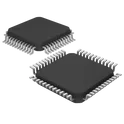
924 Uses0 StarsSTM32F103C8T6
ARM® Cortex® M3 STM32F1 Microcontroller IC 32-Bit Single-Core 72MHz 64KB (64K x 8) FLASH Medium-density performance line Arm®-based 32-bit MCU with 64 or 128 KB Flash, USB, CAN, 7 timers, 2 ADCs, 9 com. interfaces Arm® 32-bit Cortex®-M3 CPU core – 72 MHz maximum frequency, 1.25 DMIPS/MHz (Dhrystone 2.1) performance at 0 wait state memory access – Single-cycle multiplication and hardware division • Memories – 64 or 128 Kbytes of Flash memory – 20 Kbytes of SRAM • Clock, reset and supply management – 2.0 to 3.6 V application supply and I/Os – POR, PDR, and programmable voltage detector (PVD) – 4 to 16 MHz crystal oscillator – Internal 8 MHz factory-trimmed RC – Internal 40 kHz RC – PLL for CPU clock – 32 kHz oscillator for RTC with calibration • Low-power – Sleep, Stop and Standby modes – VBAT supply for RTC and backup registers • 2x 12-bit, 1 µs A/D converters (up to 16 channels) – Conversion range: 0 to 3.6 V – Dual-sample and hold capability – Temperature sensor • DMA – 7-channel DMA controller – Peripherals supported: timers, ADC, SPIs, I 2Cs and USARTs • Up to 80 fast I/O ports – 26/37/51/80 I/Os, all mappable on 16 external interrupt vectors and almost all 5 V-tolerant Debug mode: – Serial wire debug (SWD) and JTAG interfaces • Seven timers – Three 16-bit timers, each with up to 4 IC/OC/PWM or pulse counter and quadrature (incremental) encoder input – 16-bit, motor control PWM timer with dead-time generation and emergency stop – Two watchdog timers (independent and window) – SysTick timer 24-bit downcounter • Up to nine communication interfaces – Up to two I2C interfaces (SMBus/PMBus®) – Up to three USARTs (ISO 7816 interface, LIN, IrDA capability, modem control) – Up to two SPIs (18 Mbit/s) – CAN interface (2.0B Active) – USB 2.0 full-speed interface • CRC calculation unit, 96-bit unique ID • Packages are ECOPACK #commonpartslibrary #integratedcircuit #microcontroller #stm32f1
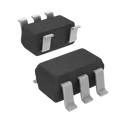
36 Uses0 StarsLP2985IM5-2.7
Linear Voltage Regulator IC Positive Fixed 1 Output 150mA SOT-23-5 LP2985IM5-2.7 is a low-dropout (LDO) linear voltage regulator designed to provide a stable 2.7 V output with very low quiescent current and excellent noise performance. It is optimized for battery-powered and noise-sensitive applications, offering high power supply rejection ratio (PSRR) and fast transient response. The device is housed in a compact SOT-23-5 package, making it ideal for space-constrained designs. Key Features Fixed 2.7 V output voltage Low dropout voltage Low quiescent current (IQ) High PSRR for noise-sensitive applications Stable with low ESR ceramic capacitors Thermal shutdown and current limit protection Small SOT-23-5 package RoHS compliant Electrical Characteristics Output Voltage: 2.7 V (fixed) Output Voltage Accuracy: ±1.5% (typical) Maximum Output Current: 150 mA Dropout Voltage: ~280 mV at 150 mA (typical) Quiescent Current (IQ): ~65 µA (typical) Line Regulation: 0.04%/V (typical) Load Regulation: 0.2% (typical) PSRR: Up to 70 dB (at low frequency) Operating Input Voltage Range: 2.5 V to 16 V Operating Temperature Range: -40°C to +125°C Mechanical Characteristics Package Type: SOT-23-5 (DBV) Mounting Type: Surface Mount Pin Count: 5 pins Approximate Dimensions: 2.9 mm × 1.6 mm Pin Configuration (Typical) IN: Input voltage GND: Ground OUT: Regulated output (2.7 V) EN: Enable (active high) BYPASS: Noise reduction / bypass capacitor connection Performance Characteristics Excellent output noise performance (low-noise design) Fast transient response to load changes Stable with small ceramic capacitors (typically 1 µF) Suitable for RF and analog circuits Applications Battery-powered devices Portable electronics RF and wireless modules Sensors and analog circuits Microcontroller power supplies #CommonPartsLibrary #IntegratedCircuit #PowerManagement #voltage-regulator #LDO #LP3985
2 Uses0 StarsKTD2027BEWE-TR
LED Lighting Driver ICs LED Lighting Drivers 4-Channel RGBW Driver, I2C, 1.5x1.5mm TDFN The KTD2027BEWE-TR is a highly integrated, low-power RGB LED driver designed for portable and battery-powered applications. It features a compact WLCSP package and provides precise current control for up to three LED channels. The device includes an I²C-compatible interface, enabling flexible control of brightness, color mixing, and lighting effects. Integrated features such as programmable current sinks, dimming control, and built-in protection mechanisms make it suitable for indicators, backlighting, and decorative lighting in consumer electronics. Key Features Triple-channel constant current LED driver (RGB support) I²C-compatible digital interface Independent brightness control per channel Programmable current up to ~24 mA per channel Built-in PWM dimming and pattern generation Low quiescent current for power-sensitive applications Wide input voltage range Thermal shutdown and overcurrent protection Small WLCSP package (suitable for compact designs) Applications Mobile devices and wearables Status indicators and notification LEDs Backlighting and decorative lighting IoT and portable electronics Absolute Maximum Ratings Supply Voltage (VDD): −0.3 V to +6.0 V Logic Input Voltage: −0.3 V to VDD + 0.3 V Operating Temperature Range: −40°C to +85°C Storage Temperature Range: −55°C to +150°C Recommended Operating Conditions Supply Voltage (VDD): 1.8 V to 5.5 V LED Forward Voltage: Dependent on external LEDs Ambient Temperature: −40°C to +85°C Electrical Characteristics (Typical) Supply Current (Idle): < 1 µA (shutdown mode) Channel Current Accuracy: ±5% (typical) Maximum Output Current: ~24 mA per channel I²C Clock Frequency: Up to 400 kHz (Fast Mode) Functional Description The KTD2027BEWE-TR operates as a constant-current sink driver for RGB LEDs. Each channel can be independently programmed via the I²C interface to control brightness and enable dynamic lighting effects. Internal PWM generators allow smooth dimming without requiring continuous microcontroller intervention. The device also integrates protection features such as thermal shutdown and current limiting to ensure reliable operation. Pin Configuration (Typical WLCSP) VDD – Power supply GND – Ground SDA – I²C data line SCL – I²C clock line LED1 – Current sink output (Red) LED2 – Current sink output (Green) LED3 – Current sink output (Blue) Package Information Package Type: WLCSP (Wafer-Level Chip Scale Package) Mounting: Surface mount Tape & Reel: Yes (TR suffix) Ordering Information KTD2027BEWE-TR: Tape and reel packaging for automated assembly #commonpartslibrary #integratedcircuit #leddriver
3 Uses0 StarsPPPC082LJBN-RC
16 Position Header Connector 0.100" (2.54mm) Through Hole, Right Angle Gold The PPPC082LJBN-RC is a dual-row, right-angle pin header connector intended for through-hole PCB mounting. It uses a standard 2.54 mm pitch with a 2×8 pin configuration and is commonly used for board-to-board or board-to-cable connections. The connector provides stable mechanical support and reliable electrical performance, making it suitable for prototyping, embedded systems, and general-purpose electronic designs. Mechanical Specifications Connector Type: Pin Header Mounting Type: Through-Hole, Right Angle Number of Positions: 16 (2×8) Pitch: 2.54 mm Row Spacing: 2.54 mm Contact Orientation: Right Angle Termination Style: Solder Housing Material: Thermoplastic (UL94V-0 rated) Contact Material: Brass Electrical Specifications Current Rating: Typically up to 3 A per contact Voltage Rating: Typically 250 V Contact Resistance: ≤ 20 mΩ Insulation Resistance: ≥ 1000 MΩ Dielectric Withstanding Voltage: ~500 VAC Environmental Specifications Operating Temperature Range: -40°C to +105°C Flammability Rating: UL94V-0 RoHS Compliance: Yes Plating Contact Plating: Gold flash over nickel (typical) Tail Plating: Tin over nickel Applications PCB interconnections Embedded systems and microcontroller boards Industrial control interfaces Consumer electronics prototyping Signal and low-power connections Mating Compatibility Compatible with standard 2.54 mm pitch female headers and IDC connectors #commonpartslibrary #connector #header
15 Uses0 StarsESP32-C6FH4
IC RF TxRx Only Bluetooth, WiFi Bluetooth v5.0, Thread, Zigbee® 2.412GHz ~ 2.484GHz 32-VFQFN Exposed Pad The ESP32-C6FH4 is a low-power, highly integrated wireless microcontroller from Espressif Systems, designed for IoT applications. It is based on a 32-bit RISC-V processor running at up to 160 MHz, providing efficient performance for embedded systems while maintaining low power consumption. This variant includes 4 MB of embedded flash memory, making it suitable for standalone applications without the need for external flash. The ESP32-C6FH4 supports multiple wireless communication protocols, including: Wi-Fi 6 (802.11ax) in the 2.4 GHz band (backward compatible with Wi-Fi 4/802.11 b/g/n) Bluetooth Low Energy (BLE 5) IEEE 802.15.4 (used for protocols like Thread and Zigbee) Key features include: Rich set of GPIO pins with support for peripherals such as UART, SPI, I2C, PWM, ADC, and more Integrated hardware security features (secure boot, flash encryption, cryptographic accelerators) Multiple low-power modes for battery-operated devices On-chip temperature sensor and RTC peripherals #commonpartslibrary #transceiver
62 Uses0 Stars