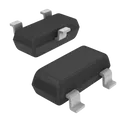
LEDs
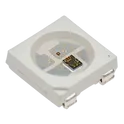
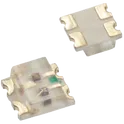
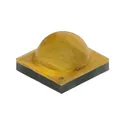
A LED (light-emitting diode) is a small, energy-efficient light source that is commonly used in a variety of applications. LED technology has advanced significantly in recent years, making it a popular choice for a wide range of lighting needs. LEDs are known for their low power consumption, long lifespan, and ability to produce a bright, directional light. One of the primary use cases for LEDs is in general lighting, where they are used in everything from residential and commercial lighting to automotive and aviation lighting. LEDs are also commonly used in electronic displays, such as TVs, computer monitors, and smartphones, as well as in signaling and indication applications, such as traffic lights and exit signs. If you are looking for high-quality LED resources, flux.ai has the world's largest community-driven public library of LED footprints, symbols, datasheets, and simulation models. Whether you are a designer, engineer, or manufacturer, you can find the resources you need to work with LEDs in your projects.
HT4936S-CO
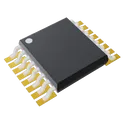
The HOTCHIP HT4936S is a sophisticated mobile power management integrated circuit designed by Hotchip, optimized for portable power solutions that require efficient charging and power management capabilities. This advanced component integrates features for charging and discharging through a common port, automatic load detection for boost startup and shutdown, four-light battery level indication, and a low battery alert functionality. The HT4936S stands out for its ability to manage 1A input/output with minimal external components, leveraging synchronous rectification to enhance efficiency and reduce thermal footprint. Additionally, it supports a versatile charging protocol accommodating both 4.20V and 4.35V batteries, and is packaged in a compact SOP16 form factor, ensuring a low-cost, space-efficient solution for a wide range of mobile power applications including power banks, backup power supplies, and lithium battery chargers. It incorporates protection features against battery overcharge, over-discharge, and thermal overload, thereby ensuring reliable operation across a range of conditions. Furthermore, the HT4936S facilitates direct LED drive and includes an NTC thermistor input for temperature monitoring, making it an all-encompassing solution for power management in consumer electronics.
8 Uses3 StarsArduino Uno Optical Sensor Shield
Arduino Uno Shield for Blue Light Optical Sensor. The circuit generates a 2.1kHz sinusoidal signal to send to LEDs and contains a filtering and amplification circuit to preprocess the signal. Powered by 24V and regulated down to 12V and 5V to power Arduino. #ArduinoUno
493 Uses3 StarsMMBT3904-TP
Bipolar (BJT) Transistor NPN 40V 200mA 300MHz 350mW Surface Mount SOT-23 The MMBT3904-TP is an NPN general-purpose bipolar junction transistor (BJT) in a SOT-23 surface-mount package. It is a compact SMD version of the classic 2N3904, designed for switching and low-power signal amplification in a wide range of electronic circuits. It is commonly used in embedded systems, consumer electronics, and PCB designs where small size and reliable switching performance are required. Key Features NPN Bipolar Junction Transistor (BJT) Suitable for switching and amplification applications SOT-23 Surface-Mount Package Compact footprint for high-density PCB designs Collector-Emitter Voltage (Vceo) Typically up to 40V Collector Current Up to 200 mA continuous Low Power Operation Designed for small signal and low-power switching tasks High Gain (hFE) DC current gain typically 100–300 Fast Switching Capability Suitable for digital and pulse applications Wide Operating Temperature Range Typically -55°C to +150°C High Reliability Stable performance for general-purpose use RoHS Compliant Environmentally compliant manufacturing Typical Applications Signal switching in digital circuits LED driving circuits Small relay or load switching Sensor interface circuits General-purpose amplification stages 2N3904 SOT-23 #CommonPartsLibrary #Transistor #BJT #NPN #MMBT3904
552 Uses2 Stars