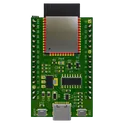
ESP8684-WROOM-02UC Reference Design
This is a reference design of the ESP8684-WROOM-02UC WiFi module from Espressif Systems. This board has USB C for flashing via CH340, RESET and BOOT buttons, 3.3V regulator and 2 IO connectors #WiFi #BLE #MCU #ReferenceDesign... show more1 Use
0 Stars
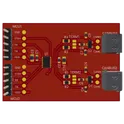
TJA1059TKJ Reference Design g6jG
This is a reference design for TJA1059TKJ Dual high-speed CAN transceiver with Standby mode. It offers advanced features, such as wake-up capability and high-speed data rates, making it suitable for automotive and industrial applications. #MCP25612FD #CANbus #transceiver #highspeed #automotive #referenceDesign #project #CANbus #interface #transceiverCircuit #TJA1059TKJ #referenceDesign #canbus #nxp #template #reference-design... show more0 Uses
0 Stars
MP5048A Reference Design
A power management circuit featuring the MP2162 from Monolithic Power Systems, incorporating inductors, capacitors, and resistors for regulation. #project #referenceDesign #powermanagement #template #reference-design... show more0 Uses
0 Stars
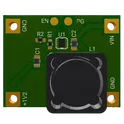
MP2162 Reference Design
A power management circuit featuring the MP2162 from Monolithic Power Systems, incorporating inductors, capacitors, and resistors for regulation. #project #referenceDesign #powermanagement #template #reference-design #MP2162 #monolithicpower... show more1 Use
1 Star
[Example] ESP32 Reference Design
An example development and reference design for the ESP32 microcontroller.... show more1 Use
0 Stars
[Example] ESP32 Reference Design
An example development and reference design for the ESP32 microcontroller.... show more1 Use
0 Stars
[Example] ESP32 Reference Design
An example development and reference design for the ESP32 microcontroller.... show more0 Uses
0 Stars
[Example] ESP32 Reference Design
An example development and reference design for the ESP32 microcontroller.... show more0 Uses
0 Stars
ESP32-WROOM-32E Reference Design
This project is a reference design for an ESP32-WROOM-32E based device. It features USB-C for power and data transfer, onboard voltage regulation, and multiple peripheral connections. It also includes a CH340C for USB to serial conversion #referenceDesign #project #ESP32 #ESP32WROOM #RF #WIFI #MCU #referenceDesign #simple-embedded #espressif #template #reference-design... show more5 Uses
1 Star
ESP32-WROOM-32E Reference Design
This project is a reference design for an ESP32-WROOM-32E based device. It features USB-C for power and data transfer, onboard voltage regulation, and multiple peripheral connections. It also includes a CH340C for USB to serial conversion #referenceDesign #project #ESP32 #ESP32WROOM #RF #WIFI #MCU #simpleEmbedded #espressif #template... show more1 Use
0 Stars

Reference design of TPS62040
This is a submodule of high efficiency synchronous step-down dc-dc converters optimized for battery powered portable applications. #power #dcdc #ti #buck... show more4 Uses
2 Stars
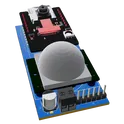
WiFi Camera with Motion Detection Reference Design
This project is a WiFi Camera with Motion Detection, utilizing ESP32-CAM module and HC-SR501 PIR sensor. The camera is activated by the sensor's output. The system also includes power regulation and communication headers for setup and control. #WiFi #MCU #PIR #ReferenceDesign #project #ESP32 #camera #referenceDesign #edgeComputing #espressif #template #reference-design... show more1 Use
0 Stars
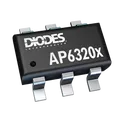
AP63203WU-7
Buck Switching Regulator IC Positive Fixed 3.3V 1 Output 2A SOT-23-6 Thin, TSOT-23-6 The AP63200/AP63201/AP63203/AP63205 is a 2A, synchronous buck converter with a wide input voltage range of 3.8V to 32V and fully integrates a 125mΩ high-side power MOSFET and a 68mΩ low-side power MOSFET to provide high-efficiency step-down DC/DC conversion. The AP63200/AP63201/AP63203/AP63205 device is easily used by minimizing the external component count due to its adoption of peak current mode control along with its integrated compensation network. The AP63200/AP63201/AP63203/AP63205 has optimized designs for Electromagnetic Interference (EMI) reduction. The converter features Frequency Spread Spectrum (FSS) with a switching frequency jitter of ±6%, which reduces EMI by not allowing emitted energy to stay in any one frequency for a significant period of time. It also has a proprietary gate driver scheme to resist switching node ringing without sacrificing MOSFET turn-on and turn-off times, which further erases highfrequency radiated EMI noise caused by MOSFET switching. The device is available in a low-profile, TSOT26 package. • VIN 3.8V to 32V • 2A Continuous Output Current • 0.8V ±1% Reference Voltage • 22µA Ultralow Quiescent Current • Switching Frequency o 500kHz: AP63200 and AP63201 o 1.1MHz: AP63203 and AP63205 • Pulse Width Modulation (PWM) Regardless of Output Load o AP63201 • Supports Pulse Frequency Modulation (PFM) o AP63200, AP63203, and AP63205 o Up to 80% Efficiency at 1mA Light Load o Up to 88% Efficiency at 5mA Light Load • Fixed Output Voltage o 3.3V: AP63203 o 5.0V: AP63205 • Proprietary Gate Driver Design for Best EMI Reduction • Frequency Spread Spectrum (FSS) to Reduce EMI • Precision Enable Threshold to Adjust UVLO • Protection Circuitry o Overvoltage Protection o Cycle-by-Cycle Peak Current Limit o Thermal Shutdown • 12V and 24V distributed power bus supplies • Flat screen TV sets and monitors • Power tools and laser printers • White goods and small home appliances • FPGA, DSP, and ASIC supplies • Home audios • Network systems • Set top boxes • Gaming consoles • Consumer electronics #commonpartslibrary #integratedcircuit #AP63203WU7 #BuckConverter #DCDCConverter #PowerManagement #VoltageRegulator #SynchronousBuck #EmbeddedSystems #IndustrialElectronics #PowerSupply #DiodesInc #3V3Power #ElectronicsDesign... show more1.4k Uses
1 Star
TL431ACDBZR
Shunt Voltage Reference IC Adjustable 1.24V 18 VV ±1% 70 mA SOT-23-3... show more6 Uses
0 Stars
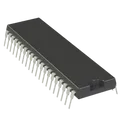
PIC16F877A-I/P
PIC PIC® 16F Microcontroller IC 8-Bit 20MHz 14KB (8K x 14) FLASH 40-PDIP The PIC16F877A-I/P is a high-performance 8-bit microcontroller from Microchip Technology, based on a Harvard architecture with separate program and data memory buses. It is designed for a wide range of embedded applications requiring reliable processing, multiple communication interfaces, and analog capability. The device integrates Flash program memory, EEPROM data storage, and numerous peripherals including ADC, timers, serial communication modules, and PWM functions. Packaged in a 40-pin PDIP form factor, it is widely used in industrial automation, consumer electronics, and educational development systems. Core Features 8-bit PIC microcontroller architecture Harvard architecture with RISC instruction set Operating frequency up to 20 MHz Single-cycle instruction execution (except branches) Memory Program Memory: 8K words (Flash) Data Memory (RAM): 368 bytes EEPROM Data Memory: 256 bytes I/O Features Up to 33 programmable I/O pins Multiple input/output ports (PORTA, PORTB, PORTC, PORTD, PORTE) High current sink/source capability on selected pins Analog Features 10-bit Analog-to-Digital Converter (ADC) Up to 8 analog input channels Programmable voltage reference Timers and Control Three timers (Timer0, Timer1, Timer2) Capture/Compare/PWM (CCP) modules Watchdog Timer (WDT) Power-on Reset (POR) and Brown-out Reset (BOR) Communication Interfaces USART (Universal Synchronous/Asynchronous Receiver/Transmitter) SPI (Serial Peripheral Interface) I²C (Inter-Integrated Circuit) via MSSP module Electrical Characteristics Operating Voltage: 4.0V to 5.5V Operating Temperature Range: -40°C to +85°C (Industrial grade) Low power consumption modes available Package Information Package Type: PDIP (Plastic Dual Inline Package) Pin Count: 40 pins Mounting Type: Through-hole Applications Industrial control systems Embedded automation Consumer electronics Sensor interfacing and data acquisition Educational and prototyping platforms #commonpartslibrary #integratedcircuit #microcontroller... show more872 Uses
2 Stars

MTCH2120-V/REB
Touchscreen Controller 2 Wire Capacitive I2C Interface 20-VQFN (3x3) The MTCH2120-V/REB specification defines the engineering requirements for a capacitive touch sensing controller integrated circuit designed for human-machine interface applications in embedded electronic systems. This specification establishes the functional, electrical, mechanical, environmental, and quality requirements necessary to ensure accurate touch detection, stable system performance, and reliable operation across consumer, industrial, and embedded environments. The device is intended for use in applications requiring touch-based user input such as control panels, interface buttons, and capacitive sensing surfaces. It provides robust sensing performance with immunity to noise and environmental variation, enabling reliable detection of touch events in compact and low-power electronic designs. Engineering Requirements The integrated circuit shall be manufactured using qualified semiconductor fabrication processes to ensure consistent sensing performance, low power consumption, and long-term operational stability. The device shall support reliable capacitive touch detection under defined electrical and environmental conditions without degradation of sensitivity or accuracy. The sensing architecture shall provide stable touch event detection with immunity to electrical noise, environmental interference, and parasitic capacitance variations. The system shall maintain consistent performance across intended operating conditions including temperature variation and supply voltage fluctuation. Electrical characteristics shall ensure stable digital communication, accurate sensing response, and reliable operation during startup, normal operation, and power transitions. The device shall maintain functional integrity during dynamic system conditions without false triggering or loss of sensitivity. Mechanical and package construction shall be suitable for surface-mount assembly and shall ensure robustness during soldering, handling, and long-term operation. Workmanship shall be free from defects such as contamination, cracks, bonding issues, or structural inconsistencies that could impact electrical or mechanical reliability. Inspection, validation, and testing shall be performed using controlled procedures and calibrated equipment to ensure compliance with all applicable engineering and quality requirements. Any deviation from this specification shall require formal engineering review, documented justification, and approval through established change control processes. Documentation Supporting documentation shall include official datasheets, reference design materials, electrical characterization reports, qualification data, inspection records, and revision-controlled manufacturing documentation. All documentation shall be maintained under formal configuration management and quality assurance systems to ensure traceability and consistency. Revision Control All modifications to this specification shall be managed through formal engineering change control procedures. Each revision shall undergo technical evaluation, validation, and approval prior to implementation to ensure continued compliance with design intent and applicable standards. #EngineeringSpecification #CapacitiveTouch #HMI #MicrochipTechnology #EmbeddedSystems #UserInterface #SensorIC #LowPowerDesign #ElectronicsDesign #QualityAssurance #EngineeringDocumentation... show more1 Use
0 Stars
LM4132CMF-1.8/NOPB
Series Voltage Reference IC Fixed 1.8V V ±0.2% 20 mA SOT-23-5 #ReferenceVoltaget #commonpartslibrary... show more16 Uses
0 Stars

TLVH431ACDBZR
Shunt Voltage Reference IC Adjustable 1.24V 18 VV ±1% 70 mA SOT-23-3... show more12 Uses
0 Stars
AP431SAN1TR-G1
Shunt Voltage Reference IC Adjustable 2.5V 36 VV ±0.5% 100 mA SOT-23-3 #ReferenceVoltaget #commonpartslibrary... show more0 Uses
0 Stars
LMR50410Y5FQDBVRQ1
Buck Switching Regulator IC Positive Fixed 5V 1 Output 1A SOT-23-6 The LMR50410Y5FQDBVRQ1 (part of the LMR50410-Q1 family from Texas Instruments) is a synchronous step-down (buck) DC-DC converter designed for automotive and industrial power applications. It operates over a wide input voltage range of 4 V to 36 V and can deliver up to 1 A output current, making it suitable for converting higher, unregulated voltages into stable lower voltages (e.g., 5 V or 3.3 V rails). The device integrates power switches, control circuitry, and compensation internally, allowing simple design with minimal external components and a compact PCB footprint. Key Features Power & Performance Wide input voltage range: 4 V to 36 V Output current: up to 1 A High switching frequency: 2.1 MHz (enables small inductors) High efficiency with PFM (light load) and FPWM (constant frequency) options Integration & Ease of Use Synchronous rectification (integrated high-side & low-side MOSFETs) Internal compensation (no complex external tuning) Minimal external components required Small SOT-23-6 package for compact designs Protection & Reliability Cycle-by-cycle current limit Short-circuit protection (hiccup mode) Thermal shutdown protection Undervoltage lockout (UVLO) ±1% reference voltage accuracy Automotive & Industrial Capability AEC-Q100 qualified (automotive grade) Operating temperature: Ambient: up to 125°C Junction: up to 150°C Designed for rugged automotive environments Additional Features Soft-start for controlled startup Precision enable pin for system control Monotonic startup with pre-biased output Available in fixed output (e.g., 5 V) variants Typical Applications Automotive electronics (ADAS, infotainment, lighting) Industrial power supplies Distributed power systems General-purpose DC-DC regulation #commonpartslibrary #integratedcircuit #powermanagement #voltageregulator... show more830 Uses
0 Stars

![[Example] ESP32 Reference Design](https://img-cdn.flux.ai/eyJidWNrZXQiOiJncmF2aXRvbi1lbGVjdHJpYy1zeW1ib2xzIiwia2V5IjoiZG9jdW1lbnRfYXNzZXRzL2VzcDMyLWM3OGU1YTg3LThmNzgtMGVkZS1mODc3LTYwZjdiMDM0MjRkNS5wbmciLCJlZGl0cyI6eyJyZXNpemUiOnsid2lkdGgiOjEyNCwiaGVpZ2h0IjoxMjQsImZpdCI6ImNvbnRhaW4iLCJiYWNrZ3JvdW5kIjp7InIiOjAsImciOjAsImIiOjAsImFscGhhIjowfX19LCJvdXRwdXRGb3JtYXQiOiJ3ZWJwIn0=)



Page 1 of 163
Next