semgdaq
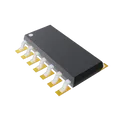
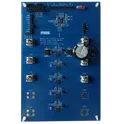
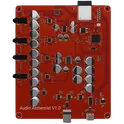
The semgdaq board is a wearable 6 channel data acquisition unit for capturing surface electromyographic (sEMG) signals from human arm muscles using SJ2-3593D jack connectors while conditioning, digitizing, processing and feature extracting them then transmitting the feature data as vectors to an external AI accelerated board through an SM12B-SRSS IDC connector using 12C and UART communication protocals where AI models are run for various applications including robotic control, muscle signals medical assessment and gesture recognition. The feature vectors are comprised of onset detection, slope sign changes, autoregression coefficients and Short Time Fourier Transform magnitude spectrum data for each segment or window of the signals in real time. This vectors can be used as the basis for further feature extraction on more computationally resourceful hardware where machine learning algorthms can be employed for descision making in the applications mentioned earlier. The board leverages INA125P instrumentation amplifiers together with filter stages utilizing LM324QT op-amps for conditioning and an STM32G4A1VET6 microcontroller for the digitization, processing, feature extraction and data transmission. Since AI models can only be as good as the data, the design of such a DAQ is necessary to ensure clean, reliable and real-time data for AI applications requiring sEMG feature data. The board also has USB-FS and JTAG to cater for debugging and external flash memory to extend its data storage and processing capability. The power (5V) is fed through a screw terminal and is regulated by two LDK320AM LDO regulators to offer 5V, 3.3V and 1.8V to meet the requirements of various components on the board.... show more0 Uses
6 Comments
1 Star
TMF8801-1BM Reference Design
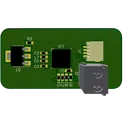
This is a reference design of a PCB utilizing the TMF8801-1BM time-of-flight (ToF) sensor from ams-OSRAM. It comprises electronic components such as resistors, capacitors, voltage regulators, and GPIO connectors. The logic signals are managed via Mosfets BSS138 while the Sensor IC is powered & controlled by a 3.3V AP2112K Voltage Regulator. #industrialSensing #referenceDesign #lzer #I2C #osramusa #template #reference-design... show more0 Uses
5 Comments
1 Star
Raspberry Pi Pico | End-to-end AI Design Tutorial [Example]
Learn how to design PCBs faster with generative AI in this 20 minute hands-on tutorial. You’ll learn how to use Flux Copilot, an AI-powered hardware design assistant, to research parts, review your design, and even connect components. https://youtu.be/FL7e0OXTLic... show more0 Uses
3 Comments
1 Star
PGA300ARHHR Reference Design
This project is a reference design utilizing Texas Instruments' PGA300ARHHR, a precision analog and digital IC, for signal processing. The circuit also includes a Diodes Incorporated's FZT603QTA Transistor, passive components like resistors and capacitors, and connectors from JST Sales America Inc. #project #referenceDesign #industrialsensing #texas-instruments #template #reference-design... show more0 Uses
3 Comments
1 Star
Raspberry Pi Pico | End-to-end AI Design Tutorial [Example]
Learn how to design PCBs faster with generative AI in this 20 minute hands-on tutorial. You’ll learn how to use Flux Copilot, an AI-powered hardware design assistant, to research parts, review your design, and even connect components. https://youtu.be/FL7e0OXTLic... show more0 Uses
1 Comment
1 Star
Portable Audio DSP
Portable Audio DSP project utilizing multiple ICs, capacitors, resistors, and LEDs for advanced audio processing and control. Designed for embedded audio applications with ESP32, ADC, DAC, and interface components. #audioDevices #DSP #ADC #audio #DAC... show more0 Uses
1 Comment
1 Star
RES-1K
The Ariel AI Chip, a pioneering component in the realm of artificial intelligence hardware, integrates a suite of electronic elements tailored for high-performance computing applications. At the heart of this assembly lies a CPU with a Radical Transistor architecture, featuring a quad-core setup clocked at 2GHz, identified by the part number CPU-RT-4C-2G. Power management is facilitated through a DC Power Supply, marked DCPS-5V, ensuring a stable 5V supply to the intricate circuitry. The chip's switching capabilities are bolstered by two NPN transistors, NPN-TRANS-001 and NPN-TRANS-002, which play a crucial role in signal modulation. Essential to the chip's operation are the passive components: two 1kΩ resistors (RES-1K and RES-1K-002) and a 10µF capacitor (CAP-10UF), which together with the transistors, form a robust network ensuring reliable performance under varying load conditions. Designed for integration into advanced AI systems, this chip stands out for its innovative use of standard components in a configuration that emphasizes efficiency, reliability, and high-speed data processing capabilities.... show more0 Uses
1 Comment
1 Star
DCPS-5V
The Ariel AI chip prototype, designed for integration with Flux AI for advanced simulation and testing, incorporates a suite of electronic components optimized for high-performance computing applications. At the heart of this system lies a CPU with a radical transistor architecture, featuring a 4-core configuration and a clock speed of 2GHz, identified by part number CPU-RT-4C-2G. Power management is facilitated through a DC Power Supply, specified as DCPS-5V, ensuring a stable 5V supply to the system. The circuit's dynamic performance is modulated by two NPN transistors, NPN-TRANS-001 and NPN-TRANS-002, which, along with precision resistors RES-1K and RES-1K-002 (both 1kΩ), and a 10μF capacitor (CAP-10UF), form the critical signal processing path leading to the CPU. This configuration is designed to provide an efficient, reliable processing environment for AI computations, with an emphasis on minimizing latency and maximizing throughput. The Ariel AI chip's architecture, combining traditional components with an innovative CPU design, offers a versatile platform for developing advanced AI applications, reflecting a significant step forward in computational technology.... show more0 Uses
1 Comment
1 Star
RES-1K-002
The Ariel AI Chip, a pioneering component in the field of artificial intelligence hardware, integrates advanced features designed to enhance computational efficiency and AI processing capabilities. This chip is distinguished by its utilization of a quad-core CPU with a clock speed of 2GHz, operating on a radical transistor architecture that promises significant improvements in speed and power efficiency. Key components that constitute the Ariel AI Chip include a DC power supply with a 5V output (DCPS-5V), NPN transistors (NPN-TRANS-001 and NPN-TRANS-002) that serve as the fundamental switching elements, precision resistors (RES-1K and RES-1K-002) each with a resistance of 1kΩ, and a capacitor (CAP-10UF) rated at 10μF to stabilize voltage and filter noise. This chip is designed for integration into systems requiring advanced AI capabilities, offering a comprehensive solution for developers looking to leverage machine learning and artificial intelligence in their applications. With its innovative architecture and component selection, the Ariel AI Chip stands out as a versatile and powerful tool for a wide range of AI applications, from embedded systems to more complex computational platforms.... show more0 Uses
1 Comment
1 Star
Doorbell with Camera Reference Design
This project is a doorbell system reference design with an integrated camera. It leverages an ESP32 microcontroller for processing, along with various components including resistors, buzzers, and transistors. The system also features a charging circuitry with a USB-C connection for power supply. #referenceDesign #edge-computing #edgeComputing #SeeedStudio #template #iot #esp32#camera #reference-design... show more0 Uses
1 Comment
1 Star
CPU-RT-4C-2G
The Ariel AI Chip, an innovative component designed for high-performance computing applications, integrates a sophisticated array of electronic parts to deliver unparalleled processing capabilities. At the heart of this system is a CPU with a radical transistor architecture, featuring a core count of 4 and a clock speed of 2GHz, identified by its part number CPU-RT-4C-2G. Power management within the chip is efficiently handled by a DC Power Supply, rated at 5V, with the part number DCPS-5V, ensuring stable and reliable operation. The chip's signal processing and amplification needs are addressed through the inclusion of two NPN transistors, with part numbers NPN-TRANS-001 and a similar variant, providing the necessary gain and switching capabilities for complex computational tasks. Signal conditioning is further enhanced by a pair of 1kΩ resistors, RES-1K and RES-1K-002, and a 10µF capacitor, CAP-10UF, which work together to filter and stabilize the power supply and signal pathways, ensuring clean and noise-free operation. This integration of components within the Ariel AI Chip offers electrical engineers a robust platform for developing advanced AI systems, combining high processing power with efficient power management and signal integrity, suitable for a wide range of applications in the field of artificial intelligence.... show more0 Uses
1 Comment
1 Star
Raspberry Pi Pico | End-to-end AI Design Tutorial [Example]
Learn how to design PCBs faster with generative AI in this 20 minute hands-on tutorial. You’ll learn how to use Flux Copilot, an AI-powered hardware design assistant, to research parts, review your design, and even connect components. https://youtu.be/FL7e0OXTLic... show more0 Uses
0 Comments
1 Star
NE555 Motor Driver Board
Provisional recreation of a simple NE555P motor driver/speed-control board from an image, including visible components, connectors, mounting holes, and documented ambiguities for later refinement.... show more0 Uses
0 Comments
1 Star
Brainstorm a new project with AI [Example]
Cost-Effective USB-C 2S Li-Ion Charger with Integrated 1W LED Flashlight - Fully Discrete, Generic Components, Minimalist Design... show more0 Uses
0 Comments
1 Star
Fast Silver Flubber
Create a schematic diagram of an electric fence controller using the NE556 dual timer IC. The circuit must include all components with clear electronic symbols (resistors, capacitors, transistors, diode, relay) connected by lines as in a real circuit diagram. Specifications: 1. Power supply: - Vcc = +12V connected to pin 14 of the NE556. - Pin 1 of the NE556 to ground. 2. Timer A (active 10 seconds): - Pin 2 (Trigger A) receives a pulse from transistor Q2 (contact detector). - Pin 6 (Threshold A) connected to Pin 7 (Discharge A). - R1 = 1 MΩ between Pin 7 and +12V. - C1 = 10 µF between Pin 6 and ground. - Pin 3 (Out A) goes through a 4.7 kΩ resistor to the base of Q1 (BC547 NPN transistor). - Pin 3 also connected via a 100 nF capacitor to Pin 13 (Trigger B of Timer B). 3. Timer B (rest 10 seconds): - Pin 9 (Discharge B) and Pin 8 (Threshold B) connected together. - R2 = 1 MΩ between Pin 9 and +12V. - C2 = 10 µF between Pin 8 and ground. - Pin 12 (Out B) can be optionally used to block retrigger of Timer A. 4. Relay driver stage: - Q1 = BC547 NPN transistor. - Base connected through 4.7 kΩ resistor to Pin 3 (Out A). - Emitter to ground. - Collector connected to one side of the relay coil. - Other side of relay coil connected to +12V. - A diode 1N4007 placed in parallel with the relay coil (cathode to +12V, anode to collector of Q1). - Relay contacts switch the +12V supply to the electric fence energizer. 5. Contact detector: - Shunt resistor ≈0.1 Ω placed in series with the fence output. - Q2 = BC547 NPN transistor, base connected to the shunt, emitter to ground, collector to Pin 2 (Trigger A). - When current flows through the shunt, Q2 provides a trigger pulse to Timer A. Please draw the schematic in a standard style with components connected by straight lines, not in block diagrams. Show clear pin numbers of the NE556 and all external components.... show more0 Uses
0 Comments
1 Star
Raspberry Pi Pico | End-to-end AI Design Tutorial [Example] f2f9
Learn how to design PCBs faster with generative AI in this 20 minute hands-on tutorial. You’ll learn how to use Flux Copilot, an AI-powered hardware design assistant, to research parts, review your design, and even connect components. https://youtu.be/FL7e0OXTLic... show more0 Uses
0 Comments
1 Star
Raspberry Pi Pico | End-to-end AI Design Tutorial [Example]
Learn how to design PCBs faster with generative AI in this 20 minute hands-on tutorial. You’ll learn how to use Flux Copilot, an AI-powered hardware design assistant, to research parts, review your design, and even connect components. https://youtu.be/FL7e0OXTLic... show more0 Uses
0 Comments
1 Star
CAP-10UF
The Ariel AI chip prototype is an advanced electronic component designed for integration into the Flux AI environment, facilitating simulation and testing of AI applications. This component features a collection of carefully selected parts including a DC power supply (DCPS-5V), NPN transistors (NPN-TRANS-001 and NPN-TRANS-002), resistors (RES-1K and RES-1K-002), a capacitor (CAP-10UF), and a cutting-edge CPU (CPU-RT-4C-2G) with a 4-core architecture, operating at a clock speed of 2GHz. The CPU's innovative radical transistor architecture is specifically tailored for high-performance computing tasks associated with AI and machine learning applications. This configuration ensures efficient power management, signal processing, and data flow within the chip, making it an ideal choice for developers and engineers looking to push the boundaries of AI technology. The inclusion of standard components like NPN transistors, resistors, and capacitors, alongside the specialized CPU, allows for a versatile and robust design, suitable for a wide range of AI applications.... show more0 Uses
0 Comments
1 Star
LM248D
The LM248 and LM348 quad operational amplifiers, manufactured by STMicroelectronics, incorporate four independent, high-gain internally-compensated, low-power operational amplifiers designed to provide identical functional characteristics to those of the renowned UA741 operational amplifier. These components stand out for their low supply current of 0.53 mA per amplifier and class AB output stage, ensuring no crossover distortion, which makes them highly suitable for applications demanding multiple UA741 type amplifiers and where amplifier matching or high packaging density is required. Furthermore, the LM248 and LM348 offer superior features such as low input offset voltage (1 mV), low input bias current (30 nA), and a gain bandwidth product of 1.3 MHz. They also boast excellent isolation between amplifiers (120 dB) and overload protection for inputs and outputs, enhancing their reliability and performance in various operational environments. The operational temperature ranges are from -40 °C to 105 °C for the LM248 and 0 °C to 70 °C for the LM348, catering to a broad spectrum of industrial applications. Additionally, these components are pin-compatible with LM124, LM224, LM324, further extending their applicability in electronic circuit designs.... show more0 Uses
0 Comments
1 Star
EV5920-5048-V-00A Evaluation Board
This is a recreation of the [EV5920-5048-V-00A](https://www.monolithicpower.com/en/ev5920-5048-v-00a.html) from MPS which demonstrates a MP5920 Hot-Swap controller commanding 5 MP5048 e-fuses in parallel. WIP Items: -Routing In flux, this project demonstrates hierarchal design through the use of modules. Additionally, parametric symbols are used extensively to improve schematic cleanliness. Components in the canvas are locked because their positions correspond to the same positions as the original layout. Changelog from Original MPS Design: - Not including GPIO2 or GPIO3 as included in the original board due to NC pin name on the IC. - PC1 and PC2 footprints are 5mm in pitch and 12.5mm in diameter rather than the 16mm diameter in the original layout. This change corresponds with the selected part more accurately. -Renamed Designators to be More Verbose... show more0 Uses
0 Comments
1 Star
Rover
MDD10A is the dual channel version of MD10C which is designed to drive 2 brushed DC motors with high current up to 10A continuously. Just like MD10C, the MDD10A also supports locked-antiphase and sign-magnitude PWM signal. It is also using full solid state components which result in faster response time and eliminate the wear and tear of the mechanical relay.... show more0 Uses
0 Comments
1 Star
EV5920-5048-V-00A Evaluation Board
This is a recreation of the [EV5920-5048-V-00A](https://www.monolithicpower.com/en/ev5920-5048-v-00a.html) from MPS which demonstrates a MP5920 Hot-Swap controller commanding 5 MP5048 e-fuses in parallel. In Flux, this project demonstrates hierarchical design through the use of modules. Additionally, parametric symbols are used extensively to improve schematic cleanliness. Components in the canvas are locked because their positions correspond to the same positions as the original layout. Changelog from Original MPS Design: - Not including GPIO2 or GPIO3 as included in the original board due to NC pin name on the IC. - PC1 and PC2 footprints are 5mm in pitch and 12.5mm in diameter rather than the 16mm diameter in the original layout. This change corresponds with the selected part more accurately. -Renamed Designators to be More Verbose... show more0 Uses
0 Comments
1 Star
Bluetooth Smart Mirror Reference Design
This project is a Bluetooth-controlled smart mirror design. It uses an ESP32-MINI-1 for Bluetooth connectivity, an MPU-6050 IC sensor for gesture control, and a RGB LED for visual feedback. The design also comprises of other components like capacitors, resistors, and a USB-C connector for power. #referenceDesign #edge-computing #edgeComputing #template #reference-design #reusable #module #edge-computing #edgeComputing #sublayout #esp32 #lazer #sensor... show more0 Uses
0 Comments
1 Star
Wearable AI Camera
This project is a Wearable AI Camera designed to integrate multiple components such as a Murata Bluetooth module, Crypto controller, and various sensors like the STMicroelectronics Time-of-Flight sensor and microphone. It's powered by a diverse set of power nets and connects through different communication protocols. #wearableDevices... show more0 Uses
0 Comments
1 Star
IoT Devices and Wearables (no components)
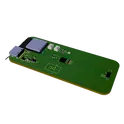
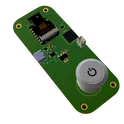
Small, inexpensive AI pendant. Records sound after user presses a button. Indicate behavior with RGB LED. Onboard processing and cloud connectivity through mobile phone tethering.... show more0 Uses
46 Comments
0 Stars
![Raspberry Pi Pico | End-to-end AI Design Tutorial [Example]](https://img-cdn.flux.ai/eyJidWNrZXQiOiJncmF2aXRvbi1lbGVjdHJpYy1zeW1ib2xzIiwia2V5IjoiZG9jdW1lbnRfYXNzZXRzL1RodW1ibmFpbC1ScGljby0tMS0tM2QwMGFjNzYtZjEzNi00YTkzLWJjYTEtYTlkZjc0ZGI0NmE3LnBuZyIsImVkaXRzIjp7InJlc2l6ZSI6eyJ3aWR0aCI6MTI0LCJoZWlnaHQiOjEyNCwiZml0IjoiY29udGFpbiIsImJhY2tncm91bmQiOnsiciI6MCwiZyI6MCwiYiI6MCwiYWxwaGEiOjB9fX0sIm91dHB1dEZvcm1hdCI6IndlYnAifQ==)
![Brainstorm a new project with AI [Example]](https://img-cdn.flux.ai/eyJidWNrZXQiOiJncmF2aXRvbi1lbGVjdHJpYy1zeW1ib2xzIiwia2V5IjoiZG9jdW1lbnRfYXNzZXRzL0JyYWluc3Rvcm0tdy1Db3BpbG90LTFkNGM1ODk0LTY2ZWMtNGFmYi05ZTAyLTU3YjRhMDk2MTdmNC5wbmciLCJlZGl0cyI6eyJyZXNpemUiOnsid2lkdGgiOjEyNCwiaGVpZ2h0IjoxMjQsImZpdCI6ImNvbnRhaW4iLCJiYWNrZ3JvdW5kIjp7InIiOjAsImciOjAsImIiOjAsImFscGhhIjowfX19LCJvdXRwdXRGb3JtYXQiOiJ3ZWJwIn0=)