Chat
Welcome to Flux
Treat Flux like your intern. Tell it what you'd like to build and it'll get to work. You can also ask it questions, brainstorm ideas, and teach it your preferences. Learn More
Explain project
Write a project description
Find schematic issues
Create a test plan
Simulate a circuit
Prepare for Manufacturing
Component Selection Workflow
New Subsystem Wizard
Write I2C initialization code
Generate firmware skeleton
explain all schema evert single components

1y
Sure, let's go through each component in your WiFi to IR gateway reference design. I'll explain the function and role of each component to ensure that you understand how they fit into your project.
LED Components
- LED1: This is a basic LED with a cathode (K) and anode (A). It is likely used to provide visual feedback.
- LED2: Similar to LED1, it is used for visual indicators.
- LED3: This appears to be a multi-color LED, with Red (R), Green (G), Blue (B) and common anode (A). It is used to provide multi-color visual feedback.
- LED_RED, LED_IR, LED_G, LED_B, LED_R: These are nets for the respective LEDs. They help connect LEDs to signals or power in the circuit.
- R1, R2, R6, R7, R8: These are current-limiting resistors (with specified resistance values: 150Ω, 150Ω, 135Ω, 50Ω, 50Ω respectively) for the LEDs to protect them from excessive current.
- R3, R4, R5: These resistors are probably part of the USB Type-C and/or pull-down or pull-up circuitry (5.1kΩ, 5.1kΩ, 10kΩ respectively).
- C1, C2, C3, C4, C5, C6, C7, C8: These capacitors are used for various purposes such as filtering and stabilizing the voltage. Capacitors like 10µF, 1µF, and 0.1µF are common for decoupling and bypassing.
- U1: This is the ESP32-S3-MINI-1U-N8 microcontroller. It manages WiFi connectivity and controls other components like LEDs and IR transmitter/receiver.
- U2: This is the AMS1117-3.3 voltage regulator that converts higher input voltage down to 3.3V required by the ESP32 and other components.
- U3: This is the TSOP4838, an IR receiver module that decodes infrared signals coming from a remote control.
- D1: This is the 1N5819HW-7-F, a Schottky diode used for reverse polarity protection or for rectification.
- SW1, SW2: These are push-button switches (PTS815 SJM 250 SMTR LFS) which can be used for reset and boot operations.
- J1: This is the USB Type-C connector (TYPE-C-31-M-12) for power and data transfer.
- 3V3, 5V, VBUS: These are power nets supplying power to various components in the circuit. 3V3 is 3.3V for the ESP32 and associated components, while 5V and VBUS are for components requiring 5V input.
- GND: This is the common ground reference for all the components in the circuit.
- ESP_BOOT, ESP_RST: These are control signals for the ESP32 for boot and reset functionality.
- USB_P_ESP, USB_N_ESP: These signals route the USB D+ and D- lines to the ESP32 for USB communication.
- LED_IR, LED_RED, LED_G, LED_B, LED_R: These nets connect the respective LEDs to the ESP32 GPIOs to control them.
- CC1, CC2: Configuration channel pins for the USB Type-C interface.
This section ensures stable voltage levels, especially when transitioning between USB voltage and the required 3.3V for the ESP32 and other components.
Summary of Connections
-
Power Connections
- Connect J1:CC1 to R4:P2.
- Connect J1:VBUS to D1:A, J1:VBUS.
- Connect D1:K to C1:P1, C7:P2, U2:VIN.
- Connect U2:VOUT to 3V3:P1, LED3:A, C4:P2, U1:3V3, LED2:A, C3:P2, R5:P1, LED1:A, C2:P2, U2:TAB(VOUT), C8:P2.
-
Ground Connections
- Connect C1:P2, C3:P1, U2:GND, R4:P1, R3:P1, U1:GND__, C6:P2, SW1:~4, SW1:~2, C7:P1, SW2:~4, SW2:~2, C5:P2, C4:P1, J1:GND, C2:P1, C8:P1 to GND.
-
Controller Connections
- Connect SW1:~3 to ESPBOOT:P1.
- Connect SW2:~3 to ESPRST:P1, R5:P2, U1:EN.
-
LED Connections
- Connect R2:P2 to LED1:K.
- Connect R7:P2 to LED3:B.
- Connect R6:P2 to LED3:R.
- Connect R8:P2 to LED3:G.
-
USB Data Lines
- Connect J1:DP1 to U1:IO19, J1:DP2.
- Connect J1:DN1 to U1:IO20, J1:DN2.
-
IR LED and Resistor
- Connect LEDIR:P1, R2:P1 to U1:IO37.
- Connect LEDRED:P1, R1:P1 to U1:IO36.
- Connect LEDB:P1, R7:P1 to U1:IO41.
- Connect LEDR:P1, R6:P1 to U1:IO39.
- Connect LEDG:P1, R8:P1 to U1:IO40.
-
Configuration Channels
- Connect CC1:P1 to R3:P2.
- Connect CC2:P1 to R3:P2, J1:CC2.
I hope this detailed explanation clarifies the role of each component and their connections in the overall design. Let me know if you need more details on a specific part or connection!
1y
3
LED_R
LED_B
IR_IN
ESP_BOOT
USB_N_ESP
USB_P_ESP
LED_RED
LED_IR
3V3
IR_IN
ESP_RST
LED_B
LED_G
LED_G
LED_R
R7
Resistance
50 Ω
LED3
R6
Resistance
135 Ω
C2
Capacitance
10uF
3V3
3V3
3V3
C4
Capacitance
1uF
C3
Capacitance
1uF
R8
Resistance
50 Ω
3V3
R5
Resistance
10KΩ
U1
3V3
3V3
U3
Reviews

- Wirelessly connects nets on schematic. Used to organize schematics and separate functional blocks. To wirelessly connect net portals, give them same designator. #portaljharwinbarrozo43.0M
- Wirelessly connects power nets on schematic. Identical to the net portal, but with a power symbol. Used to organize schematics and separate functional blocks. To wirelessly connect power net portals, give them the same designator. #portal #powerjharwinbarrozo11.4M
- A generic fixed resistor ideal for rapid circuit topology development. Its footprint automatically adapts based on the selected package case code—supporting 0402, 0603, 0805, 1203, and many other standard SMD packages, as well as axial horizontal and vertical configurations. Save precious design time by seamlessly add more information to this part (value, footprint, etc.) as it becomes available. Standard resistor values: 1.0 ohm, 10 ohm, 100 ohm, 1.0k ohm, 10k ohm, 100k ohm, 1.0M ohm 1.1 ohm, 11 ohm, 110 ohm, 1.1k ohm, 11k ohm, 110k ohm, 1.1M ohm 1.2 ohm, 12 ohm, 120 ohm, 1.2k ohm, 12k ohm, 120k ohm, 1.2M ohm 1.3 ohm, 13 ohm, 130 ohm, 1.3k ohm, 13k ohm, 130k ohm, 1.3M ohm 1.5 ohm, 15 ohm, 150 ohm, 1.5k ohm, 15k ohm, 150k ohm, 1.5M ohm 1.6 ohm, 16 ohm, 160 ohm, 1.6k ohm, 16k ohm, 160k ohm, 1.6M ohm 1.8 ohm, 18 ohm, 180 ohm, 1.8K ohm, 18k ohm, 180k ohm, 1.8M ohm 2.0 ohm, 20 ohm, 200 ohm, 2.0k ohm, 20k ohm, 200k ohm, 2.0M ohm 2.2 ohm, 22 ohm, 220 ohm, 2.2k ohm, 22k ohm, 220k ohm, 2.2M ohm 2.4 ohm, 24 ohm, 240 ohm, 2.4k ohm, 24k ohm, 240k ohm, 2.4M ohm 2.7 ohm, 27 ohm, 270 ohm, 2.7k ohm, 27k ohm, 270k ohm, 2.7M ohm 3.0 ohm, 30 ohm, 300 ohm, 3.0K ohm, 30K ohm, 300K ohm, 3.0M ohm 3.3 ohm, 33 ohm, 330 ohm, 3.3k ohm, 33k ohm, 330k ohm, 3.3M ohm 3.6 ohm, 36 ohm, 360 ohm, 3.6k ohm, 36k ohm, 360k ohm, 3.6M ohm 3.9 ohm, 39 ohm, 390 ohm, 3.9k ohm, 39k ohm, 390k ohm, 3.9M ohm 4.3 ohm, 43 ohm, 430 ohm, 4.3k ohm, 43K ohm, 430K ohm, 4.3M ohm 4.7 ohm, 47 ohm, 470 ohm, 4.7k ohm, 47k ohm, 470k ohm, 4.7M ohm 5.1 ohm, 51 ohm, 510 ohm, 5.1k ohm, 51k ohm, 510k ohm, 5.1M ohm 5.6 ohm, 56 ohm, 560 ohm, 5.6k ohm, 56k ohm, 560k ohm, 5.6M ohm 6.2 ohm, 62 ohm, 620 ohm, 6.2k ohm, 62K ohm, 620K ohm, 6.2M ohm 6.8 ohm, 68 ohm, 680 ohm, 6.8k ohm, 68k ohm, 680k ohm, 6.8M ohm 7.5 ohm, 75 ohm, 750 ohm, 7.5k ohm, 75k ohm, 750k ohm, 7.5M ohm 8.2 ohm, 82 ohm, 820 ohm, 8.2k ohm, 82k ohm, 820k ohm, 8.2M ohm 9.1 ohm, 91 ohm, 910 ohm, 9.1k ohm, 91k ohm, 910k ohm, 9.1M ohm #generics #CommonPartsLibraryjharwinbarrozo1.5M
- A generic fixed capacitor ideal for rapid circuit topology development. You can choose between polarized and non-polarized types, its symbol and the footprint will automatically adapt based on your selection. Supported options include standard SMD sizes for ceramic capacitors (e.g., 0402, 0603, 0805), SMD sizes for aluminum electrolytic capacitors, and through-hole footprints for polarized capacitors. Save precious design time by seamlessly add more information to this part (value, footprint, etc.) as it becomes available. Standard capacitor values: 1.0pF, 10pF, 100pF, 1000pF, 0.01uF, 0.1uF, 1.0uF, 10uF, 100uF, 1000uF, 10000uF 1.1pF, 11pF, 110pF, 1100pF 1.2pF, 12pF, 120pF, 1200pF 1.3pF, 13pF, 130pF, 1300pF 1.5pF, 15pF, 150pF, 1500pF, 0.015uF, 0.15uF, 1.5uF, 15uF, 150uF, 1500uF 1.6pF, 16pF, 160pF, 1600pF 1.8pF, 18pF, 180pF, 1800pF 2.0pF, 20pF, 200pF, 2000pF 2.2pF, 22pF, 220pF, 2200pF, 0.022uF, 0.22uF, 2.2uF, 22uF, 220uF, 2200uF 2.4pF, 24pF, 240pF, 2400pF 2.7pF, 27pF, 270pF, 2700pF 3.0pF, 30pF, 300pF, 3000pF 3.3pF, 33pF, 330pF, 3300pF, 0.033uF, 0.33uF, 3.3uF, 33uF, 330uF, 3300uF 3.6pF, 36pF, 360pF, 3600pF 3.9pF, 39pF, 390pF, 3900pF 4.3pF, 43pF, 430pF, 4300pF 4.7pF, 47pF, 470pF, 4700pF, 0.047uF, 0.47uF, 4.7uF, 47uF, 470uF, 4700uF 5.1pF, 51pF, 510pF, 5100pF 5.6pF, 56pF, 560pF, 5600pF 6.2pF, 62pF, 620pF, 6200pF 6.8pF, 68pF, 680pF, 6800pF, 0.068uF, 0.68uF, 6.8uF, 68uF, 680uF, 6800uF 7.5pF, 75pF, 750pF, 7500pF 8.2pF, 82pF, 820pF, 8200pF 9.1pF, 91pF, 910pF, 9100pF #generics #CommonPartsLibraryjharwinbarrozo1.5M
- A generic fixed inductor suitable for rapid circuit topology development. The footprint automatically adapts based on the selected package, supporting standard SMD sizes (e.g., 0402, 0603, 0805) as well as well-known inductor packages such as SDR1806, PA4320, SRN6028, and SRR1260. Standard inductor values: 1.0 nH, 10 nH, 100 nH, 1.0 µH, 10 µH, 100 µH, 1.0 mH 1.2 nH, 12 nH, 120 nH, 1.2 µH, 12 µH, 120 µH, 1.2 mH 1.5 nH, 15 nH, 150 nH, 1.5 µH, 15 µH, 150 µH, 1.5 mH 1.8 nH, 18 nH, 180 nH, 1.8 µH, 18 µH, 180 µH, 1.8 mH 2.2 nH, 22 nH, 220 nH, 2.2 µH, 22 µH, 220 µH, 2.2 mH 2.7 nH, 27 nH, 270 nH, 2.7 µH, 27 µH, 270 µH, 2.7 mH 3.3 nH, 33 nH, 330 nH, 3.3 µH, 33 µH, 330 µH, 3.3 mH 3.9 nH, 39 nH, 390 nH, 3.9 µH, 39 µH, 390 µH, 3.9 mH 4.7 nH, 47 nH, 470 nH, 4.7 µH, 47 µH, 470 µH, 4.7 mH 5.6 nH, 56 nH, 560 nH, 5.6 µH, 56 µH, 560 µH, 5.6 mH 6.8 nH, 68 nH, 680 nH, 6.8 µH, 68 µH, 680 µH, 6.8 mH 8.2 nH, 82 nH, 820 nH, 8.2 µH, 82 µH, 820 µH, 8.2 mH #generics #CommonPartsLibraryjharwinbarrozo15.8k
- An electrical connector acting as reusable interface to a conductor and creating a point where external circuits can be connected.Terminal
- 47 kOhms ±5% 0.125W, 1/8W Chip Resistor 0805 (2012 Metric) Automotive AEC-Q200 Thick Film #forLedBlinkjharwinbarrozo1.2M
- 10uF Capacitor Aluminum Polymer 20% 16V SMD 5x5.3mm #forLedBlink #commonpartslibrary #capacitor #aluminumpolymer #radialcanjharwinbarrozo1.2M
- Yellow 595nm LED Indication - Discrete 1.7V 1206 (3216 Metric) #forLedBlinkjharwinbarrozo1.1M


WiFi to IR Gateway Reference Design bN3H
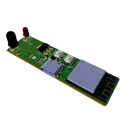
This is a WiFi to Infrared (IR) gateway reference design leveraging an ESP32-S3 microcontroller for WiFi connectivity. It also incorporates a Type-C USB interface for data and power, 3 LEDs (red, green, & IR), and voltage regulation. It facilitates wireless control of IR devices, suitable for home automation projects.
#referenceDesign #edge-computing #espressif #template #IR #project #reference-design
Properties
Pricing & Availability
Distributor | Qty 1 |
|---|---|
Arrow | $0.64–$1.18 |
Digi-Key | $4.84–$5.85 |
LCSC | $4.88–$4.97 |
Mouser | $5.16 |
Verical | $0.59–$0.89 |
Controls
Welcome 👋
Flux helps you build PCBs faster with an AI teammate!
Create your account to collaborate, stay updated, fork your own version, and get instant answers from our AI agent.
jon400